17 Small Living Room Sectional Layouts That Actually Fit
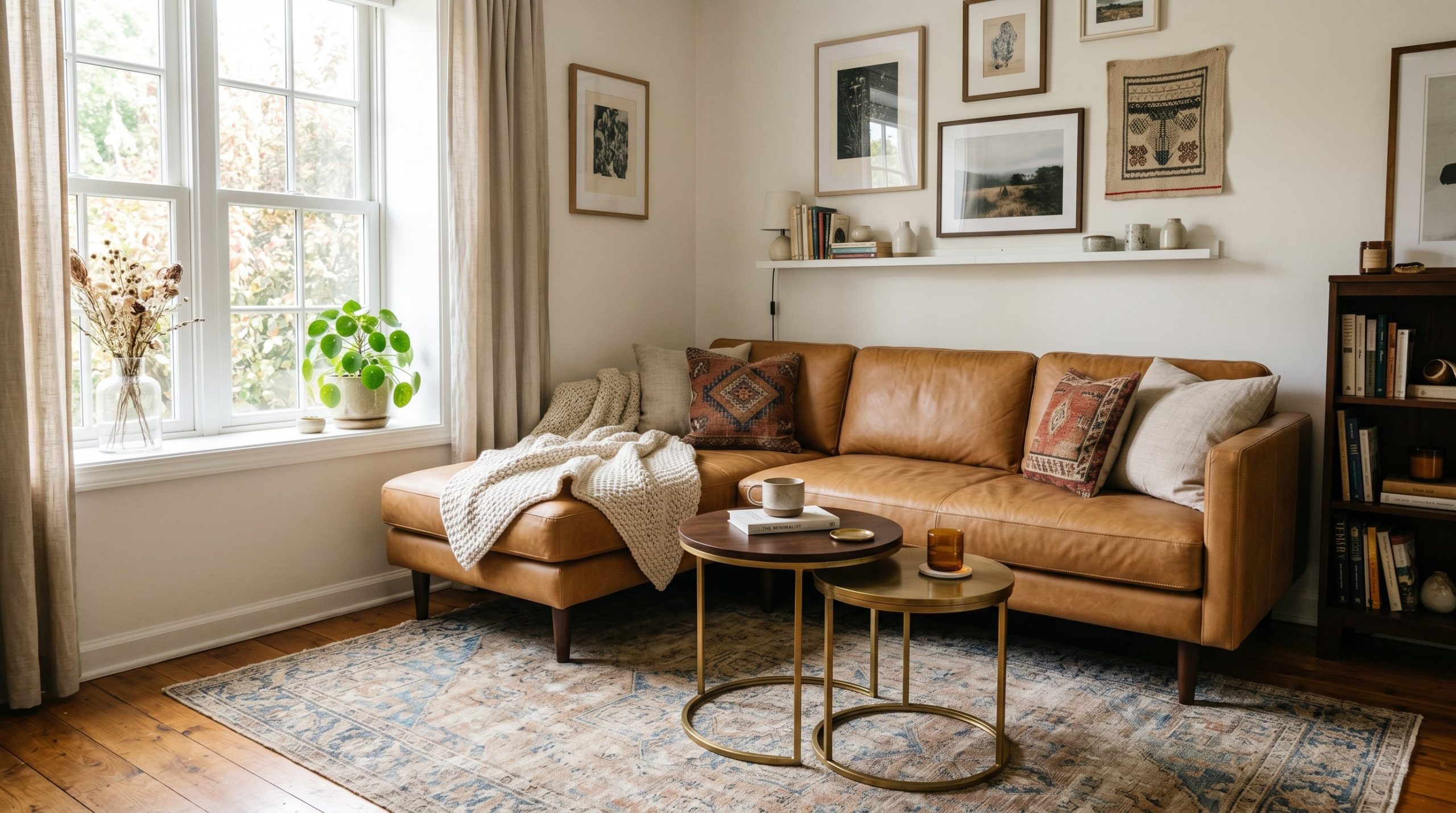
Sectional Sofa Small Living Room Layout — ideas you’ll actually want to try!
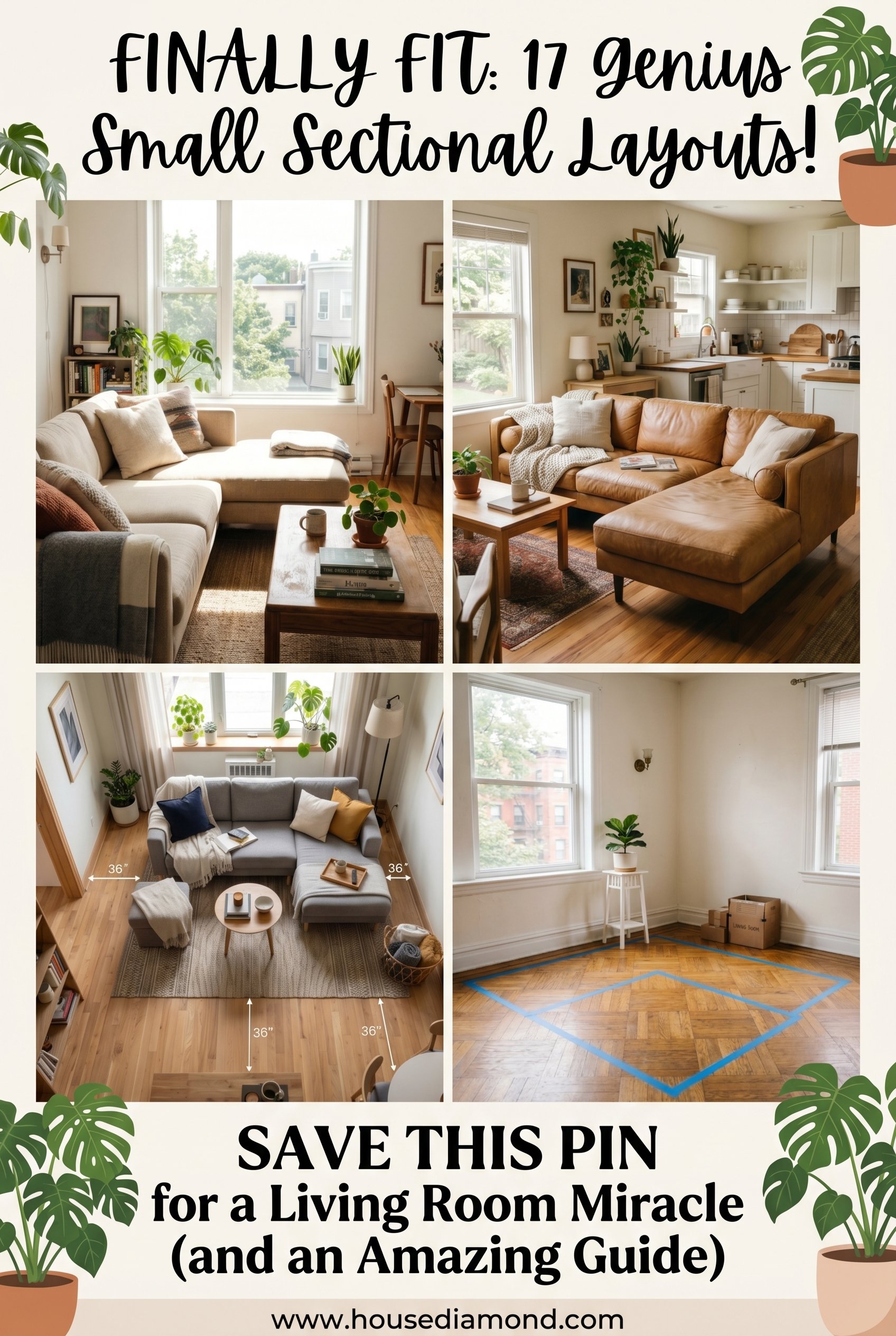
Shoving a massive sectional into a tiny living room feels like playing a high-stakes game of Tetris. Everyone tells you to just buy a loveseat, but honestly, I want to lie completely flat while watching TV. Making a sectional work in tight quarters comes down to math and visual tricks—like swapping chunky skirts for exposed legs or knowing exactly where to hide the power cords when floating a recliner. Let's make it fit.
1. The 36-Inch Traffic Rule
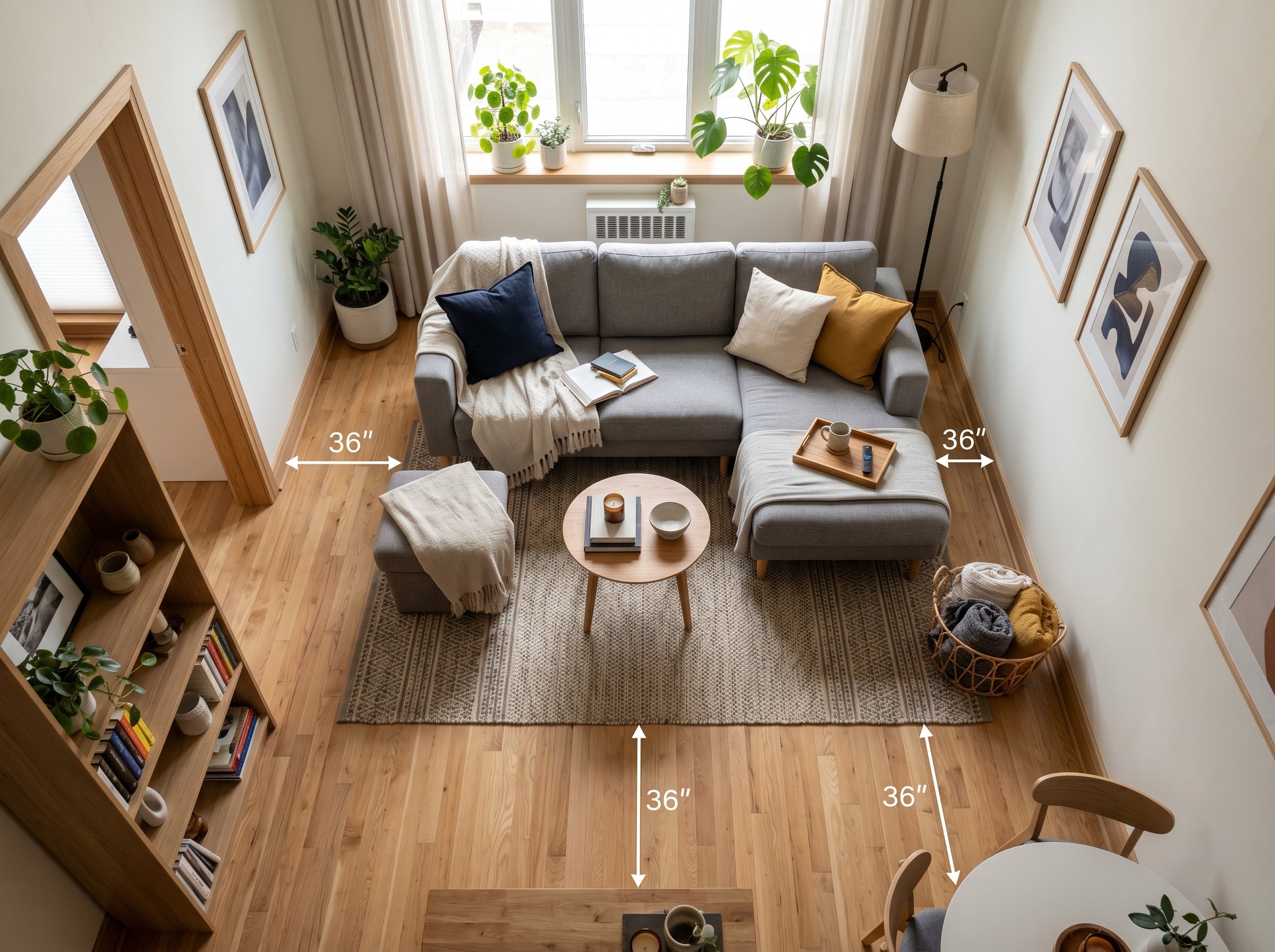
Before we even talk about style, we have to talk about math. You need 30 to 36 inches of clearance for any main walkway around your sectional. If you cheat this down to 24 inches, you'll be shimmying sideways to get to the kitchen. I always measure the main traffic path first, tape it out on the floor, and let those numbers dictate the maximum sofa dimensions.
2. Pushing It Flush Into the Corner
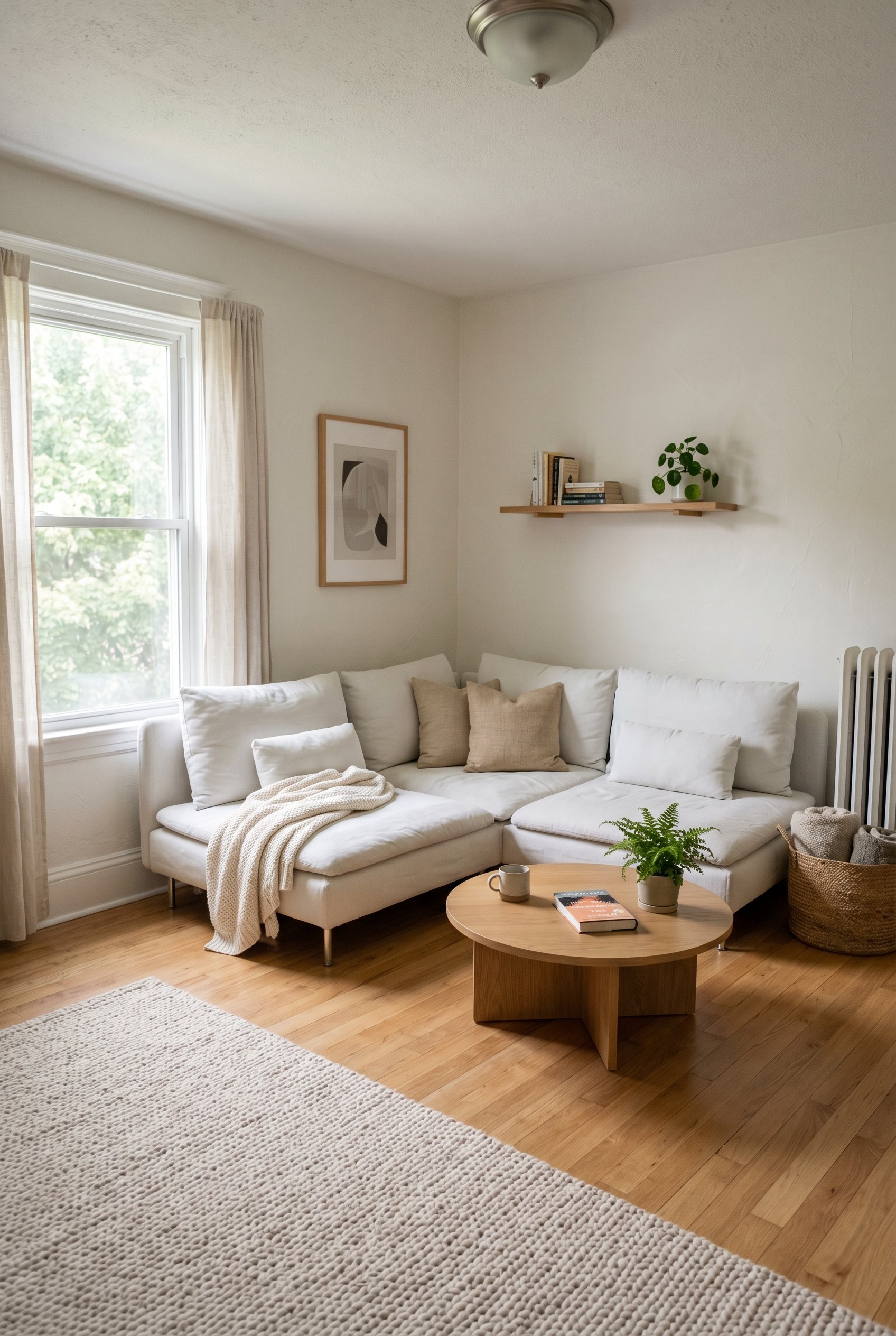
This is the oldest trick in the book for a reason. Shoving an L-shaped sectional tight against the two back walls maximizes your open floor space in the center of the room. It frees up square footage for a proper coffee table and keeps the main entry path wide open. I love doing this in square rooms where you desperately need a central void to keep things from feeling cramped.
3. Exposed Legs Over Skirted Bases
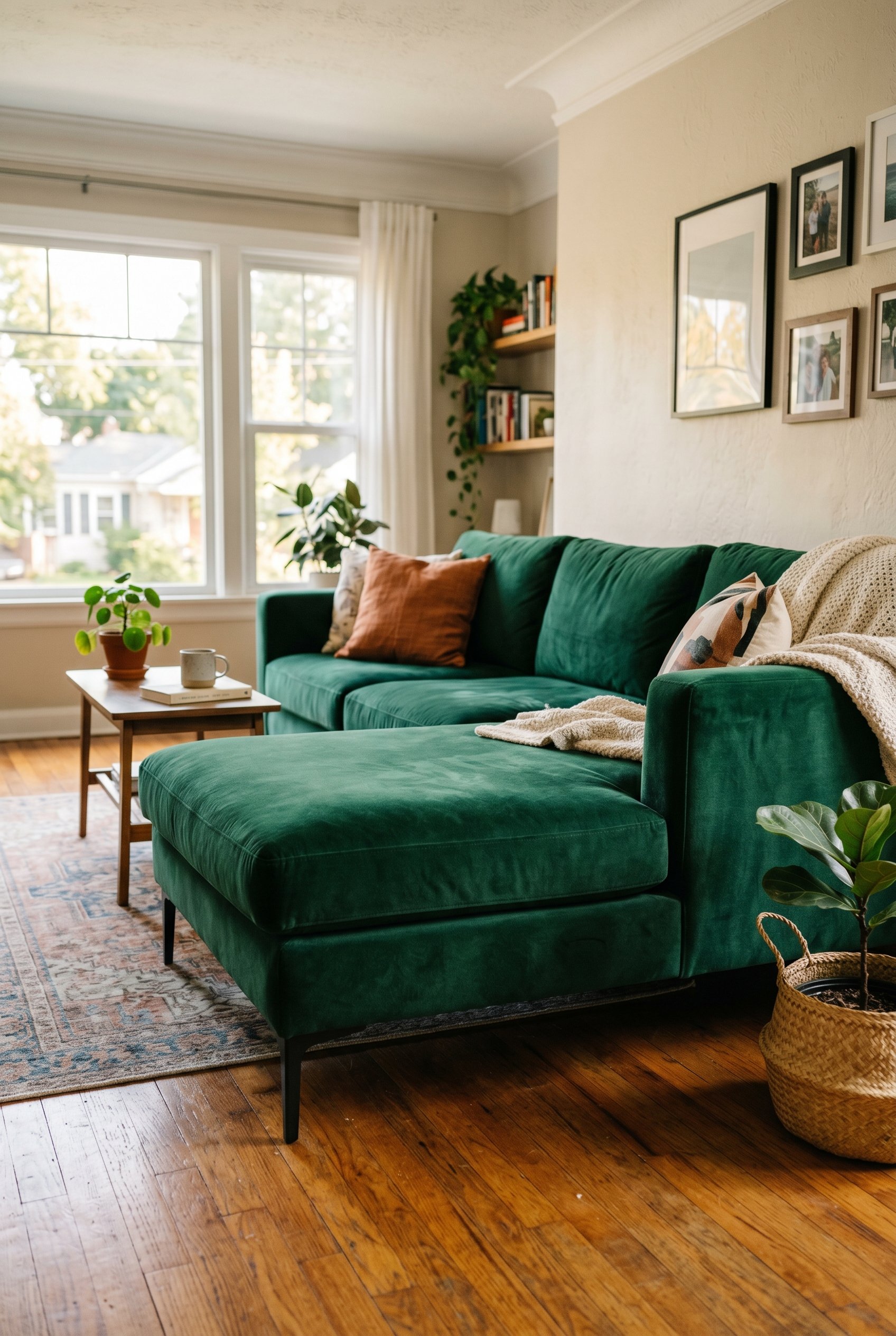
Visual weight matters just as much as physical dimensions. A sectional with a skirt or a heavy, flat base looks like a solid block of upholstery eating up the room. Pick something with exposed wood or metal legs—like the West Elm Andes collection. Seeing the floor continue underneath the sofa tricks your brain into thinking the room is bigger than it is.
4. Floating the Chaise to Define Zones
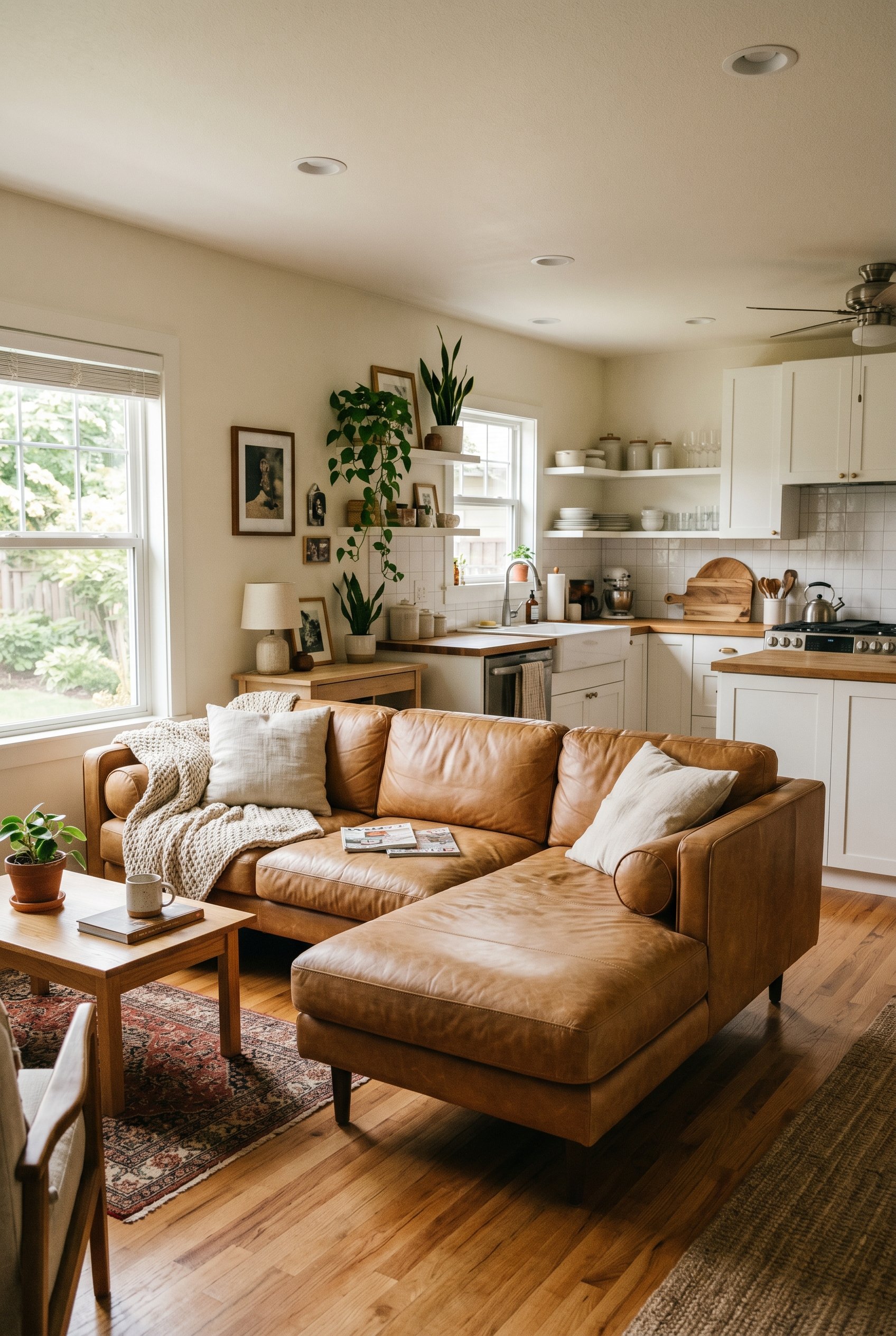
If your front door opens straight into your living room, push the back of the sofa against the main wall but let the chaise section float out into the room. That floating chaise creates an instant psychological barrier, turning an open-concept blur into a defined living area. It forces foot traffic to circulate around the seating zone rather than cutting straight through the middle of your movie night.
5. Hiding Cords on Floating Power Recliners
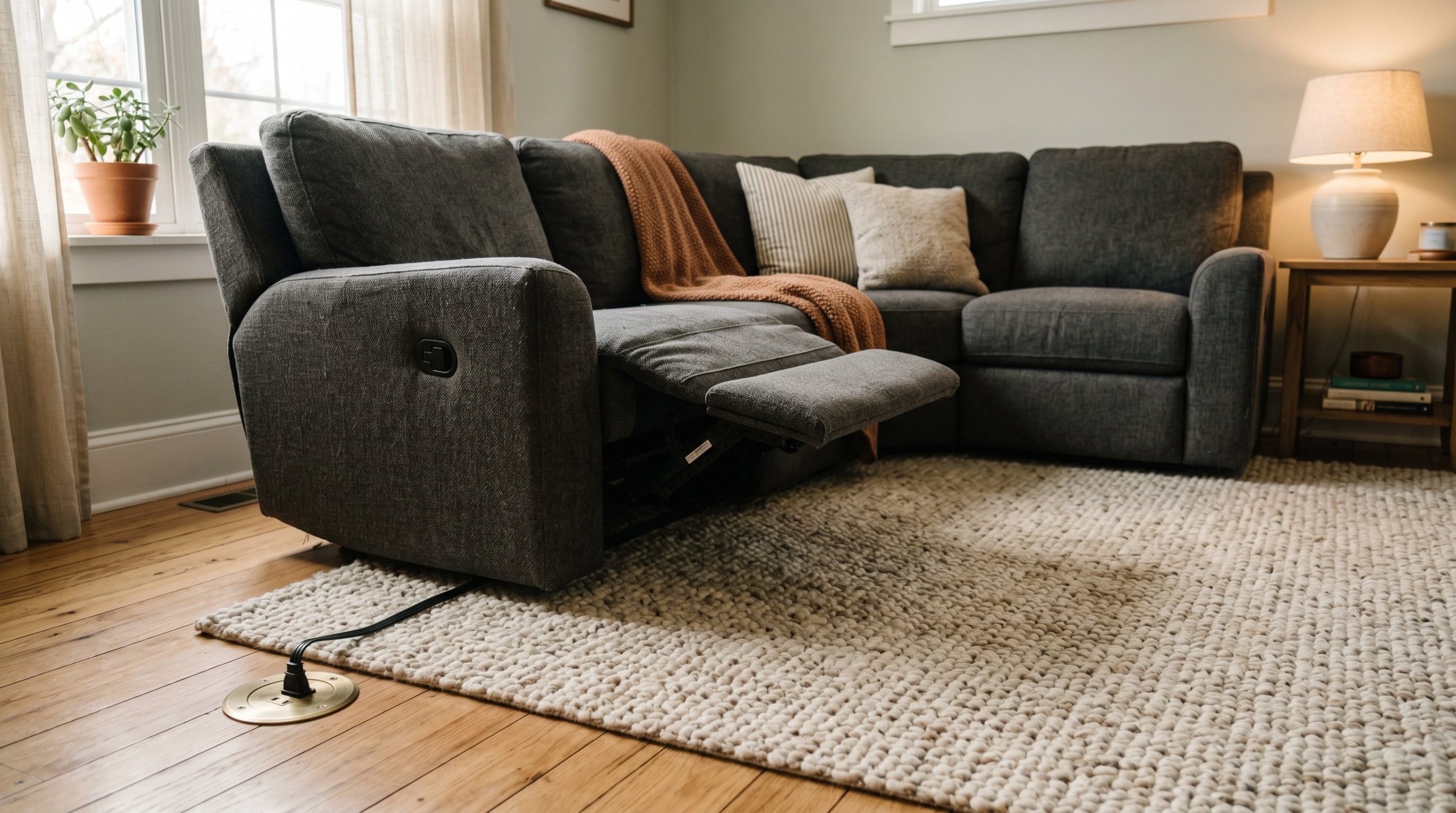
Floating a power-reclining sectional sounds great until you have a thick black power cord snaking across your oak floors. This ruins the vibe instantly. I highly recommend running a flat, paintable extension cord along the baseboards and hiding it under a rug. If you own the place, having an electrician drop a floor outlet directly under the sofa is money well spent.
6. The Dual TV and Fireplace Dilemma
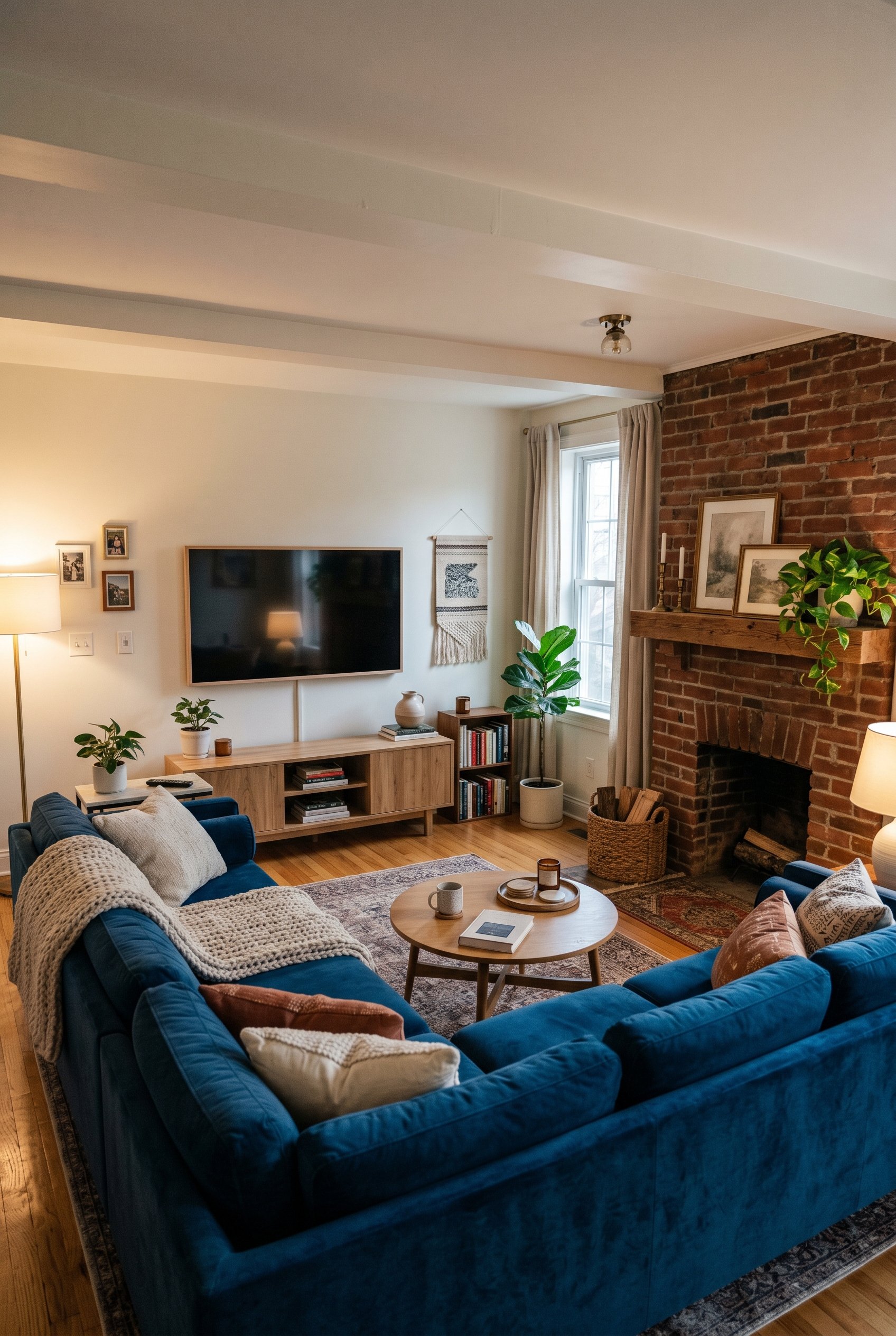
This is a nightmare scenario: the fireplace is on one wall, the TV is on another, and your small room only fits one sofa. Instead of picking a favorite, arrange an L-shaped sectional so the longer side faces the TV and the shorter side faces the fireplace. You get a comfortable viewing angle for Netflix without turning your back completely on the architectural focal point.
7. Swapping Coffee Tables for Nesting Trios
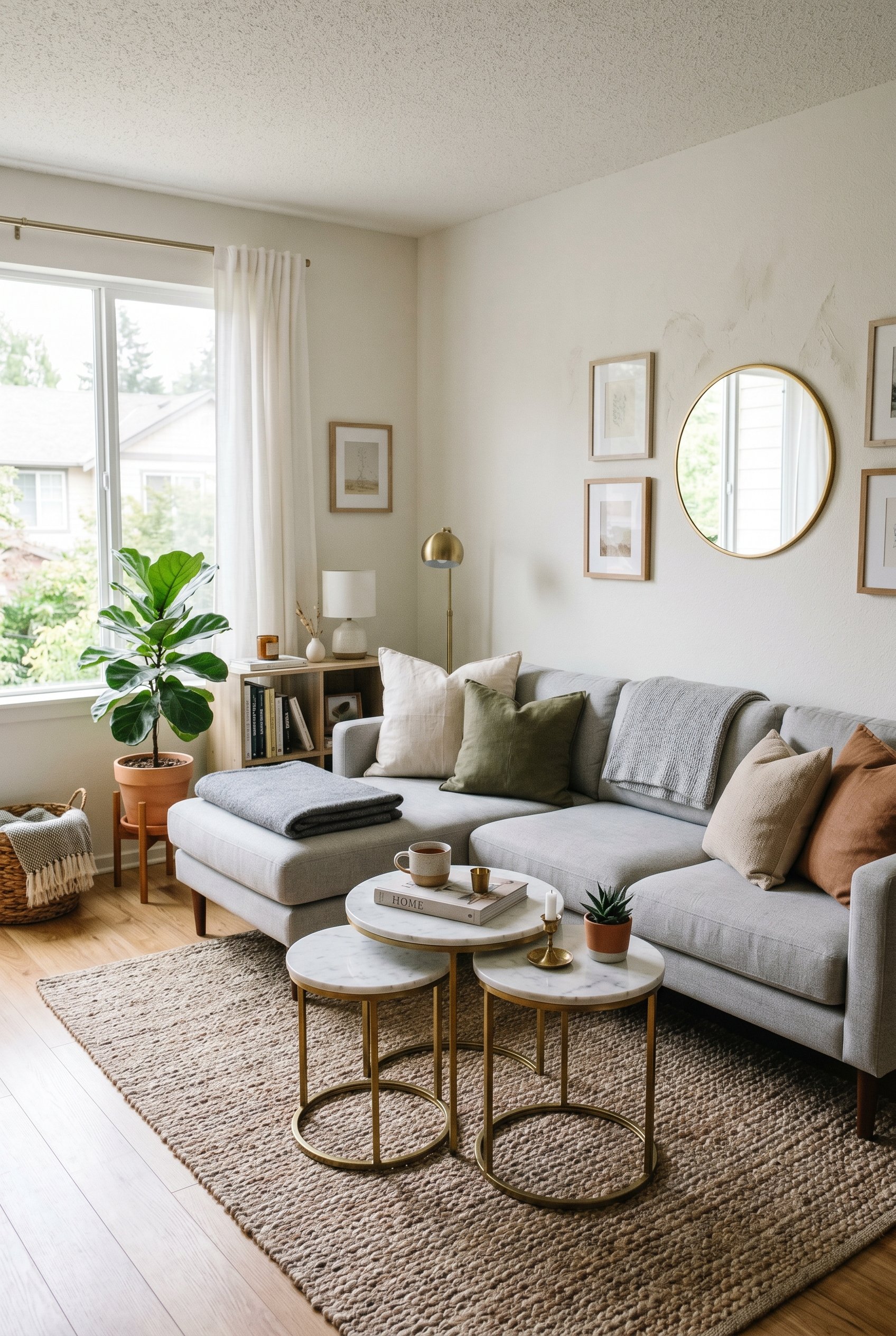
A bulky coffee table trapped inside the L of a sectional is a bruised shin waiting to happen. Swap it out for a set of nesting side tables. CB2 has some gorgeous marble ones. You can pull them apart when guests are over to hold drinks, then stack them back up in the corner when you need the floor space.
8. Navigating Corner Fireplaces
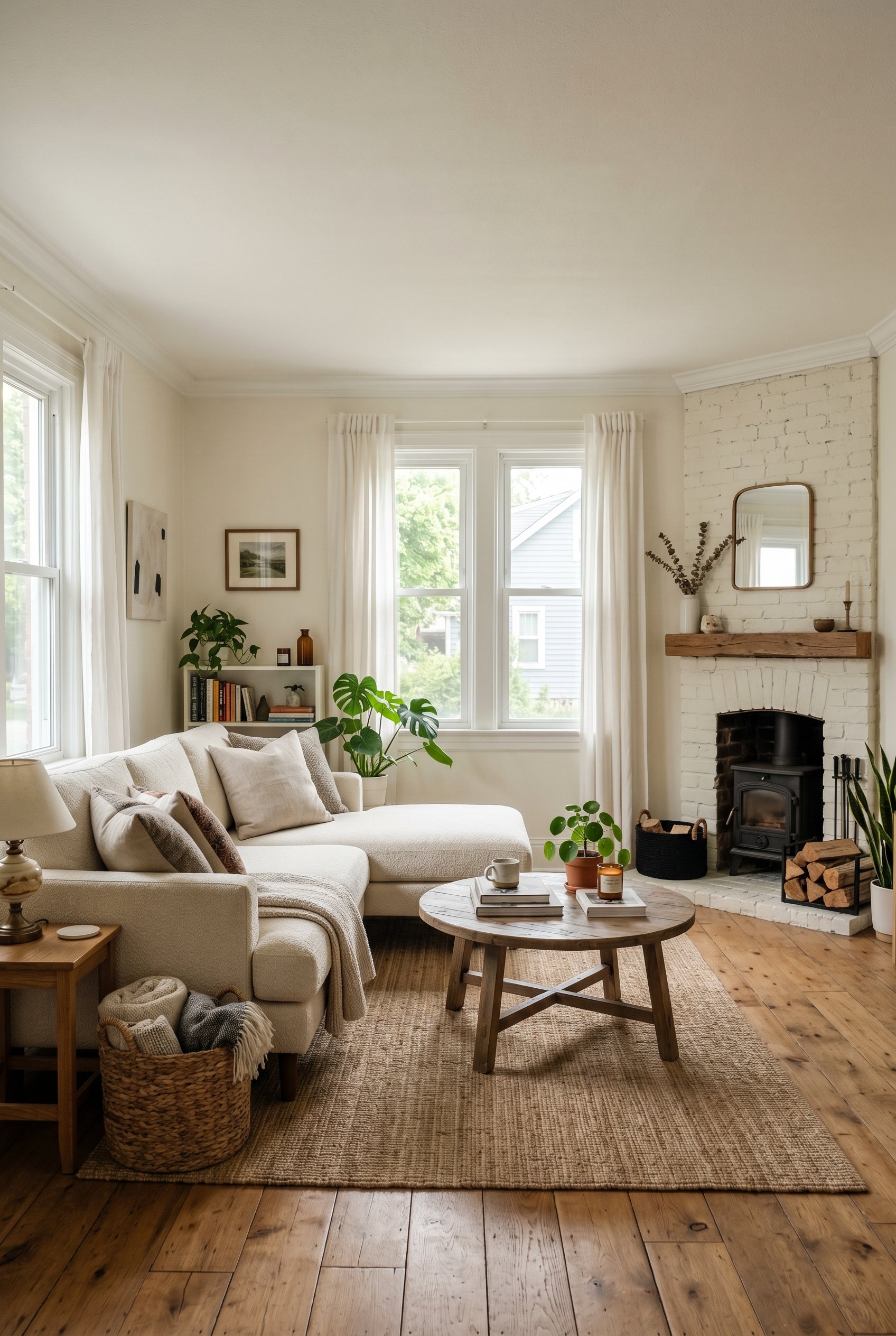
Corner fireplaces are notoriously hard to design around. You cannot force symmetry here. The best layout is often placing the sectional entirely off-center, pushed against the wall opposite the fireplace. Float a sleek accent chair near the fireplace to balance the heavy visual weight of the sofa on the other side of the room.
9. The Oversized Rug Anchor Trick
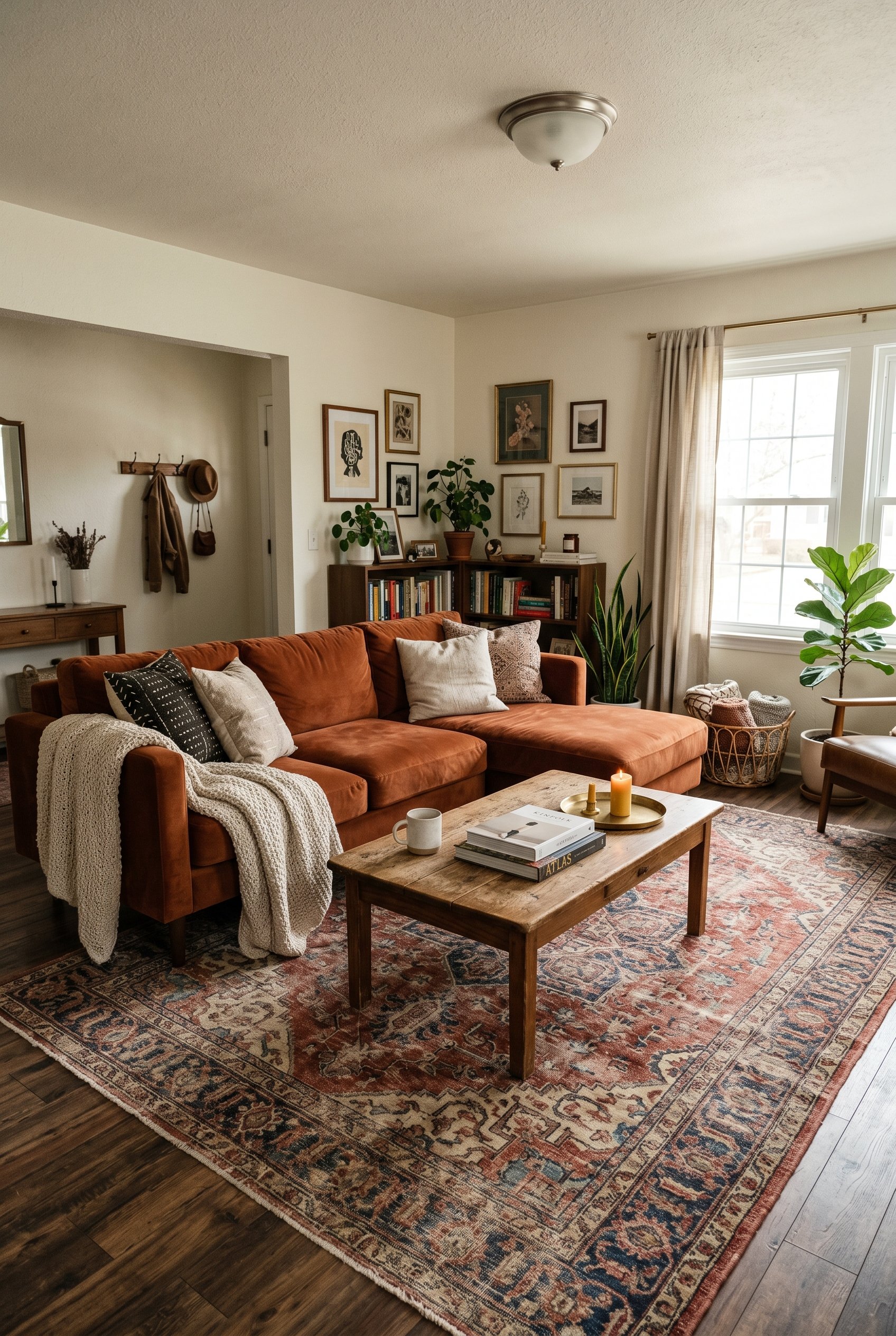
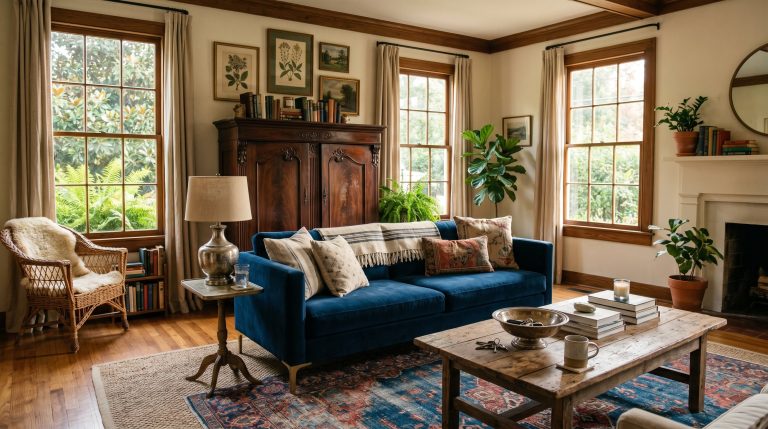
People always buy rugs that are too small for their sectionals. A tiny rug floating in front of the sofa chops the room up visually. You want an oversized area rug—at least 8×10—where the front legs of every piece of the sectional sit comfortably on it. A giant vintage rug pulls the whole seating arrangement together into one cohesive island.
10. Playing Tetris With Modular Pieces
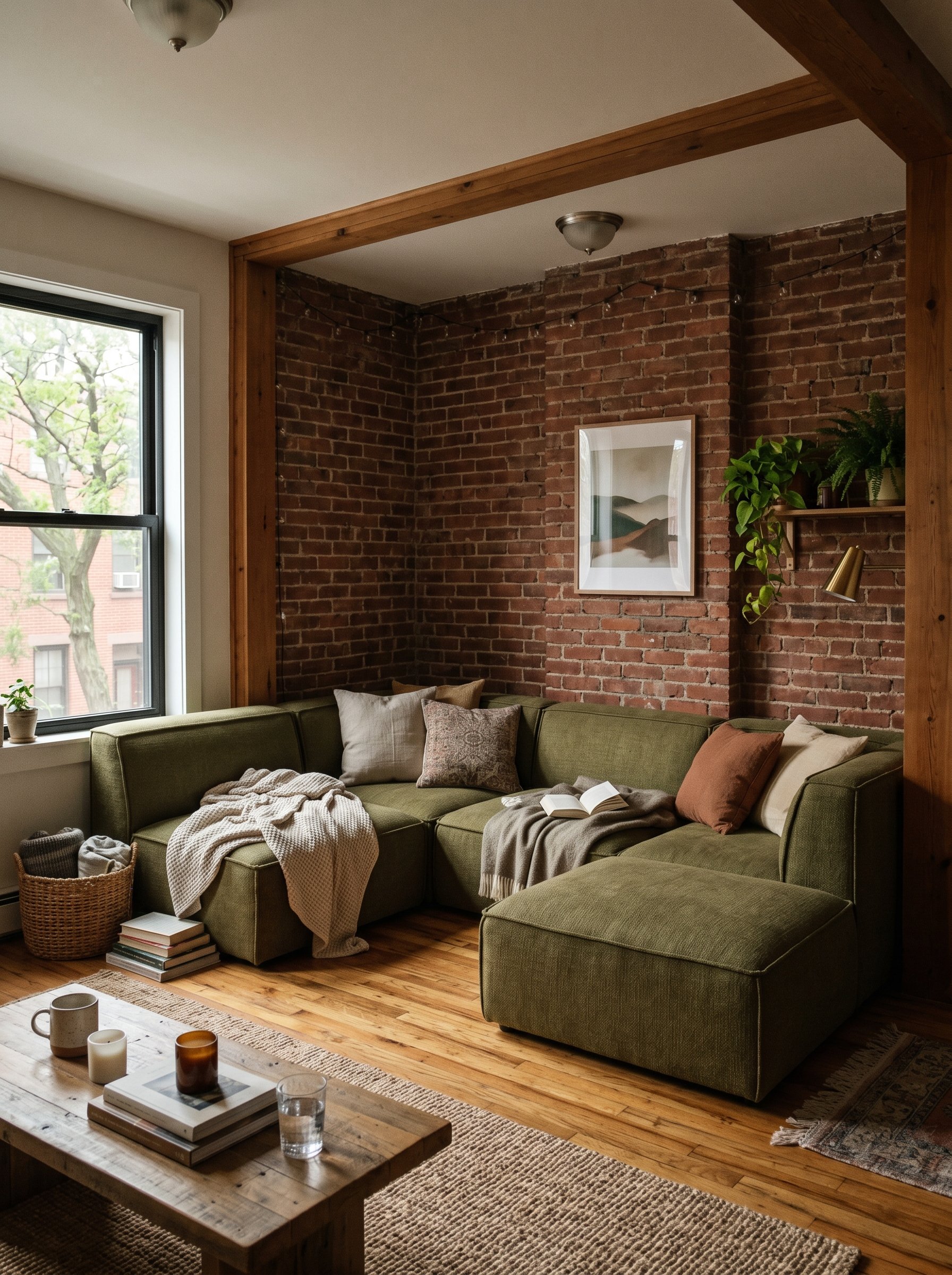
Weird alcoves and radiator pipes will destroy standard sofa plans. Modular sectionals like the IKEA Söderhamn or anything from Burrow are lifesavers here. Because they arrive in separate blocks, you can configure them into awkward U-shapes or extra-long setups that perfectly match the bizarre contours of an older apartment.
11. Ditching the Chaise for a Storage Ottoman
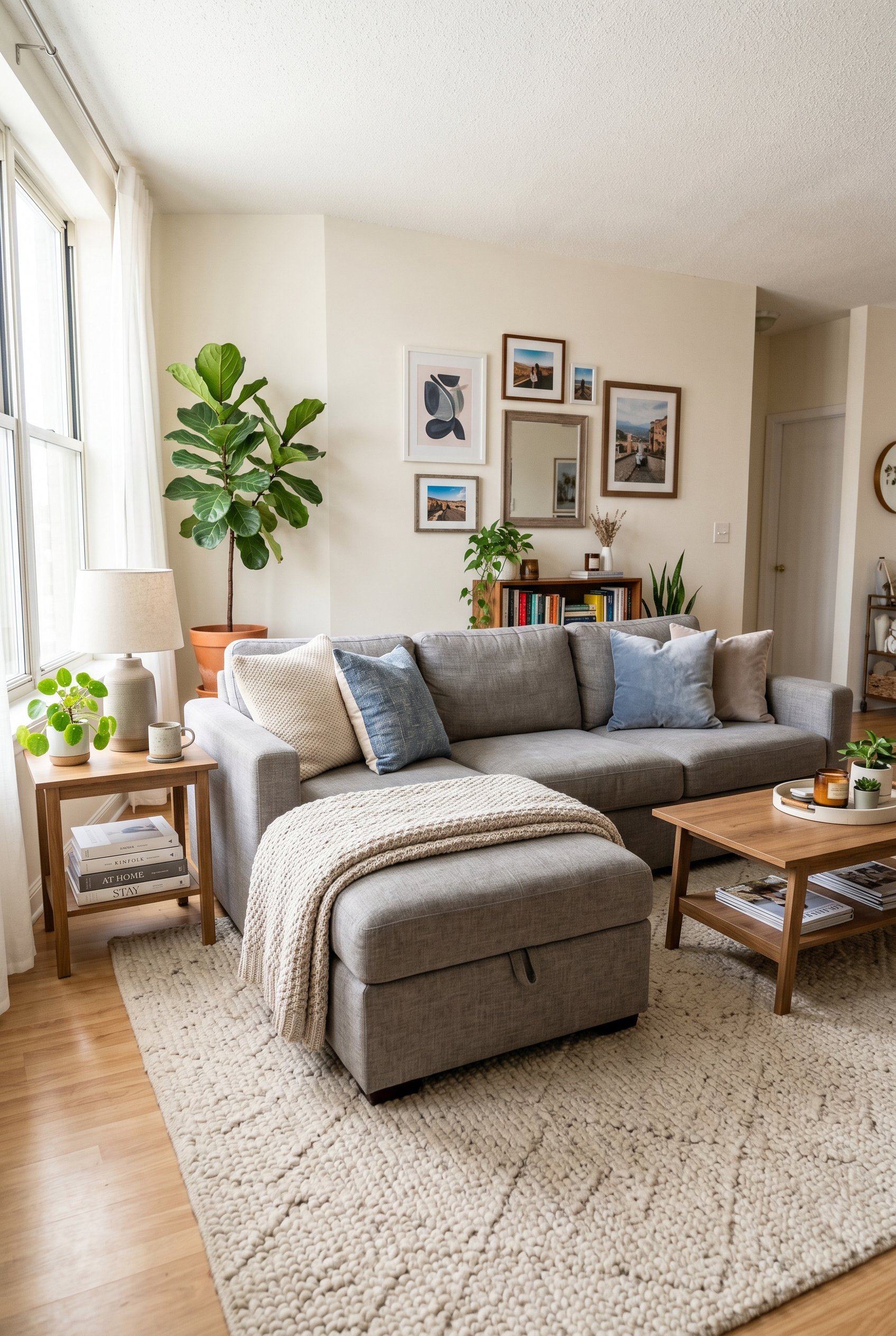
A built-in chaise locks you into one layout forever. I prefer buying a standard three-seater sofa and pairing it with a massive, matching storage ottoman. You push it against the sofa when you want to lounge, and pull it away to act as a coffee table or extra seating when friends show up. Plus, you can hide all your winter throw blankets inside.
12. Working Around Angled Doorways
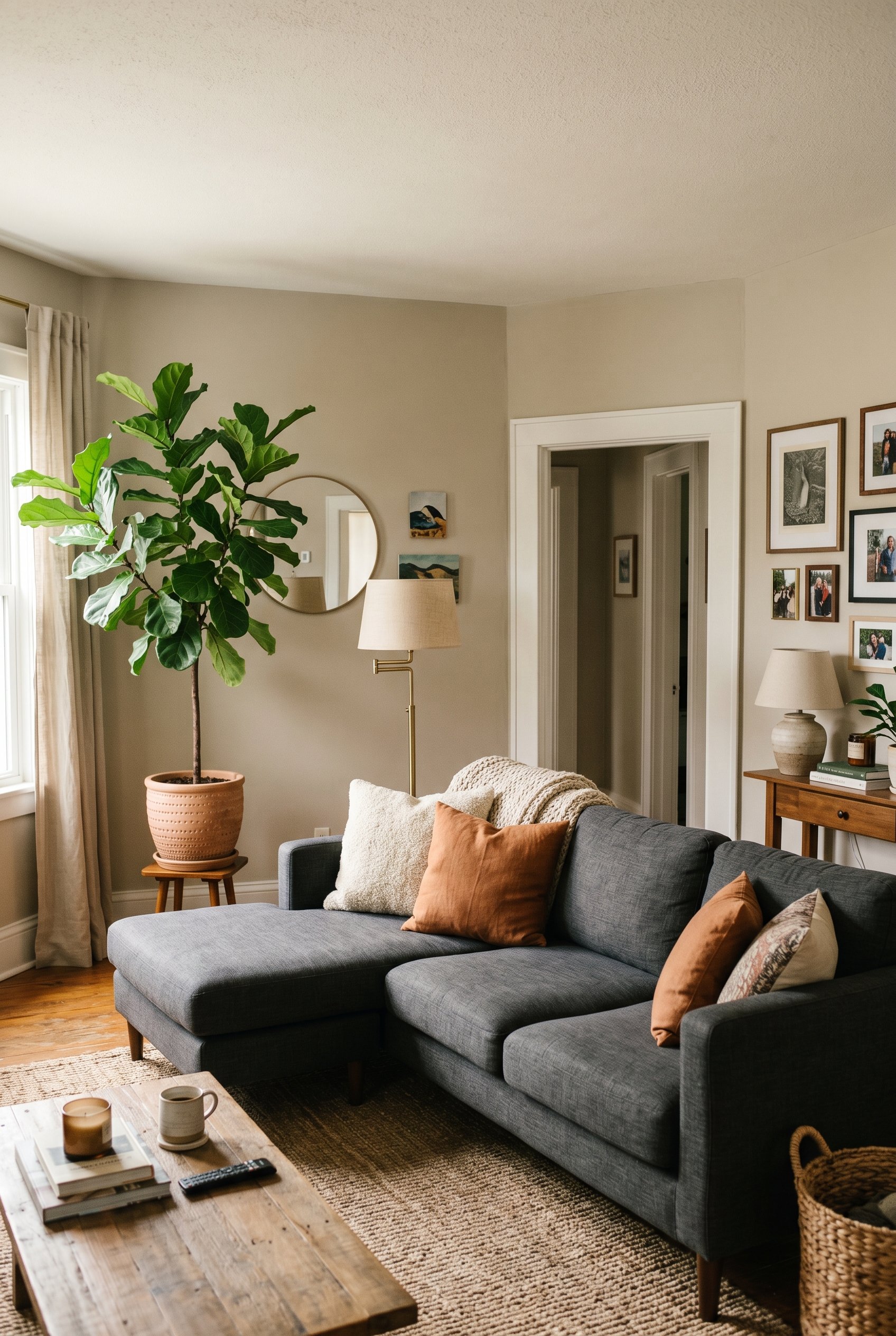
Some living rooms have doorways sliced into the corners at 45-degree angles. Don't fight the architecture by rigidly sticking to 90-degree layouts. Sometimes floating the entire sectional at an angle, parallel to that awkward doorway, actually flows better. Just put a tall plant or a floor lamp in the dead triangular space behind the sofa.
13. The Skinny Armrest Hack
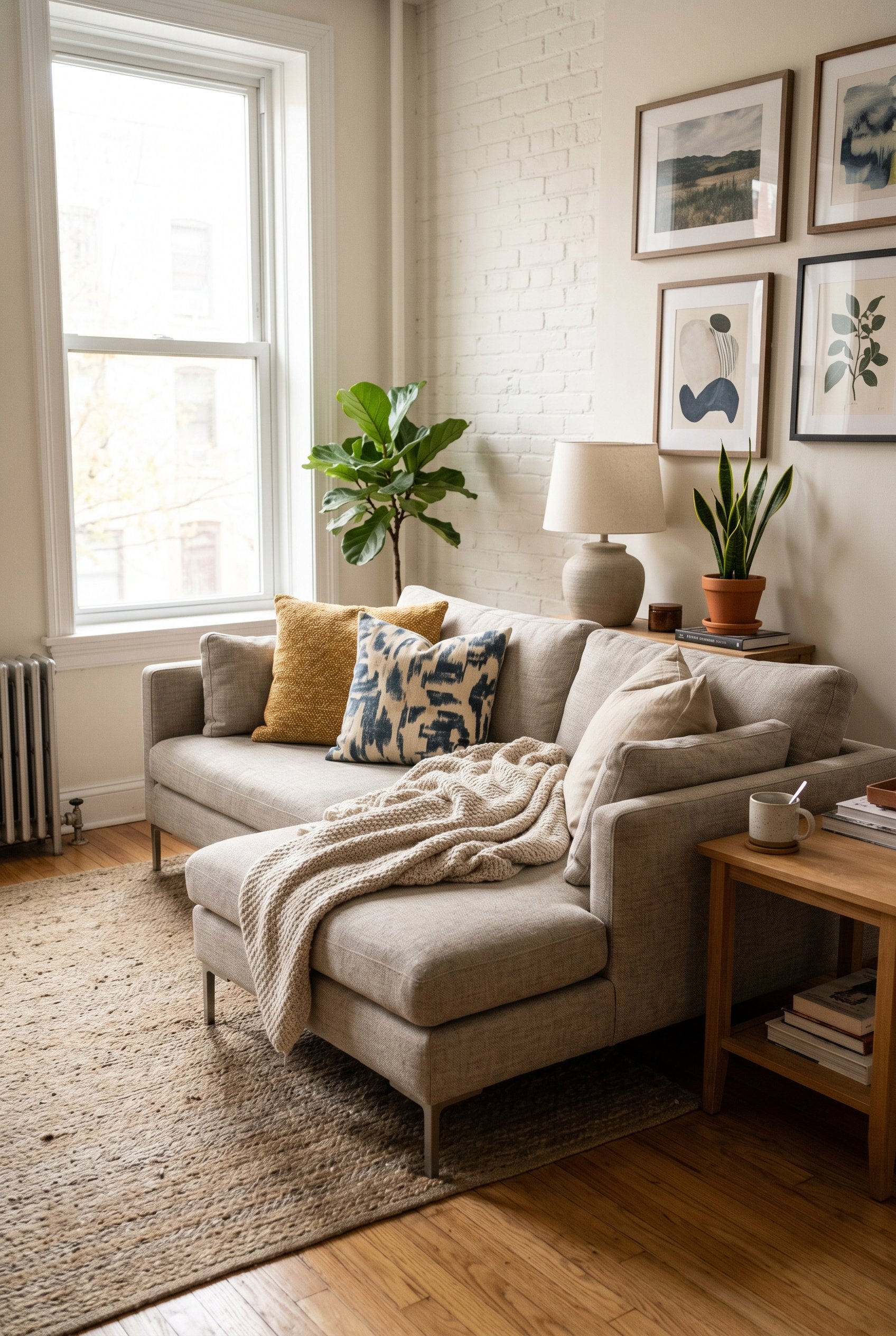
Rolled, traditional armrests can be 8 to 10 inches wide. Multiply that by two, and you just lost over a foot and a foot and a half of seating space to pure foam. In a tight room, shop for sectionals with ultra-thin, track arms. You get way more actual sitting area without increasing the overall footprint of the furniture.
14. Pulling It Three Inches Off the Wall
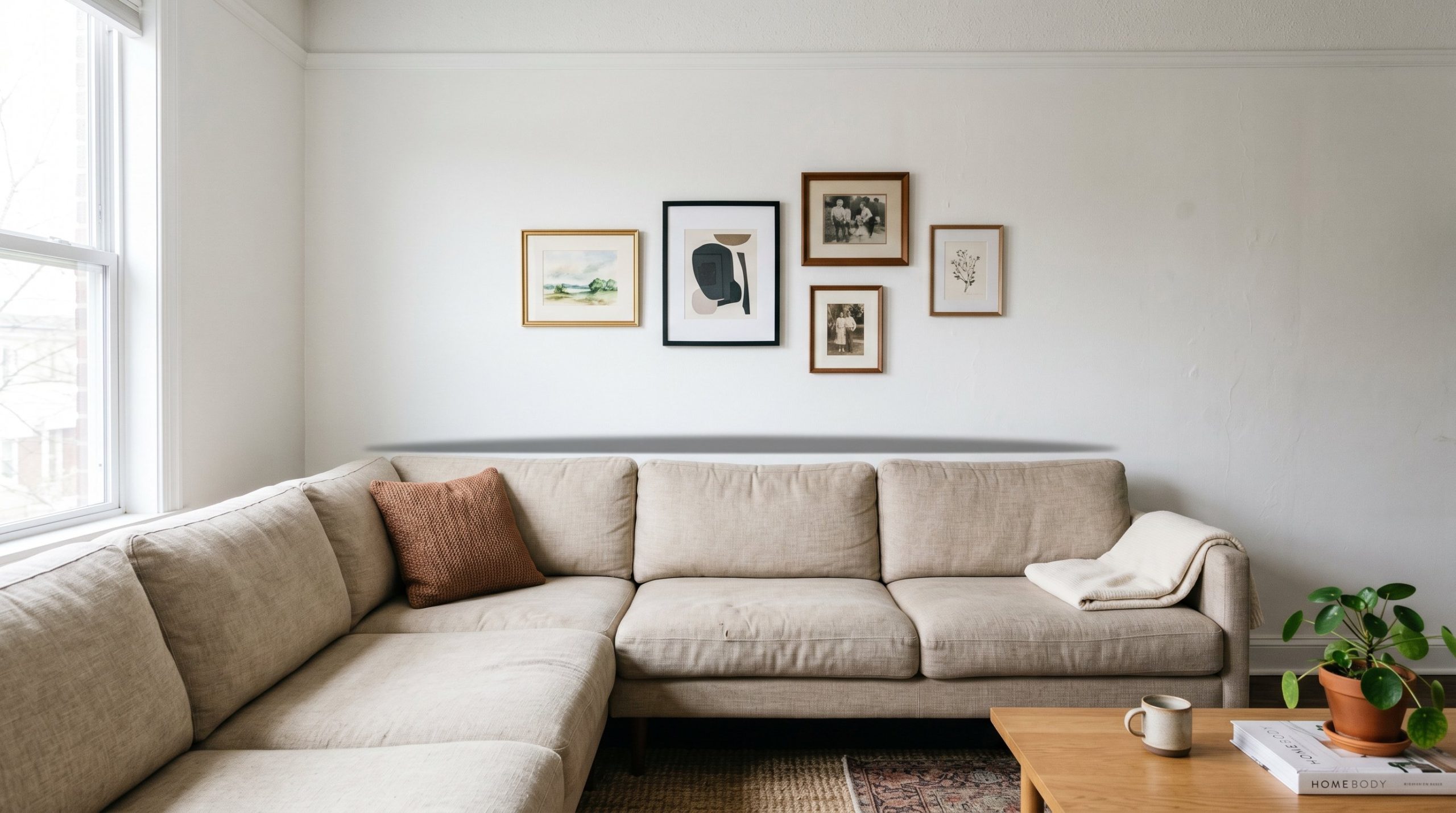
It feels counterintuitive when space is tight, but pulling your sectional just three inches away from the wall makes the room feel larger. When furniture is jammed violently against the drywall, it screams "we ran out of room." A tiny breathing gap creates a shadow line that makes the layout feel intentional and airy.
15. The Painter’s Tape Reality Check
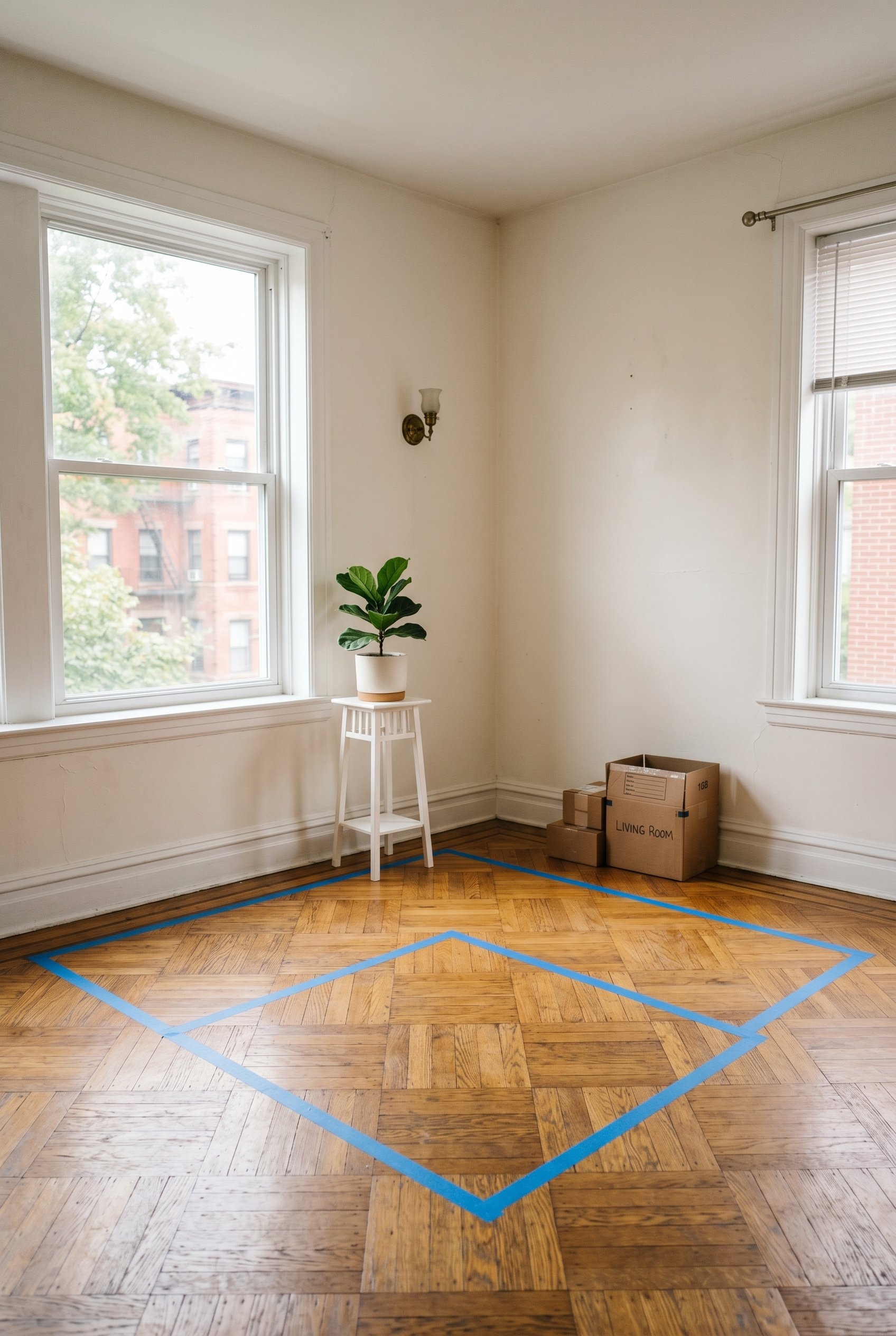
Never buy a sectional based on an app. AR tools are great for vibes, but terrible for actual spatial awareness. Get a roll of blue painter's tape and map out the exact dimensions on your floor. Then, physically walk around it. Try to pretend to sit down. You'll instantly know if the chaise is going to block your path to the balcony.
16. Window Walls and Low-Back Profiles
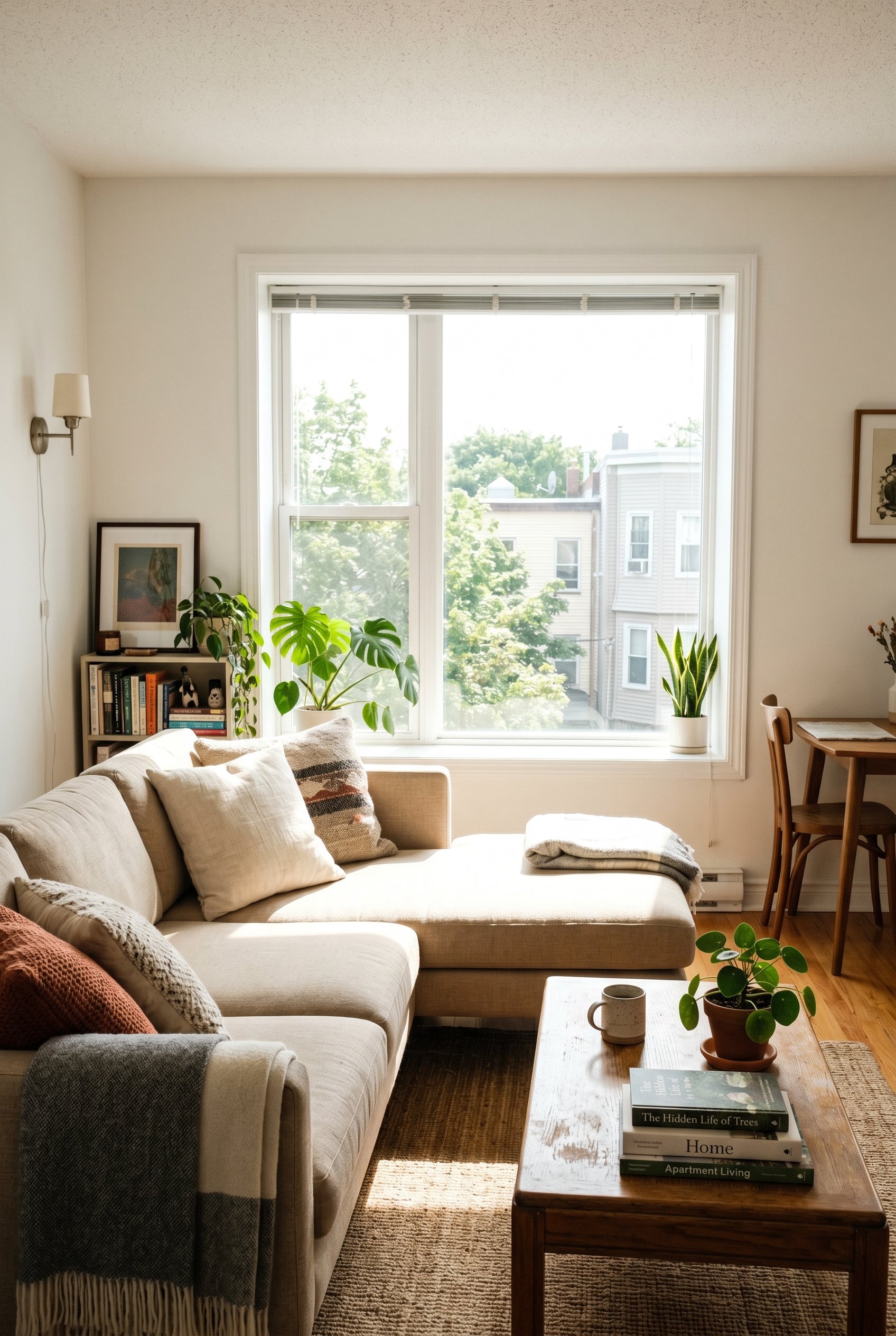
If the only wall long enough for your sectional has a massive window, you have to use it. Just make sure the sofa has a low-back profile. You don't want tall, bulky cushions blocking the natural light. Letting the sunlight pour in over the top of the sofa keeps the room from feeling like a dark cave.
17. The Slim Sofa Table Gap Filler
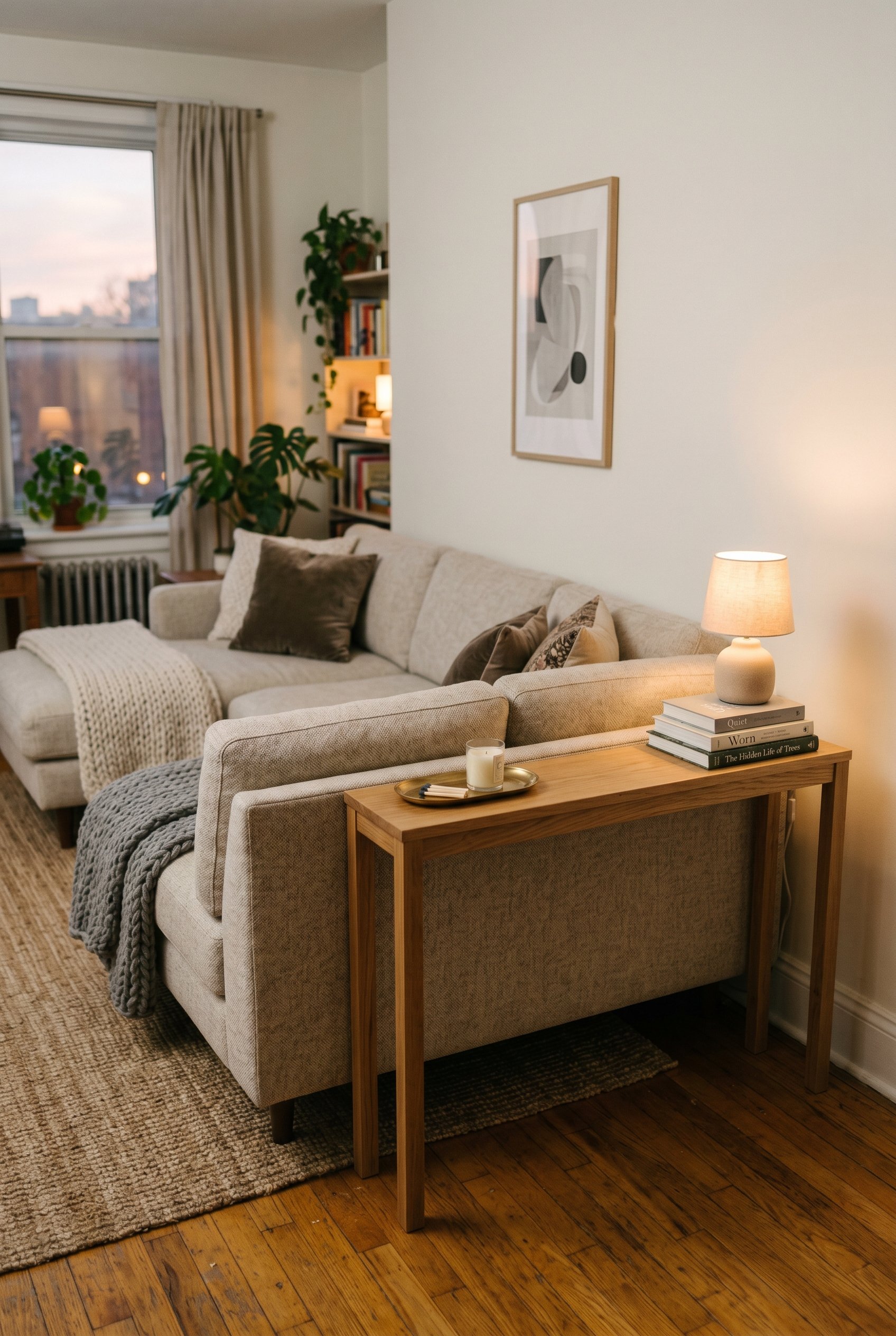
If you have to float the sofa, but the back looks boring or the room lacks surface area, slip a 6-inch deep console table right behind it. You can build one out of cheap pine lumber and paint it to match the wall. It gives you a place to drop keys, hide power strips, and display some leaning art without eating into your walking paths.
I'm a massive fan of the modular route because I change my mind about layouts every six months. Just remember to tape it out physically on the floor before you hand over your credit card. A tape measure and some blue tape are your best friends right now.
FAQ
Can you put a sectional in a 10×10 room? Yes, but you need a small-scale apartment sectional. Push it tightly into the corner to maximize floor space and stick to low backs and thin armrests.
Should a sectional go against the wall or in the middle of the room? If the room is very small, push it against the walls. If you have a slightly wider layout or an open-concept space, floating it in the middle helps define the living area.
Does a sectional make a small room look smaller? Not necessarily. A single well-proportioned sectional often looks cleaner and less cluttered than cramming a sofa, a loveseat, and an armchair into the same footprint.
How do you arrange a living room with a TV and a fireplace on different walls? Use an L-shaped sectional. Orient the main, longest section facing the TV for comfort, and let the shorter section face the fireplace.
What size rug goes under a sectional in a small room? Aim for an 8×10 rug at minimum. The rug needs to be large enough that all front legs of the sectional rest on it, which anchors the furniture.