19 Modern Kitchen Backsplash Ideas That Actually Stand Out
All the Backsplash For Modern Kitchens inspo you need!
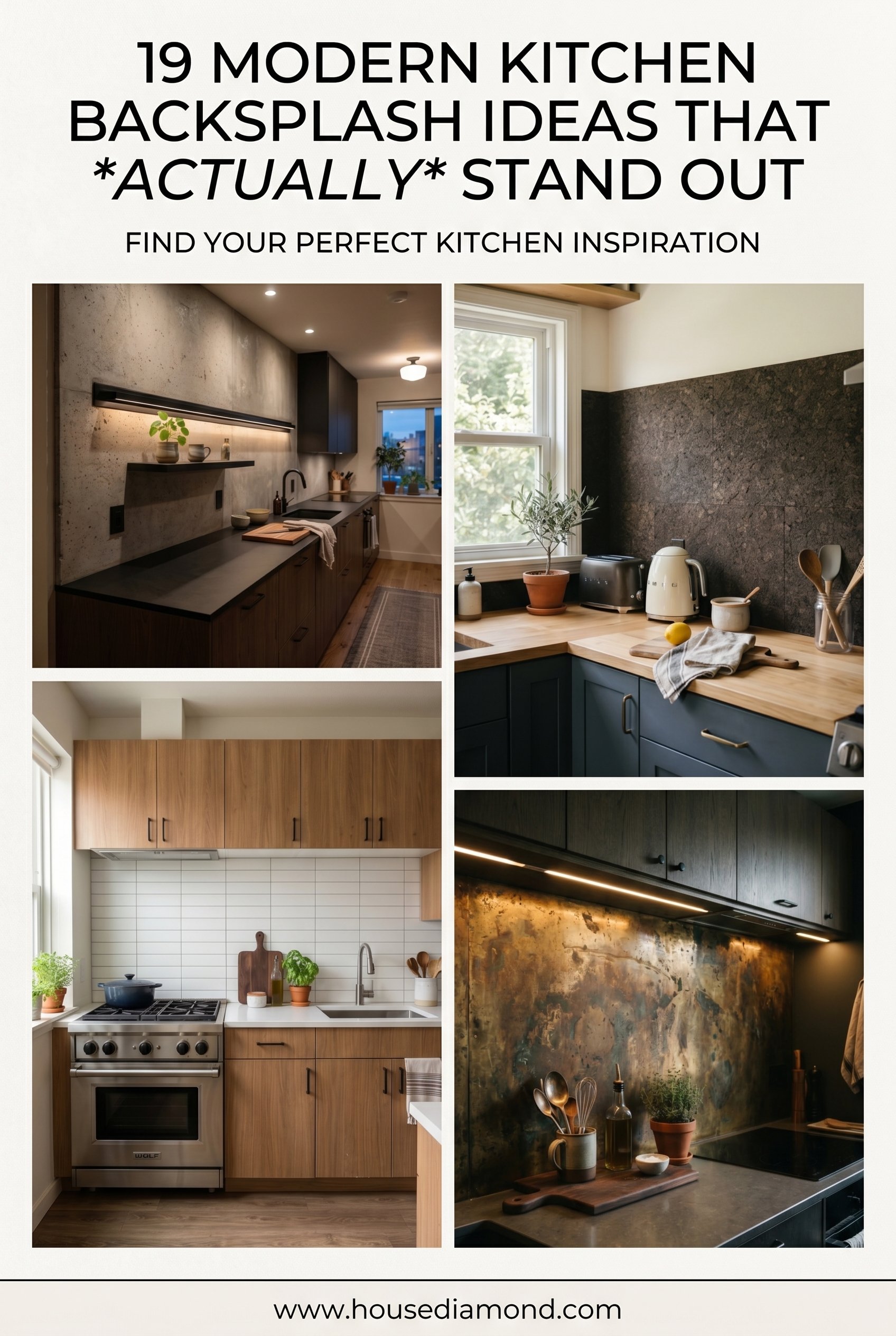
Picking a kitchen backsplash is stressful because it’s permanent and right at eye level. Everyone tells you to just do white subway tile and play it safe. I absolutely hate that advice. If you're spending real money on a modern kitchen, the wall above your range should do some heavy lifting. From ceiling-height marble slabs to integrated magnetic tracks, these are the installations that justify the renovation budget.
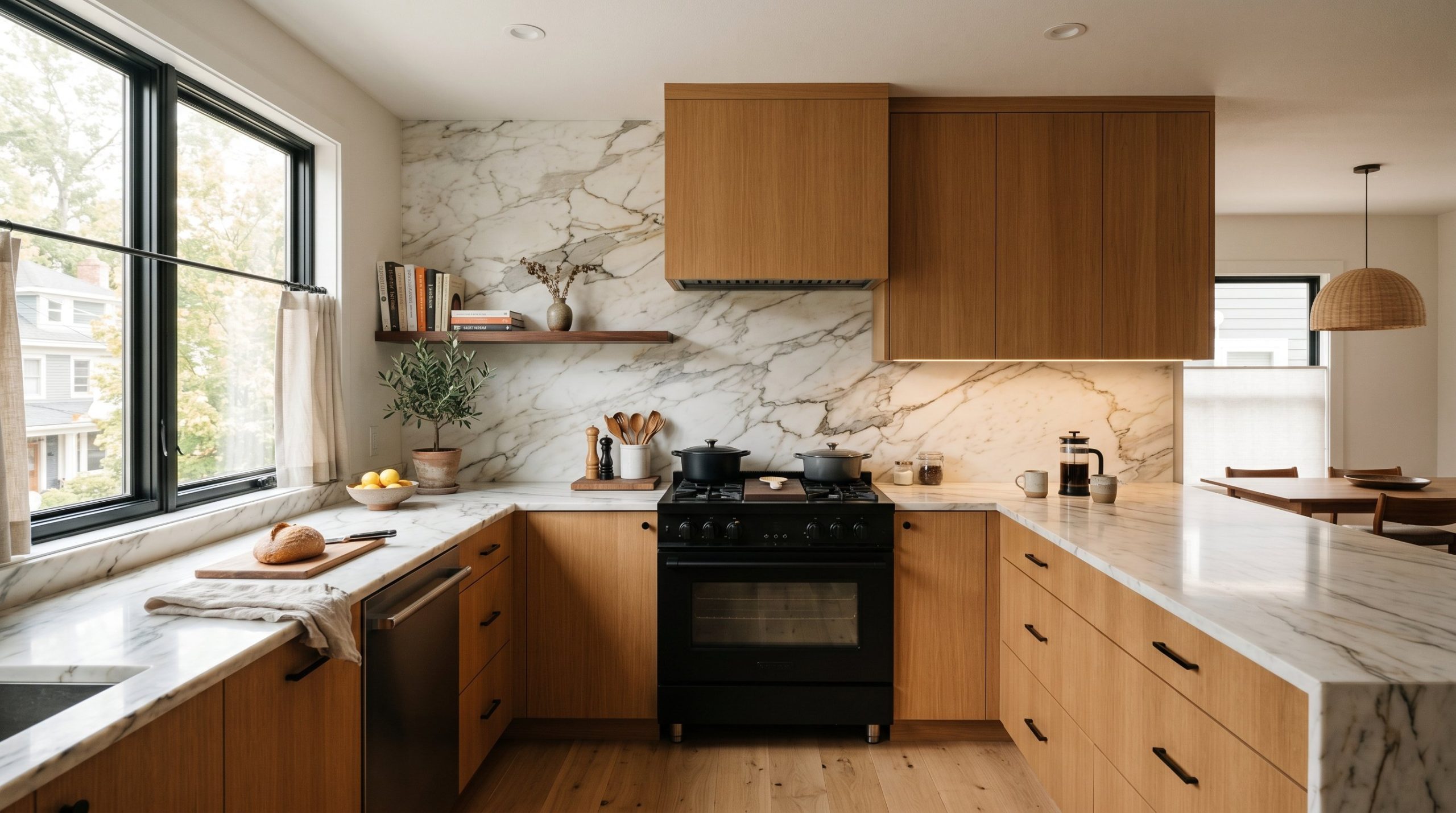
1. Continuous Marble Slabs
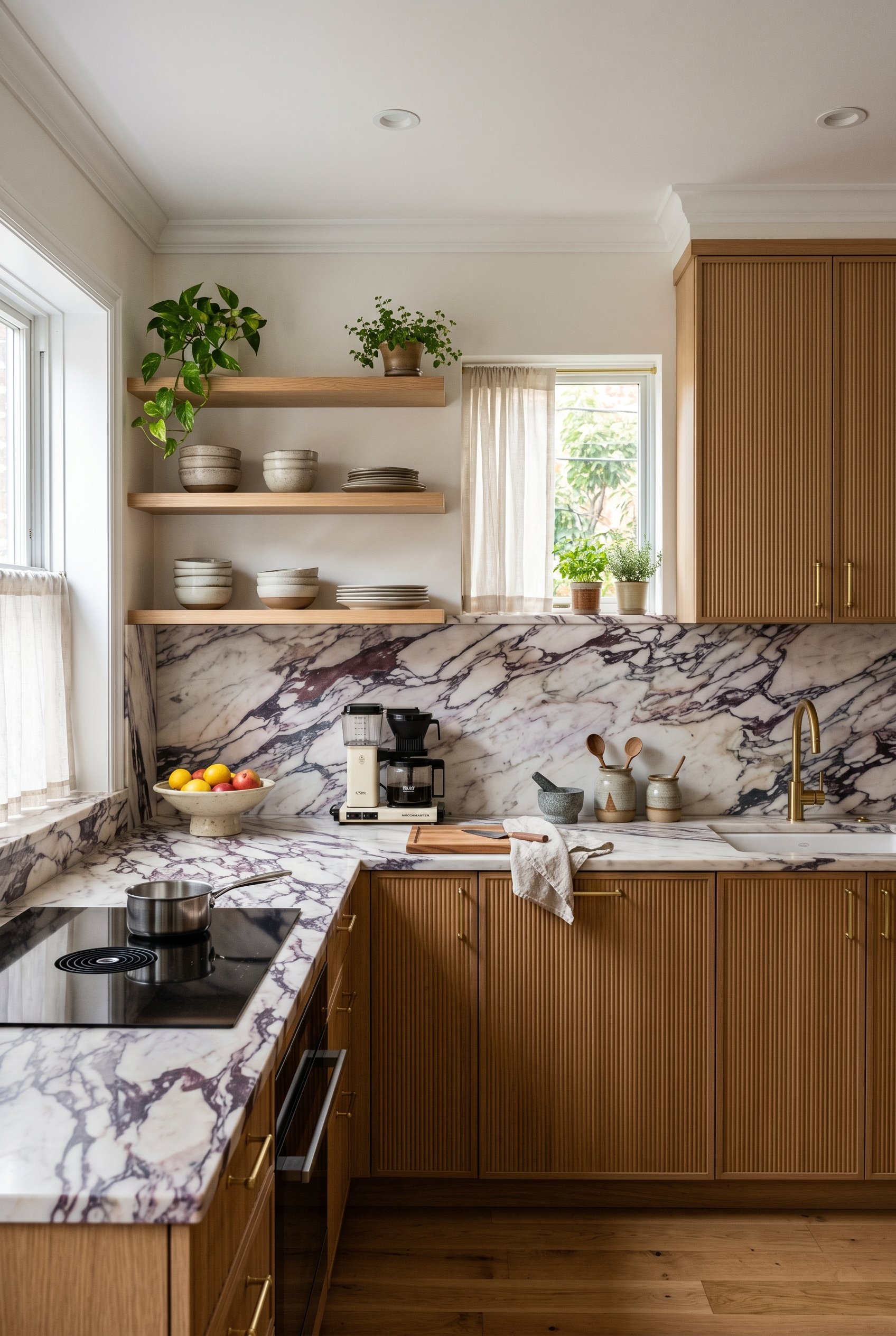
Extending your countertop material directly up the wall is the ultimate luxury move. It completely eliminates grout lines and makes the entire room look expansive. A natural marble slab like Calacatta Viola will run you anywhere from $150 to $250 per square foot installed. It is expensive, but it looks incredibly high-end.
2. Ceiling-Height Glossy Zellige
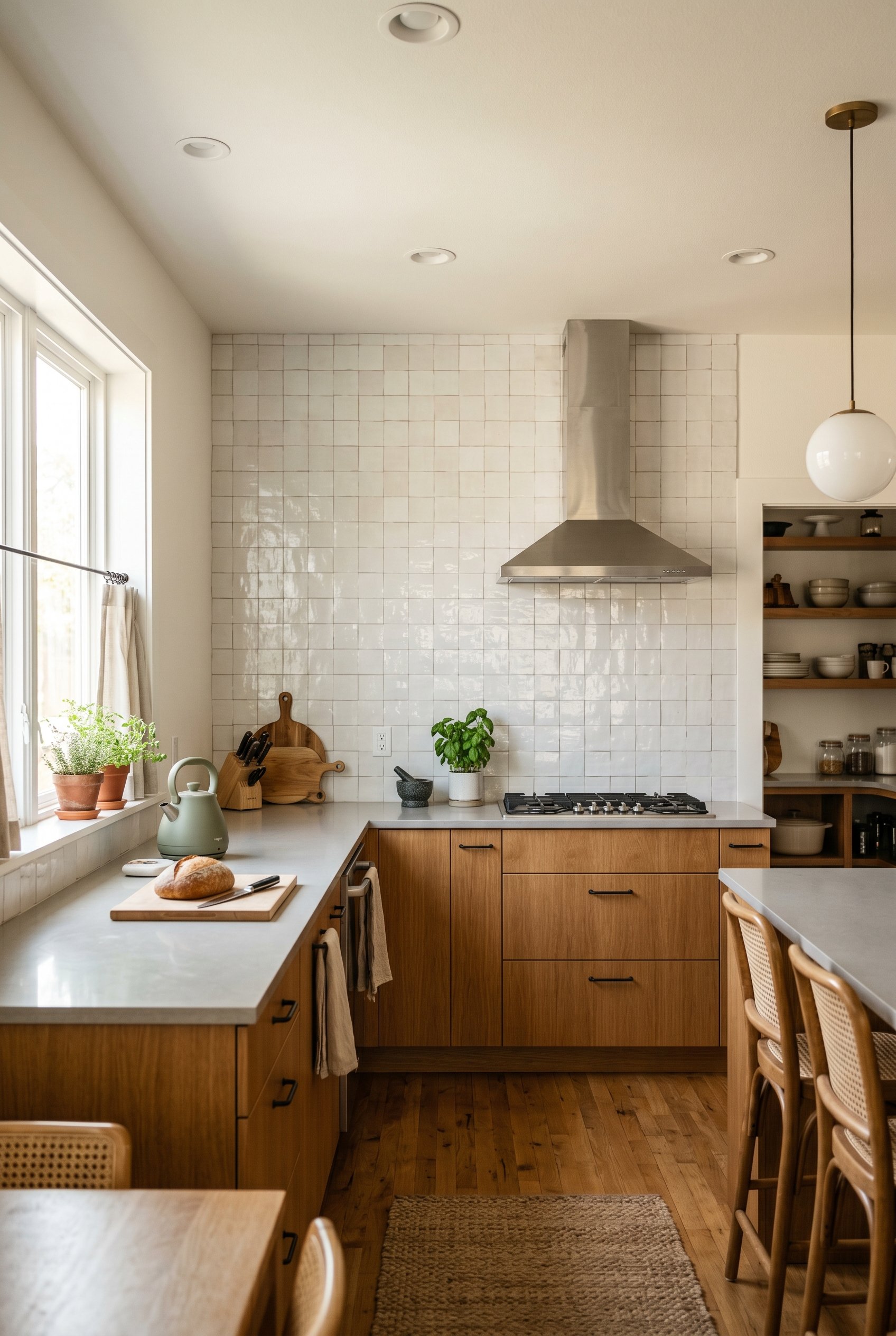
Handmade Moroccan zellige tiles are everywhere, but the secret to making them look modern is the installation. Stop ending the tile at the bottom of your upper cabinets. Taking glossy zellige from Clé Tile all the way to the ceiling feels entirely custom. Be prepared to seal the grout religiously if you put this behind a heavy-use stove.
3. Vertical Stacked Grid
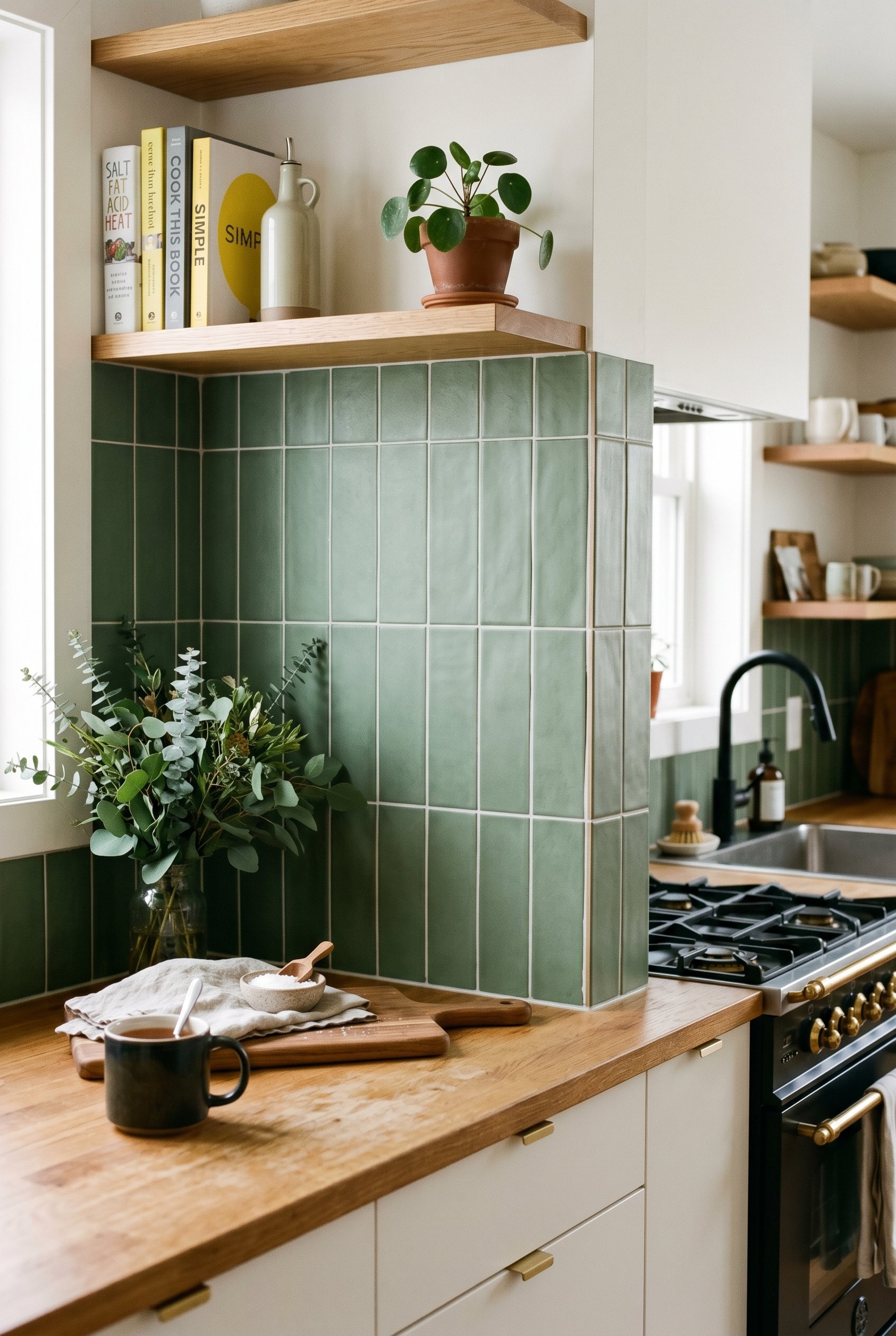
Turning rectangular tiles 90 degrees and stacking them in straight columns gives you instant architectural height. I love using matte ceramic tiles from Fireclay Tile for this. It feels ordered, intentional, and way more contemporary than a traditional brick lay.
4. Magnetic Stainless Steel Panels
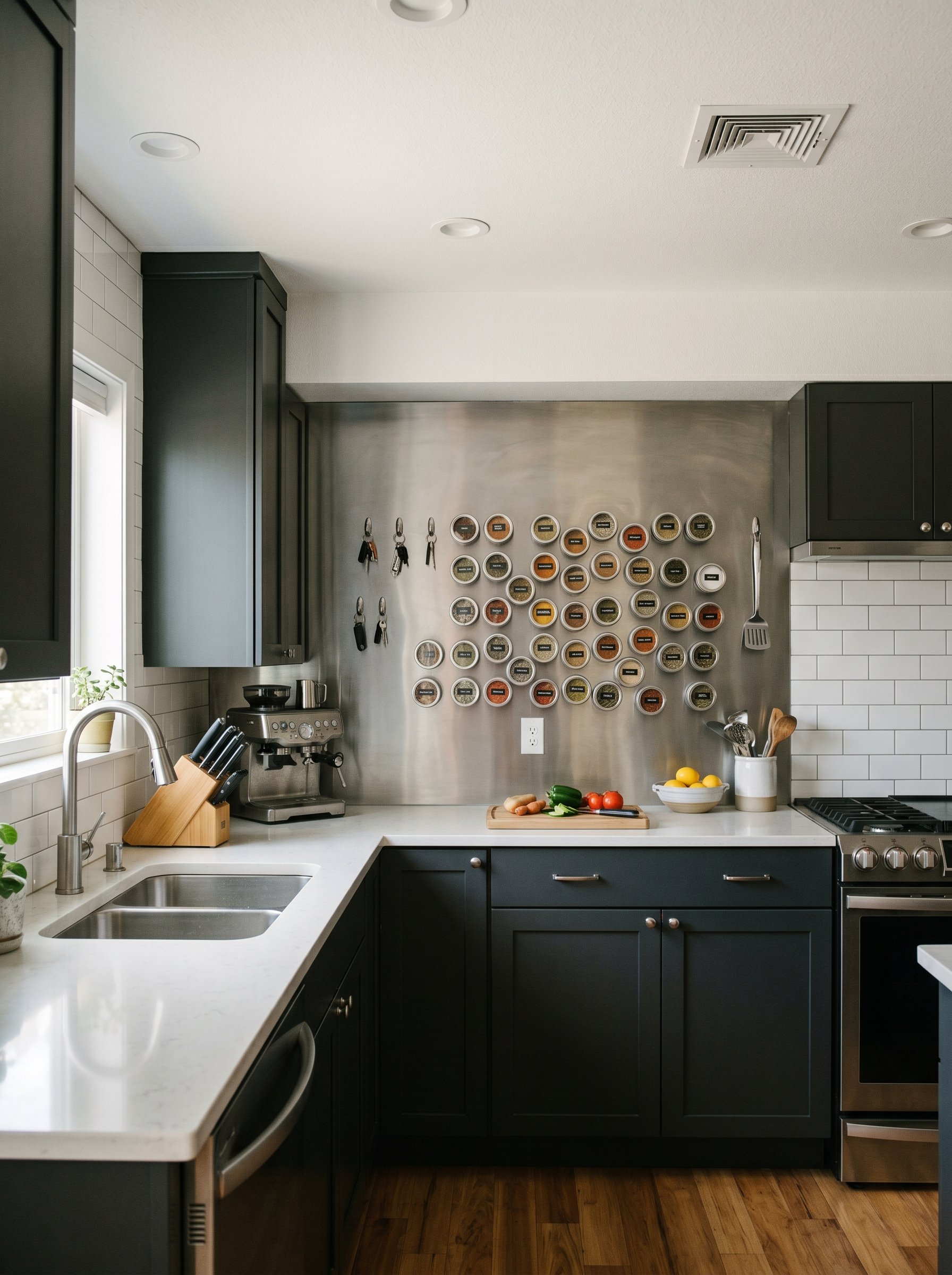
Instead of a dead zone, make the wall work for you. Integrated magnetic stainless steel panels are a massive functional upgrade. At roughly $80 to $120 per square foot, these heavy-duty panels allow you to magnetically attach spice tins, knife racks, and recipe holders directly to the backsplash. It gives off a highly efficient, commercial-kitchen vibe.
5. Smoked Glass
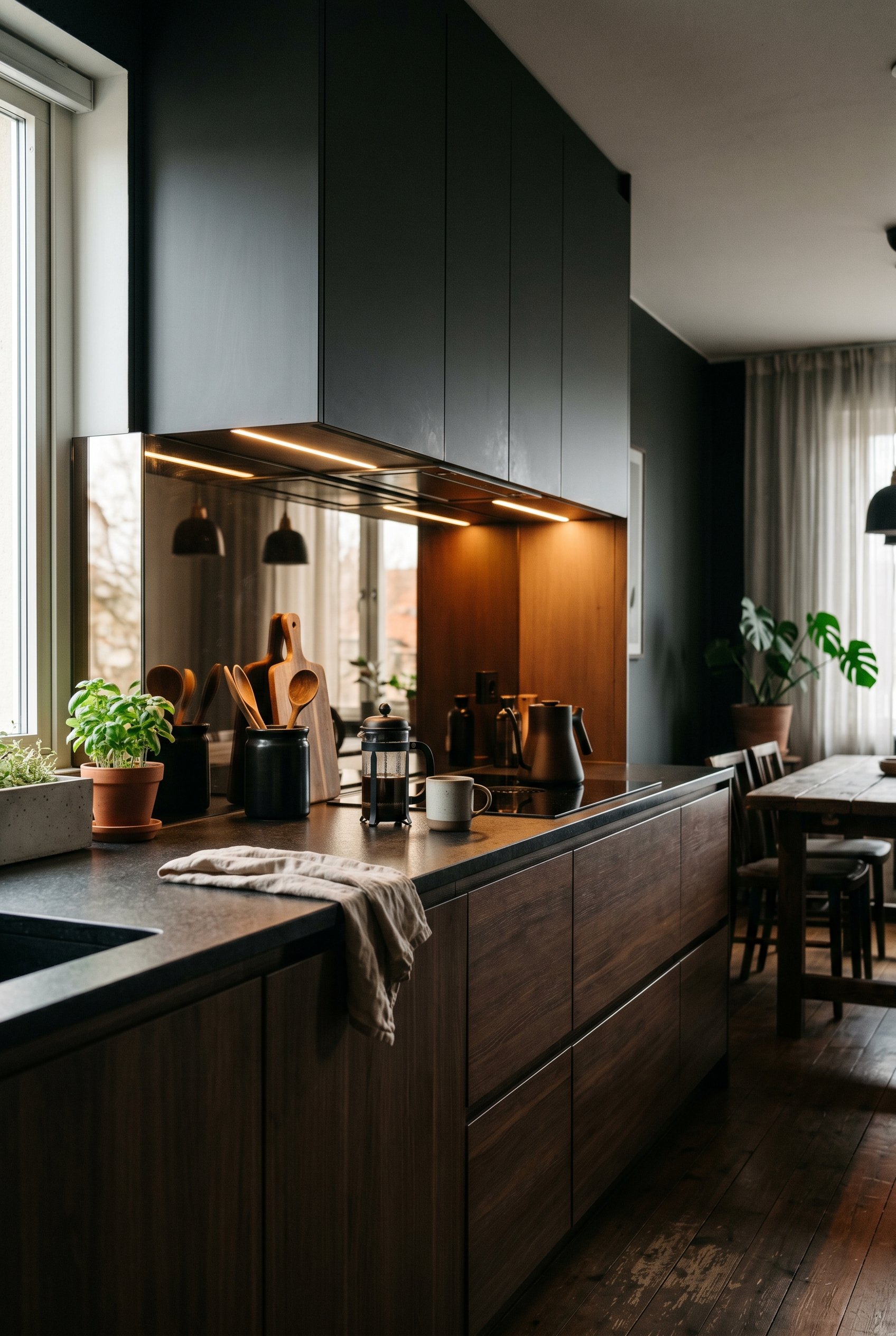
Smoked glass is giving a moody, 1970s aesthetic that feels incredibly fresh right now. It reflects light but keeps things dark and dramatic. The cleaning reality here is actually pretty great — Windex and a microfiber cloth will keep it looking flawless in under thirty seconds.
6. Recycled Glass Slabs
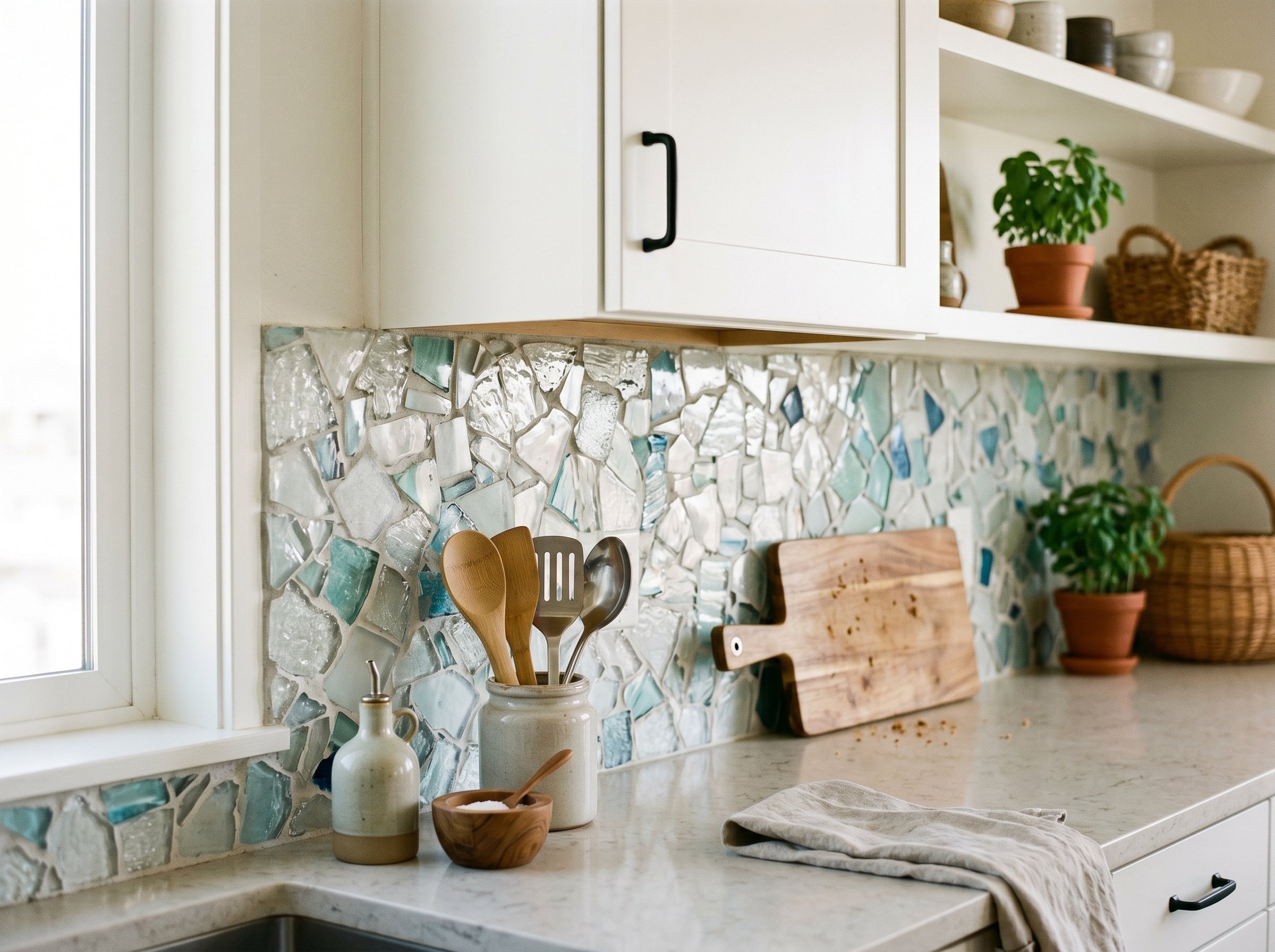
If you want an eco-friendly option that doesn't look like a craft project, sustainable recycled glass slabs are the answer. Brands like Vetrazzo bind glass bottles and jars into solid, non-porous slabs. Coming in around $100 per square foot, they are completely maintenance-free and don't require the annual sealing that natural stone does.
7. Fluted Marble Panels
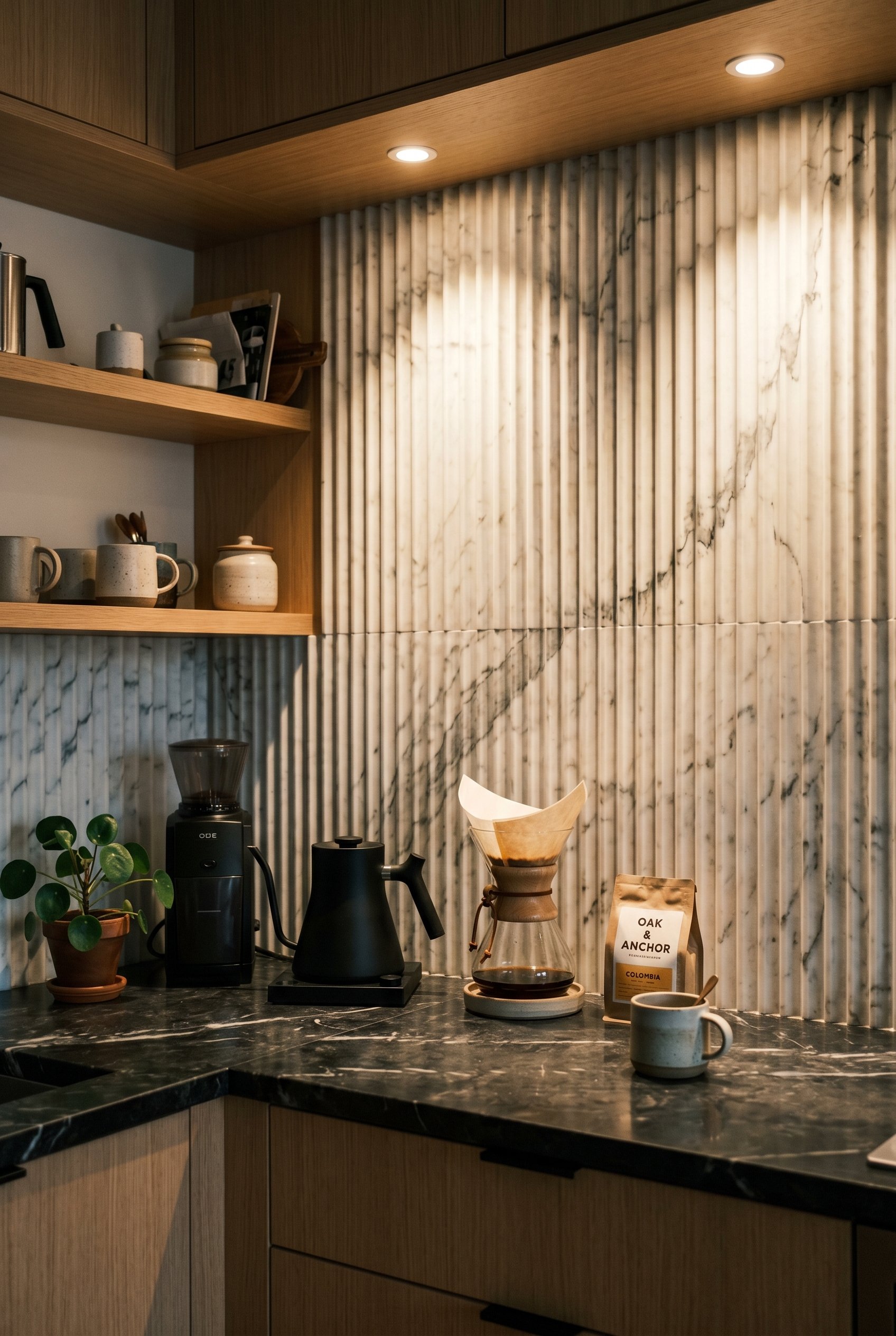
Fluted stone is visually stunning. It brings aggressive texture to an otherwise flat room. But let's talk about the cleaning reality. Installing deeply ridged stone behind a 6-burner gas range is a nightmare. Grease settles in those grooves immediately. Keep this material strictly for wet bars, coffee stations, or areas far away from aerosolized cooking oils.
8. Integrated Smart Rail Systems
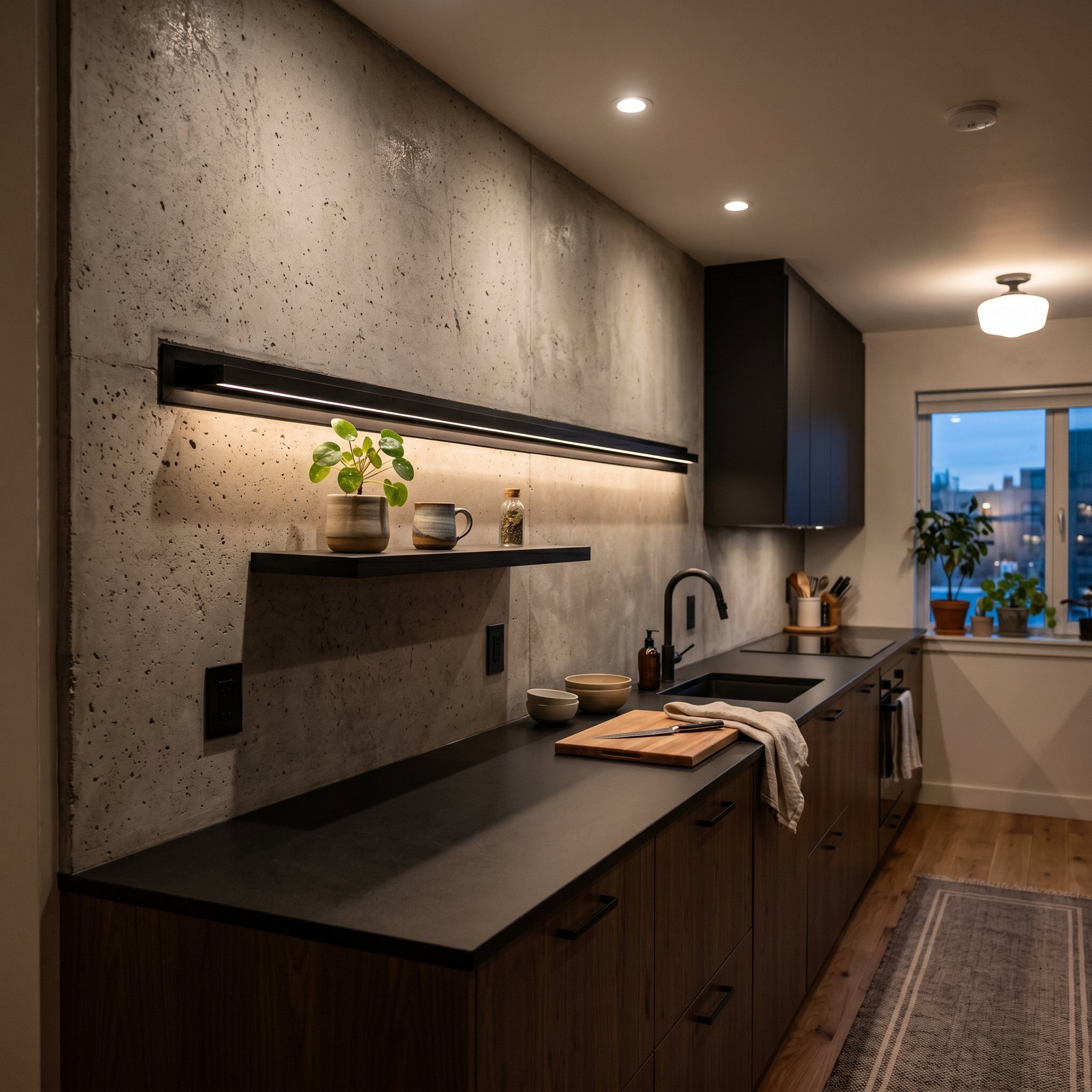
Smart tech is finally looking good in the kitchen. Modular track systems from brands like Häfele embed directly into your backsplash setup. You can snap LED lighting modules, digital screens, or floating shelves right into the electrified track. It keeps the counters completely clear while keeping your tools powered and accessible.
9. Seamless Microcement
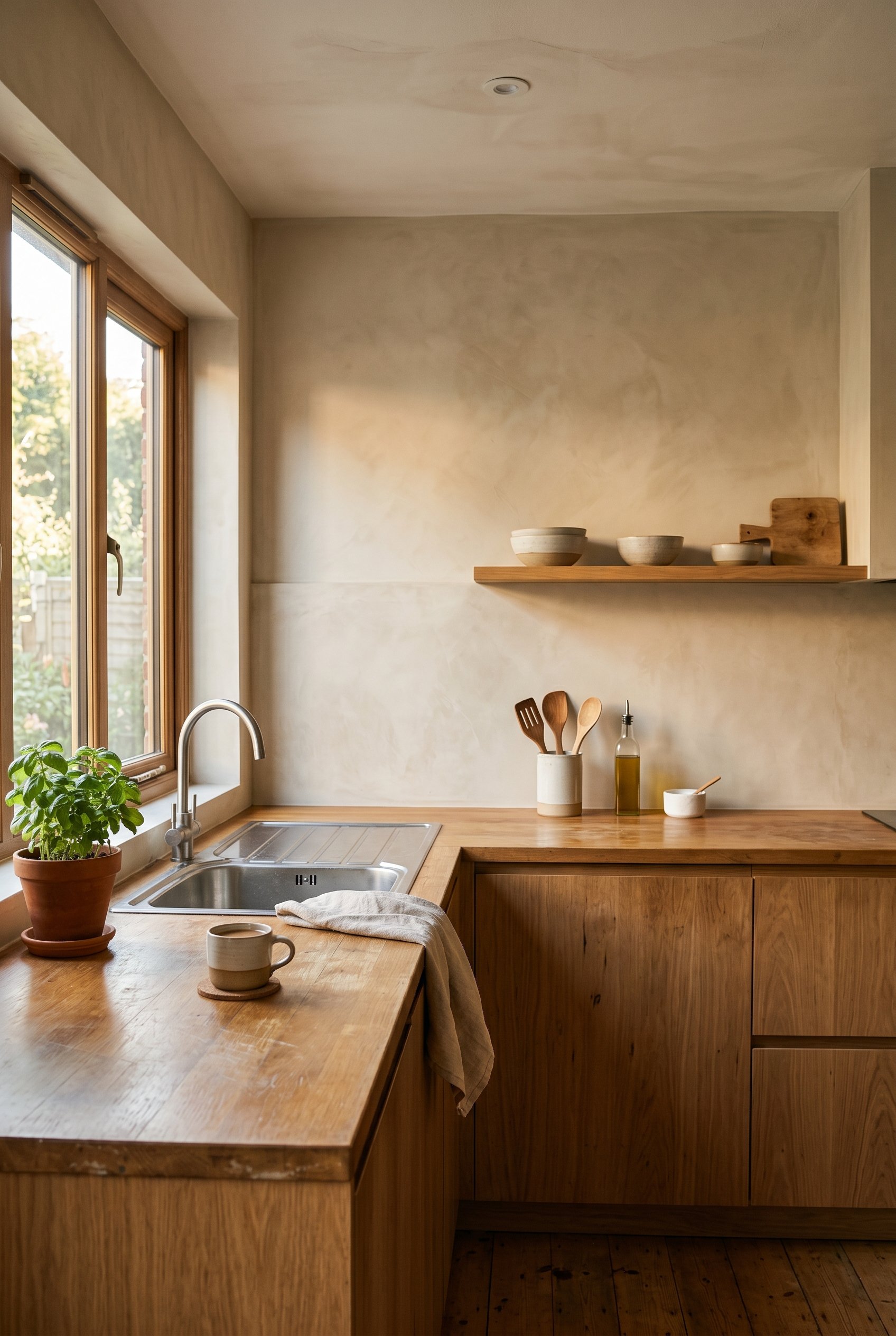
Microcement gives you the look of plaster but is engineered for wet, heavy-use spaces. It goes on completely seamless. I love this for minimalist, warm-modern kitchens where you want texture without busy grout lines. You absolutely need a professional to install and seal it, otherwise, oil splatters will ruin it on day one.
10. Horizontal Stacked Subway
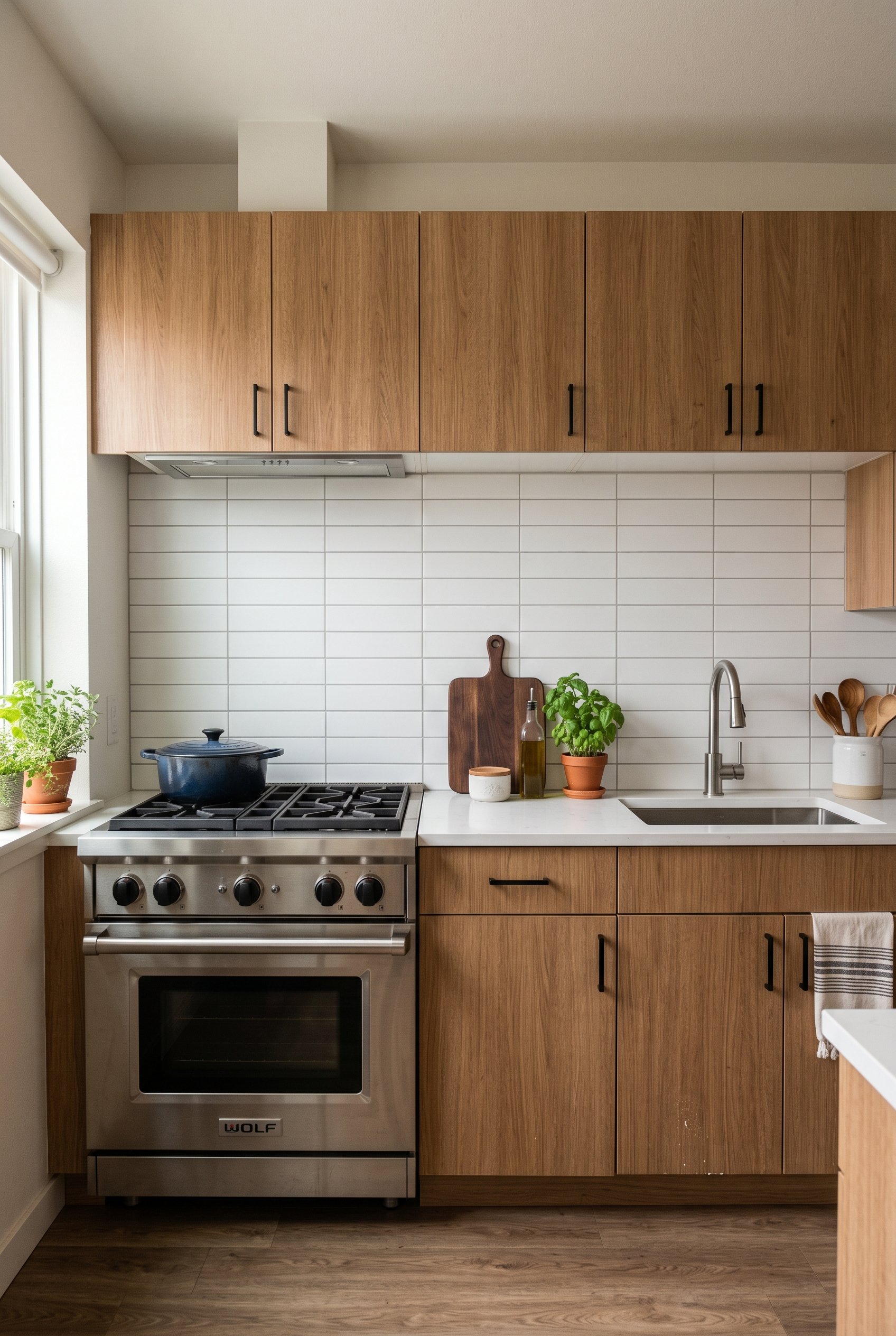
If you love subway tile but want it to look current, use the horizontal stacked grid layout. Bedrosians has great options for this. By aligning the grout lines perfectly straight rather than staggering them, a cheap, standard tile suddenly looks like a highly geometric, modern feature wall.
11. Antique Mirrored Glass
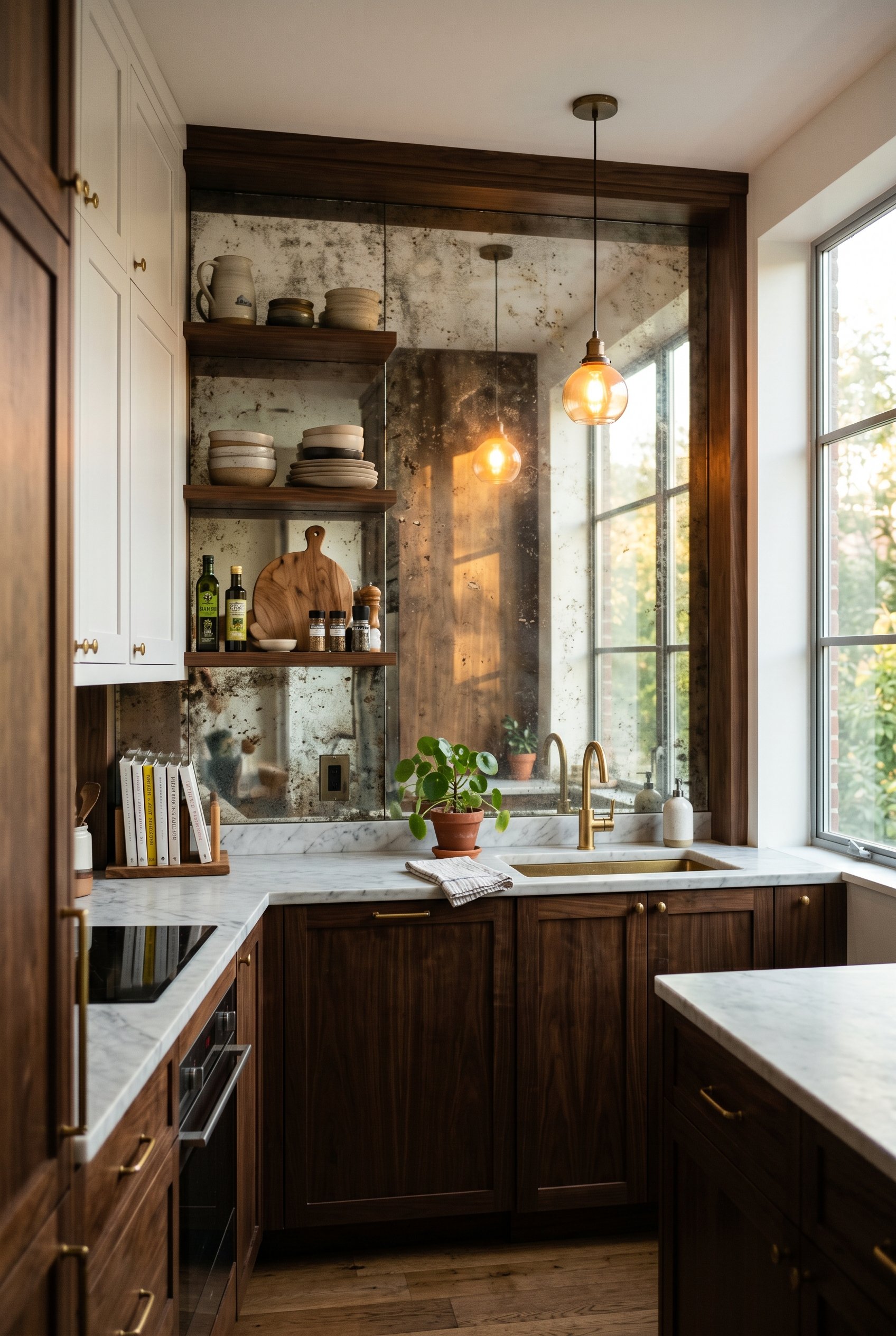
Mirrored backsplashes double the visual size of a small kitchen. Skip standard clear mirrors and go for heavily antiqued or oxidized mirror glass. It hides smudges significantly better than clear glass while still bouncing tons of natural light around the room.
12. Large Format Porcelain Slabs
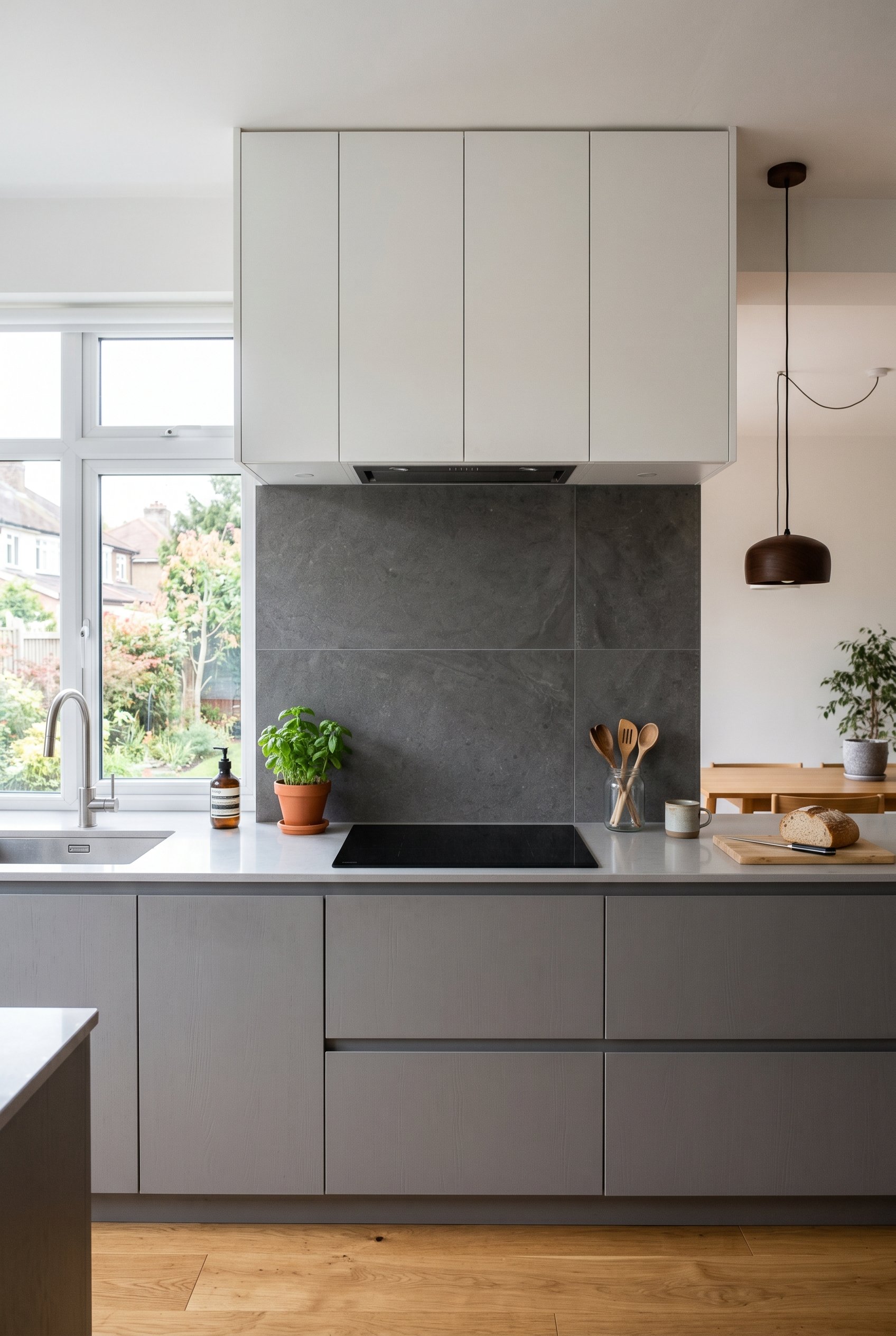
Want the continuous stone look without the anxiety of staining real marble? Large-format porcelain slabs are the exact answer. They mimic natural stone flawlessly but are completely impervious to acid and wine. Plus, the per-square-foot cost breakdown usually sits between $60 and $100 — less than half the cost of premium natural stone.
13. Raw Brass Sheeting
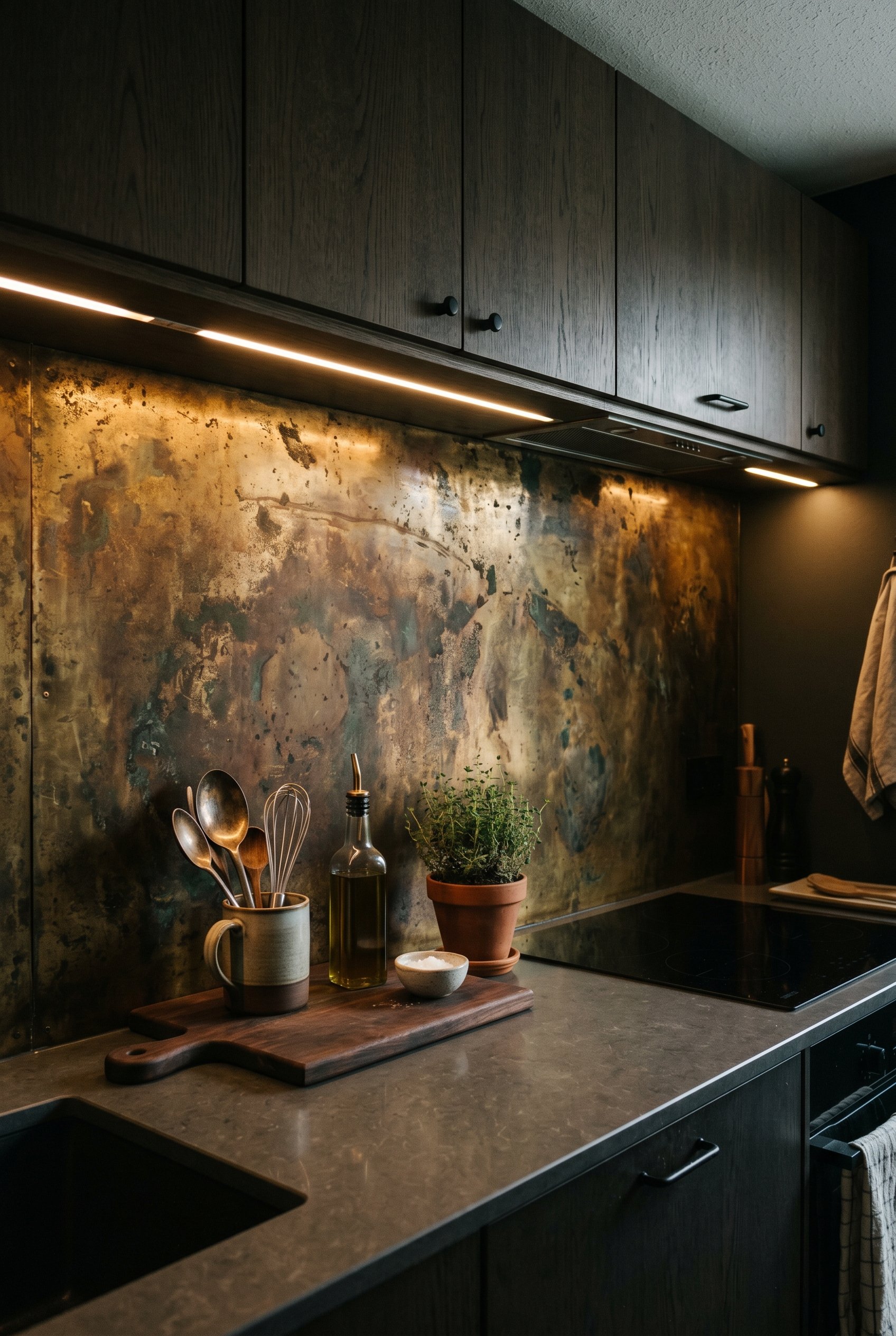
Using solid sheets of raw brass is a bold move. I love this for people who embrace imperfection. Raw brass is a living finish, meaning it will stain, oxidize, and develop a heavy patina wherever water and cooking oils hit it. Do not install this if you need your kitchen to look exactly the same in five years.
14. Chunky Oversized Terrazzo
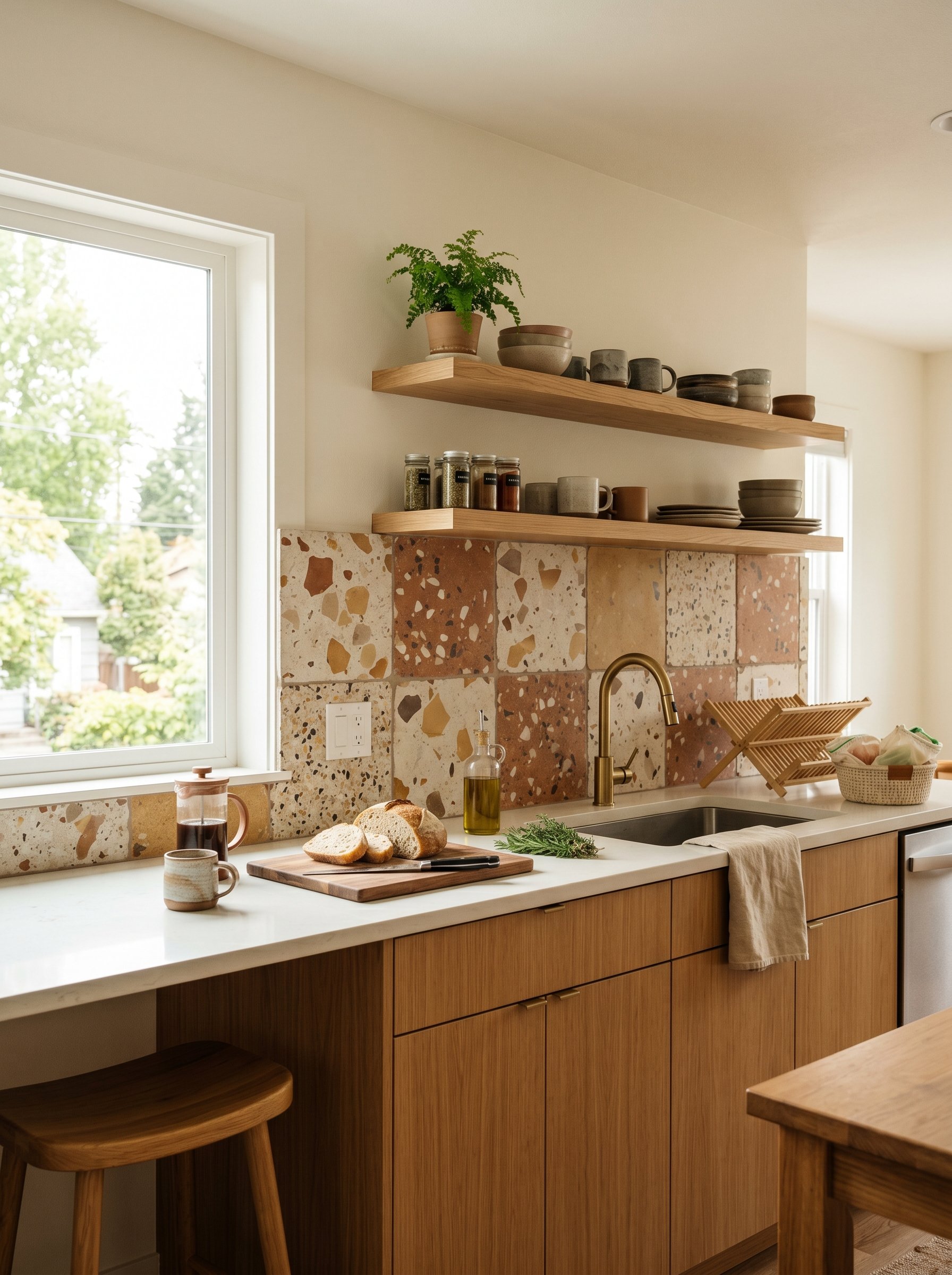
Terrazzo is an incredible eco-friendly option since it utilizes offcuts and chips of marble and quartz. Companies like Concrete Collaborative make gorgeous oversized terrazzo slabs and tiles. You get a highly custom, architectural look for about $30 to $50 per square foot.
15. Ceiling-Height Square Matte Tiles
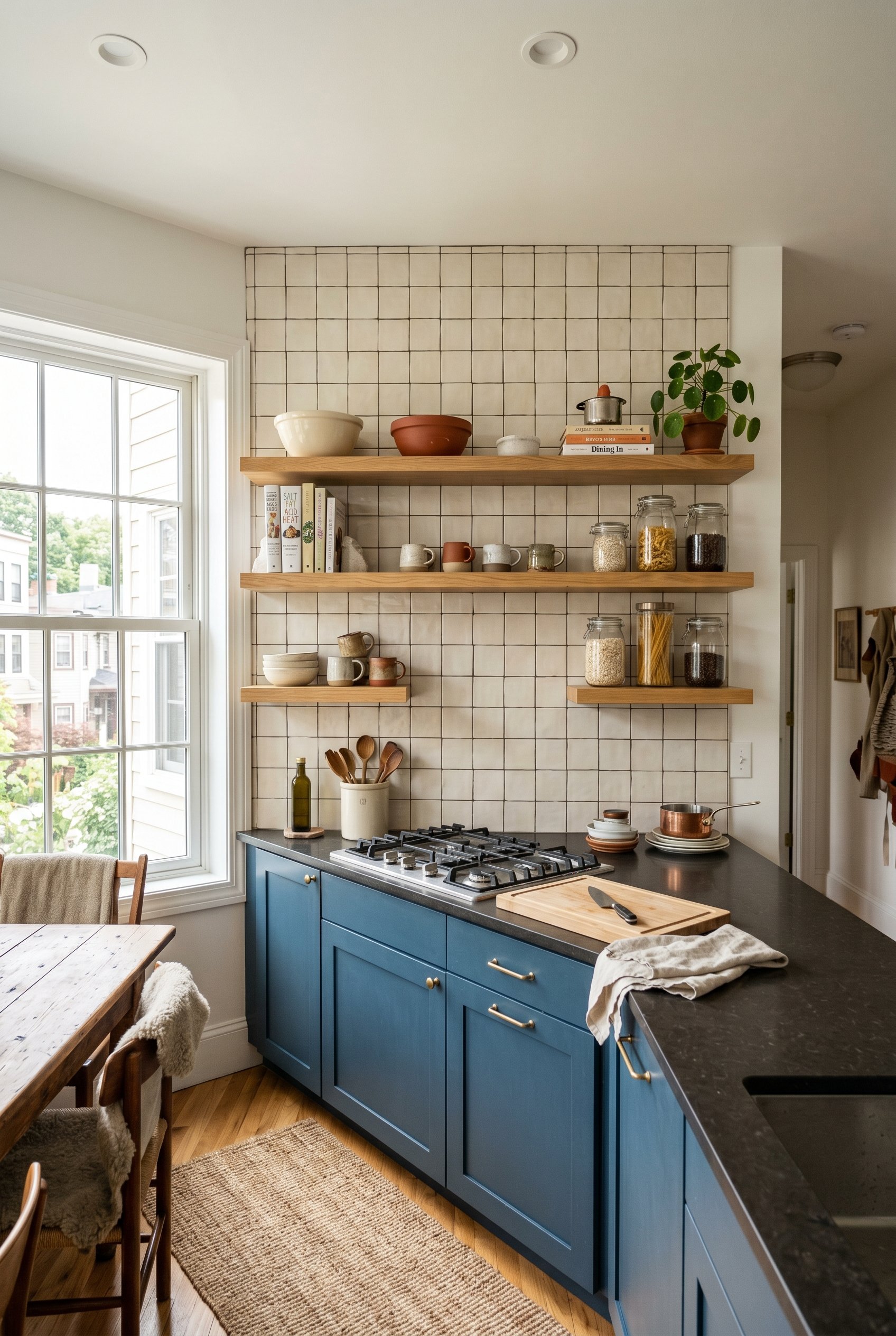
Basic 4×4 square tiles are back, but the finish and scale are completely different. Use a flat matte finish and run them from the counter straight up to the ceiling across the entire wall. It creates a subtle, mathematical grid that acts as a quiet backdrop for dramatic lighting fixtures.
16. Anti-Fingerprint Matte Black Panels
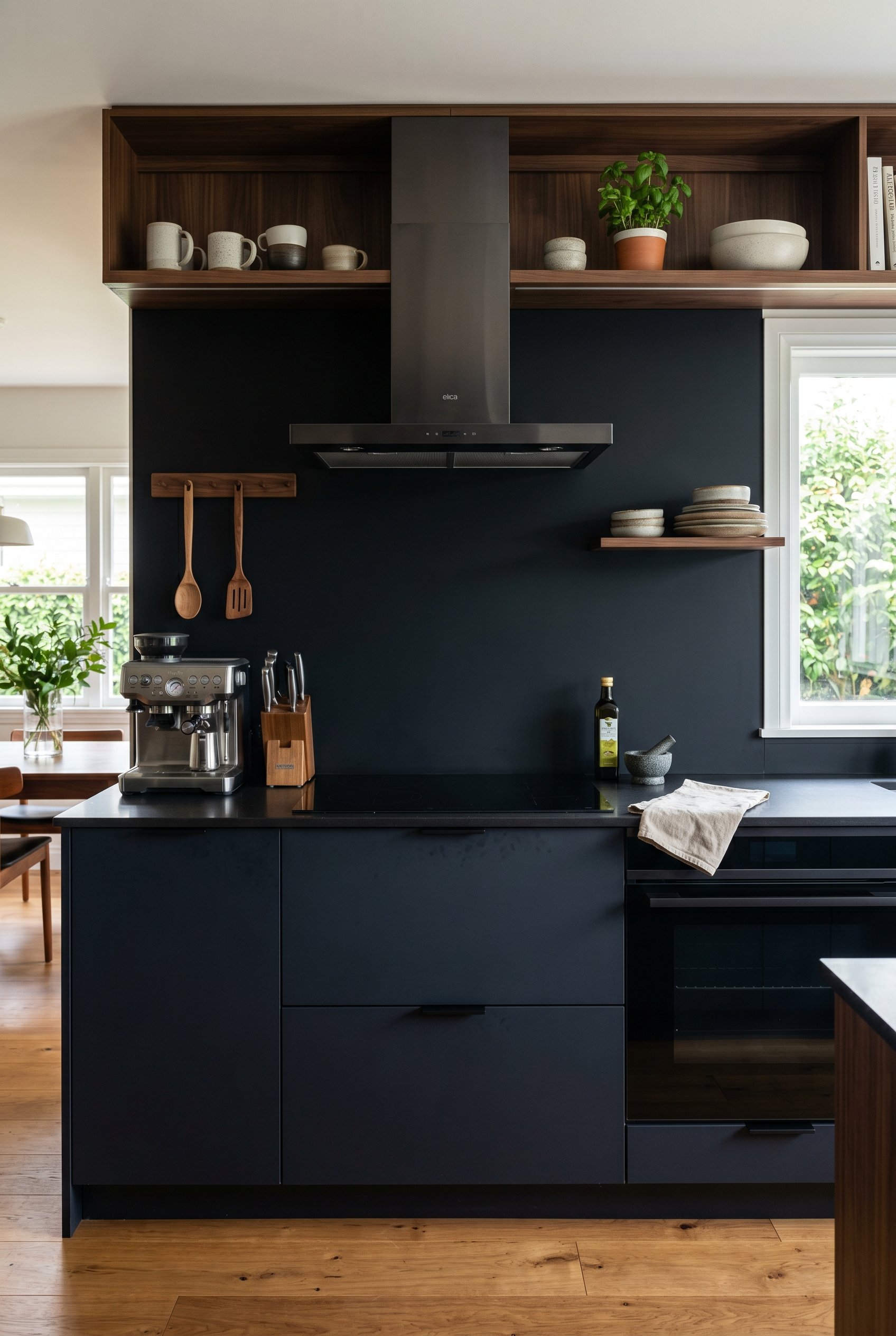
Sleek, dark kitchens are heavily trending, but matte black surfaces are notorious fingerprint magnets. If you want a black panelized backsplash, you have to use a smart material like FENIX. It's an opaque, ultra-matte material that uses nanotechnology to resist fingerprints and heal micro-scratches with heat.
17. Built-in Utensil Rails
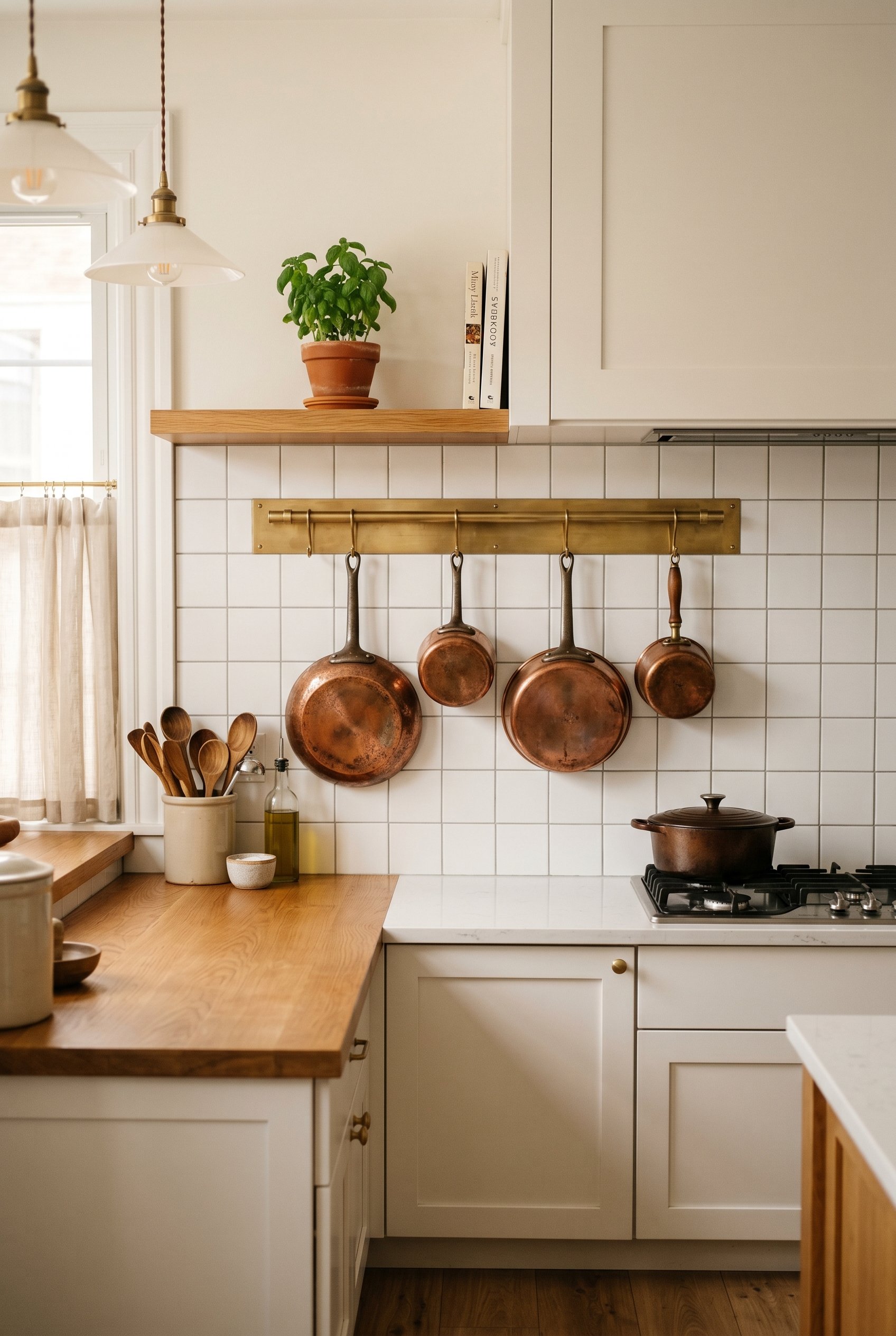
Similar to electrified tracks, analog brass or matte black rails integrated directly into the tile layout look incredibly intentional. Instead of drilling a rail into the tile after the fact, have your installer leave a channel so the rail sits flush with the backsplash. It’s perfect for hanging pots and utensils right where you prep.
18. Heavily Textured Rough Cut Stone
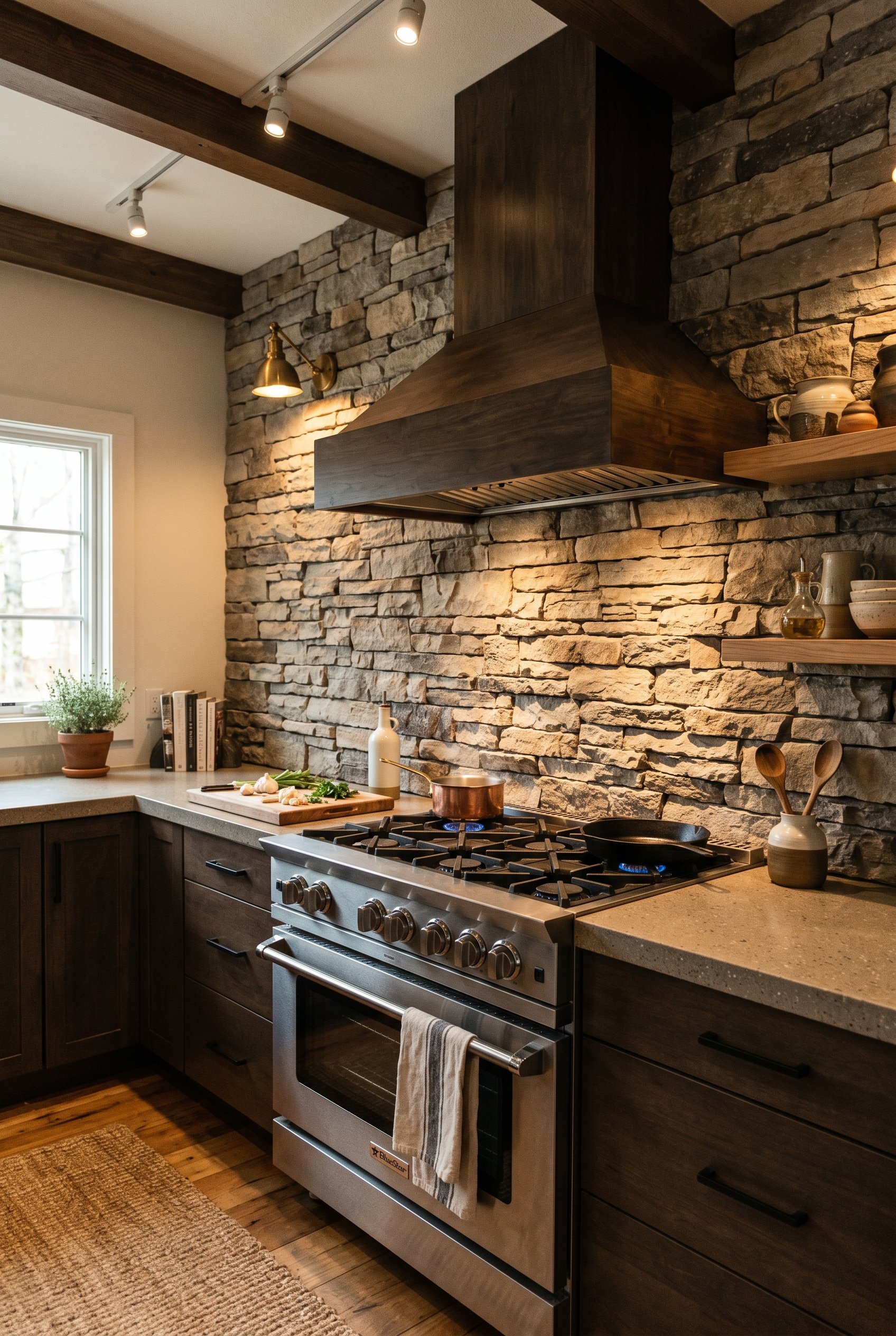
Stacked, split-face stone brings incredible warmth and earthiness to a sterile kitchen. Just know what you're signing up for. The maintenance reality here involves a scrub brush and heavy-duty degreaser. It traps dust and kitchen grime easily, so ensure your range hood is incredibly powerful if you go this route.
19. Sealed Cork Panels
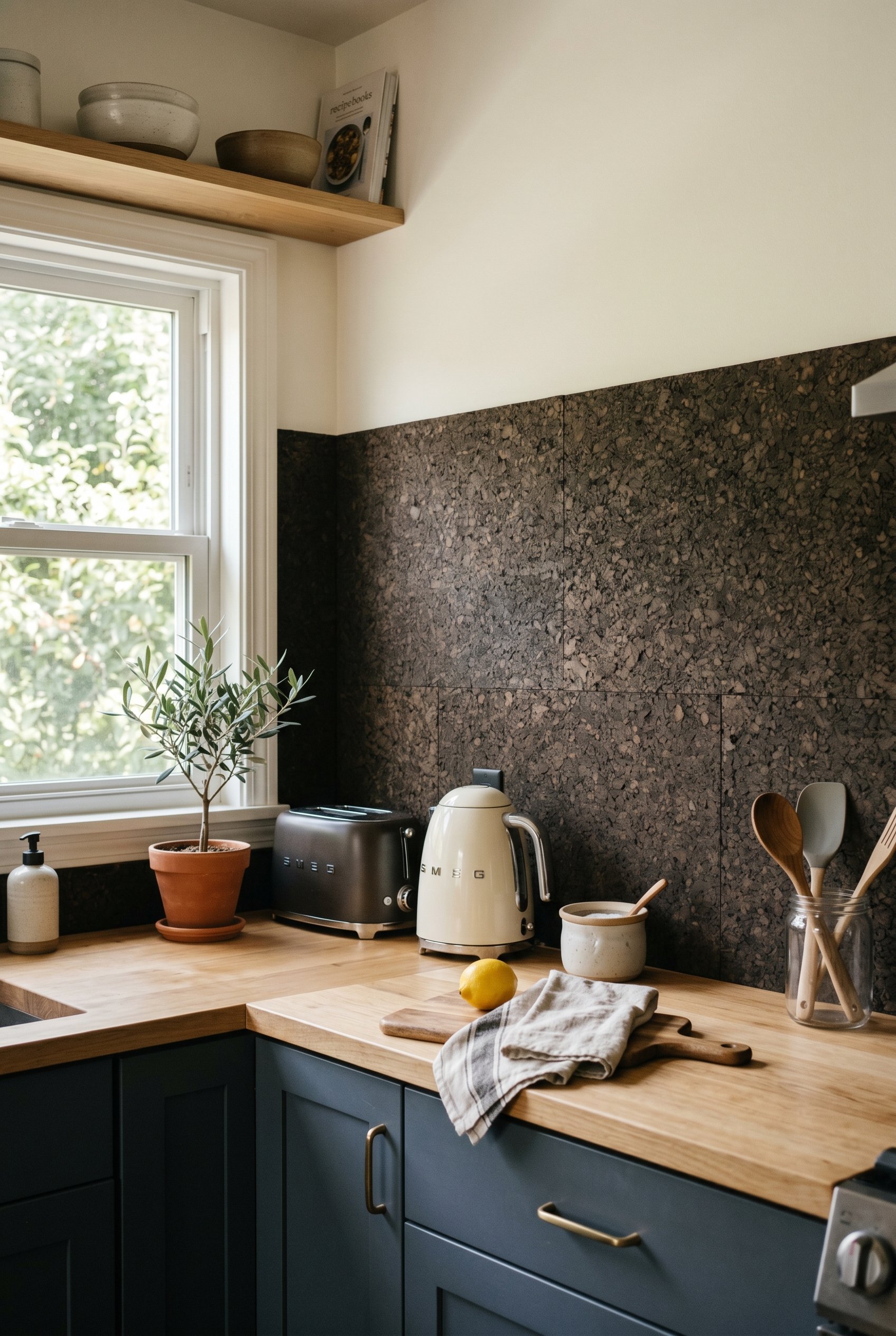
Cork is having a massive moment as a sustainable, carbon-negative material. Using high-density cork panels as a backsplash adds wild amounts of warmth and acoustic dampening to echoey kitchens. At around $20 a square foot, it's budget-friendly, but you must use a commercial-grade polyurethane topcoat to make it wipeable.
I will forever be loyal to a continuous porcelain or stone slab because I despise scrubbing grout lines on a Sunday morning. But if you are going the tile route, taking it all the way to the ceiling is the only way to make it look truly finished.
FAQ
How much does a slab backsplash cost? Depending on the material, a full slab backsplash typically costs between $60 and $120 per square foot for porcelain, and $150 to $300+ per square foot for natural stone like marble or quartzite, including professional fabrication and installation.
Are textured backsplashes hard to clean? Yes. Deep grooves in fluted stone or split-face tiles trap aerosolized grease and dust easily. They require scrubbing with a bristle brush rather than a simple wipe-down, making them high-maintenance choices for the area directly behind a stove.
Where should a kitchen backsplash stop? In a modern kitchen, the backsplash should either stop at the bottom of the upper cabinets or, if you have open shelving or bare walls, continue all the way to the ceiling. Stopping awkwardly halfway up a bare wall looks unfinished.
Do I need a backsplash behind the fridge? No. Backsplashes are only necessary where water or grease splashes against the wall, which means behind the sink, the prep counters, and the stove.
Can I install a zellige tile backsplash myself? You can, but you probably shouldn't. Zellige tiles are handmade, meaning they have irregular edges, varying thicknesses, and are meant to be installed without spacers. It requires an advanced skill level to make it look intentional rather than just messy.