13 Styling A Sunroom With Plants And Real Furniture
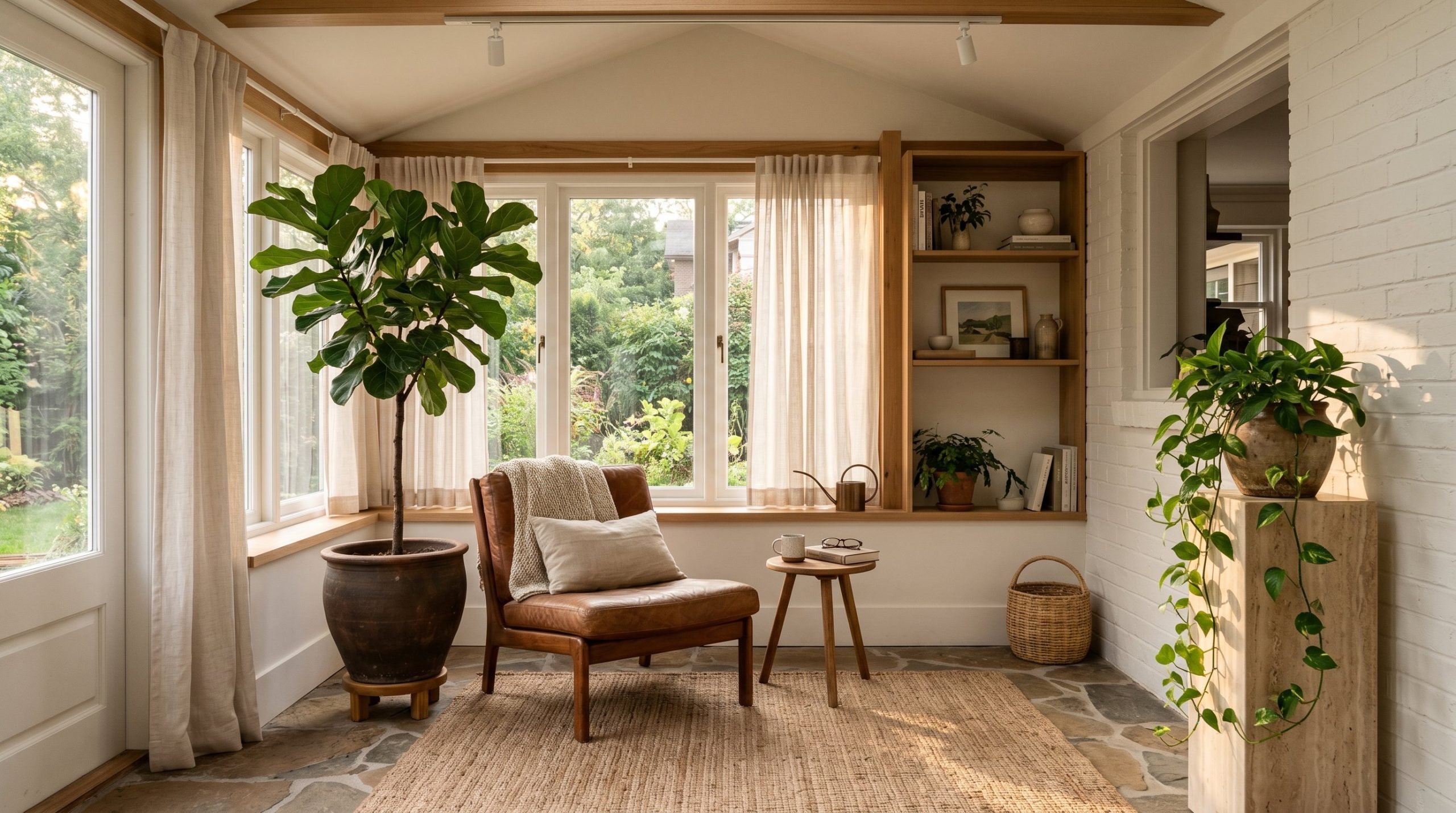
Here’s everything about Sunroom Home Decor With Plants!
A room stuffed with plants isn't automatically well-designed. I see so many sunrooms that look like chaotic garden centers—plastic nursery pots leaking onto the floor, tangled extension cords for ugly purple grow lights, and random patio chairs shoved in a corner. We need to actually style these rooms. Let's talk about pairing giant Ficus trees with actual lounge furniture, managing the humidity mess, and fixing the lighting without ruining the aesthetic.
1. South-Facing Sun and Low-Slung Seating
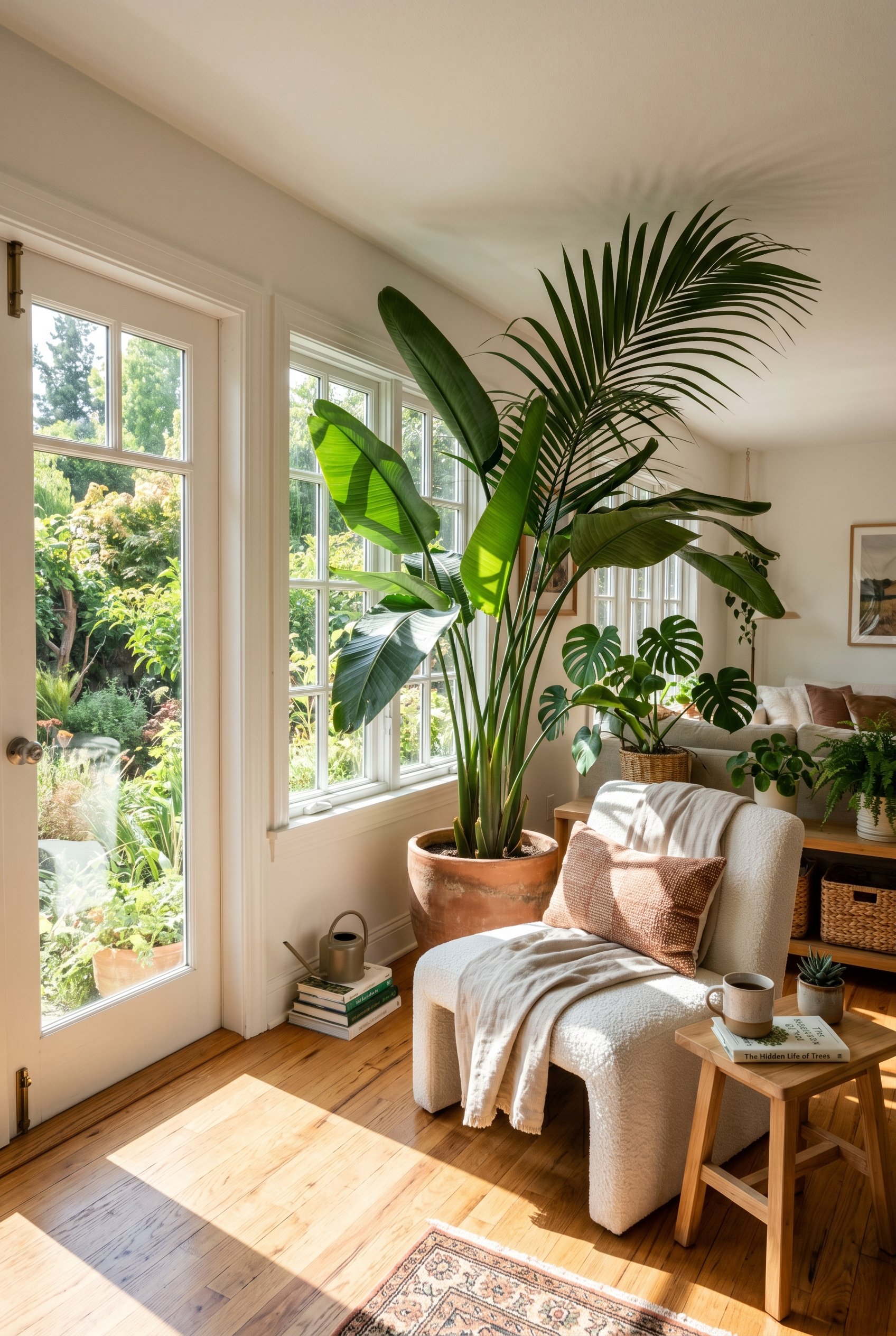
If you have a south-facing room, you have the holy grail of sunlight mapping. You can keep massive, light-hungry plants alive in here, like a towering Bird of Paradise or an olive tree. But don't just shove them against the glass. I pair these huge statement plants with low-slung, chunky seating—think a low-profile boucle sofa from CB2 or a vintage Togo chair. The height contrast makes the ceiling look way taller.
2. Grow Lights That Aren’t Hideous
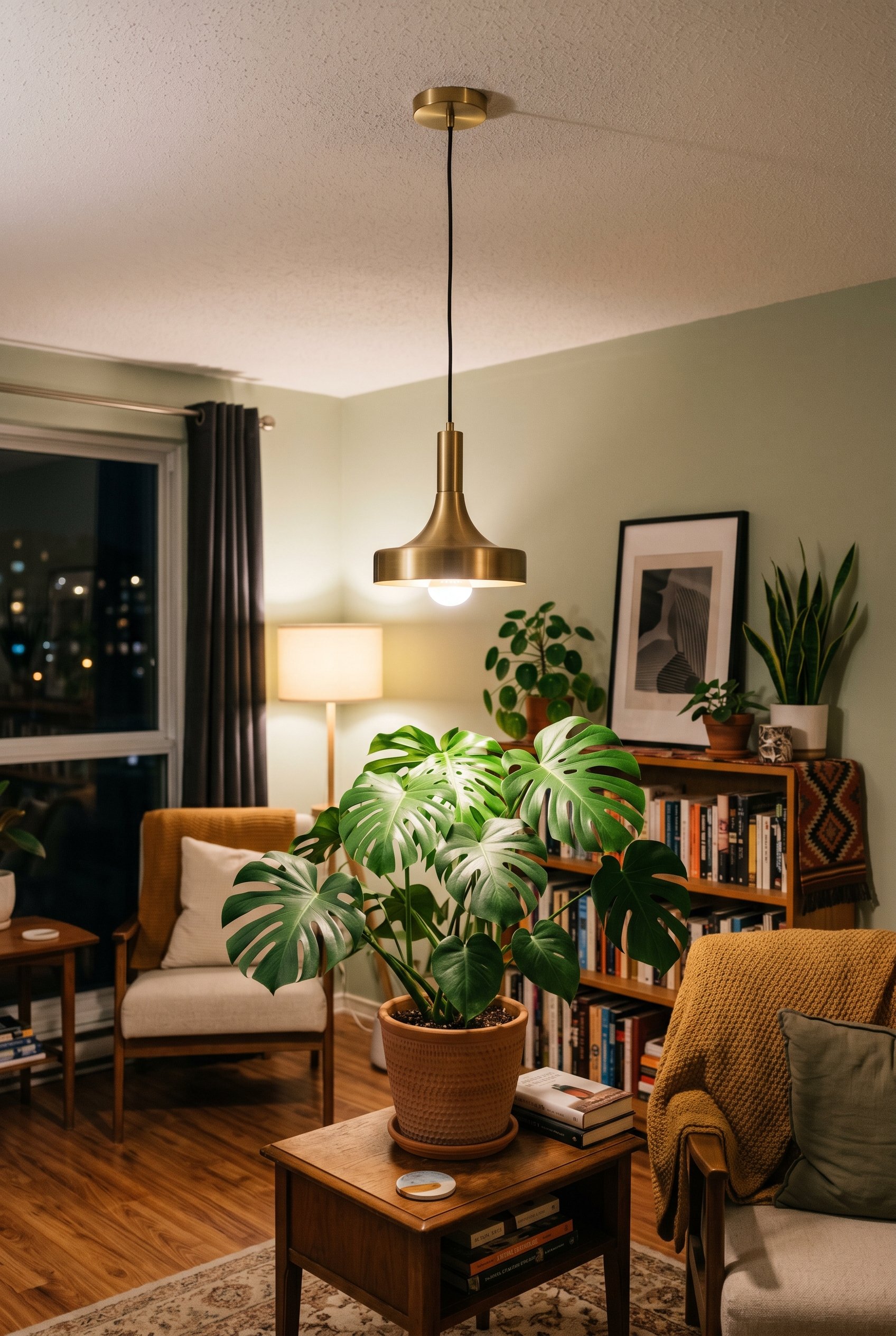
Winter climate management usually means bringing out the grow lights. Those clamp-on purple LED monstrosities completely ruin a room's aesthetic. Swap them for sleek, smart home lighting. Soltech makes solid brass halo lights that hang like expensive pendant fixtures but output the exact spectrum your Monsteras need. Hook them up to a hidden smart plug, and your winter lighting setup suddenly looks like high-end architectural lighting.
3. Travertine Plinths Instead of Flimsy Stands
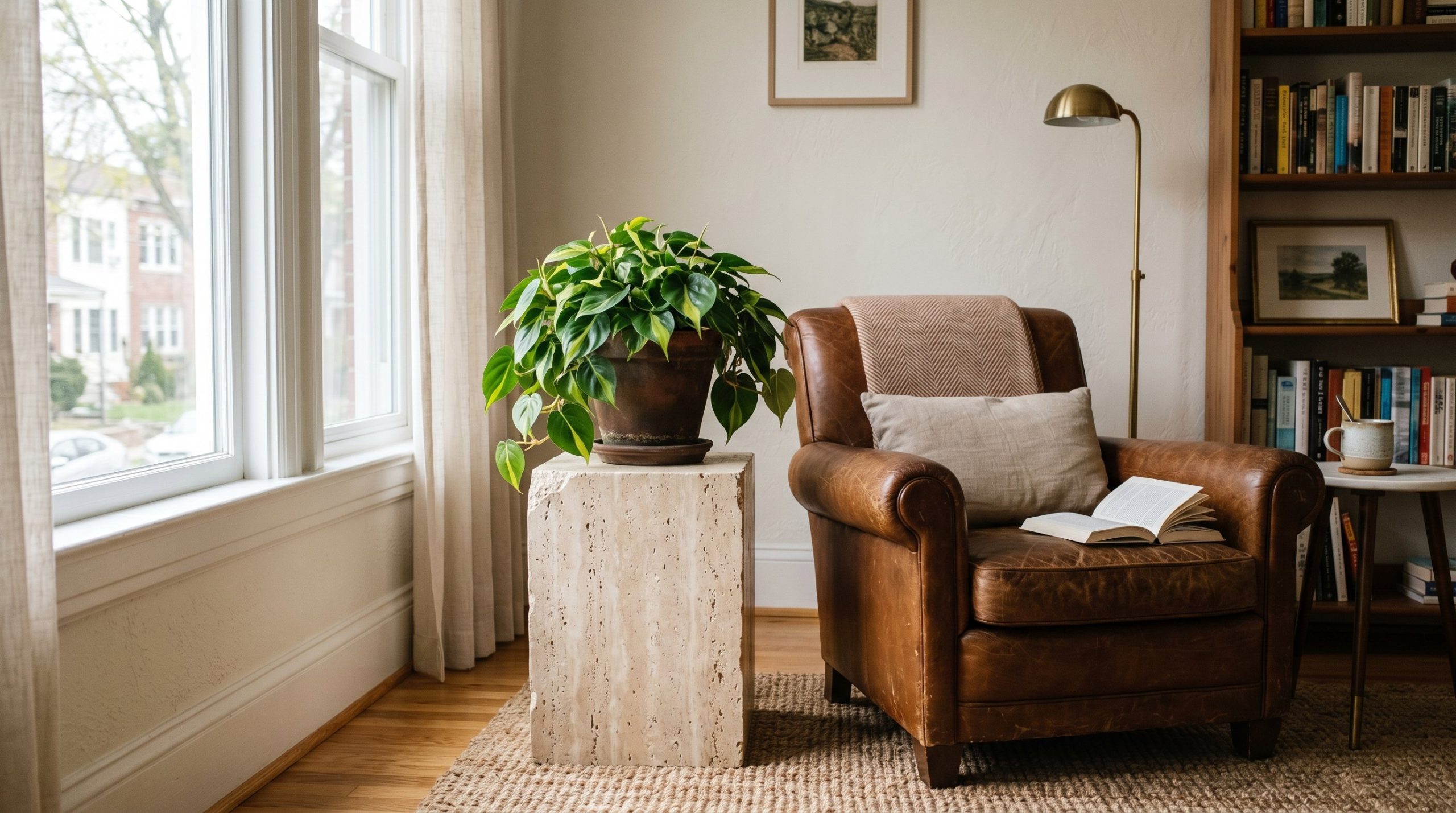
I absolutely despise those rickety wire plant stands. They look cheap and they tip over easily. For vertical styling, swap them out for solid stone plinths. A heavy travertine or marble pedestal elevates a simple terracotta pot into a literal sculpture. It grounds the room. I hunt for vintage stone pedestals at estate sales and use them to boost up bushy Philodendrons right next to a reading chair.
4. The Humidity Station Sideboard
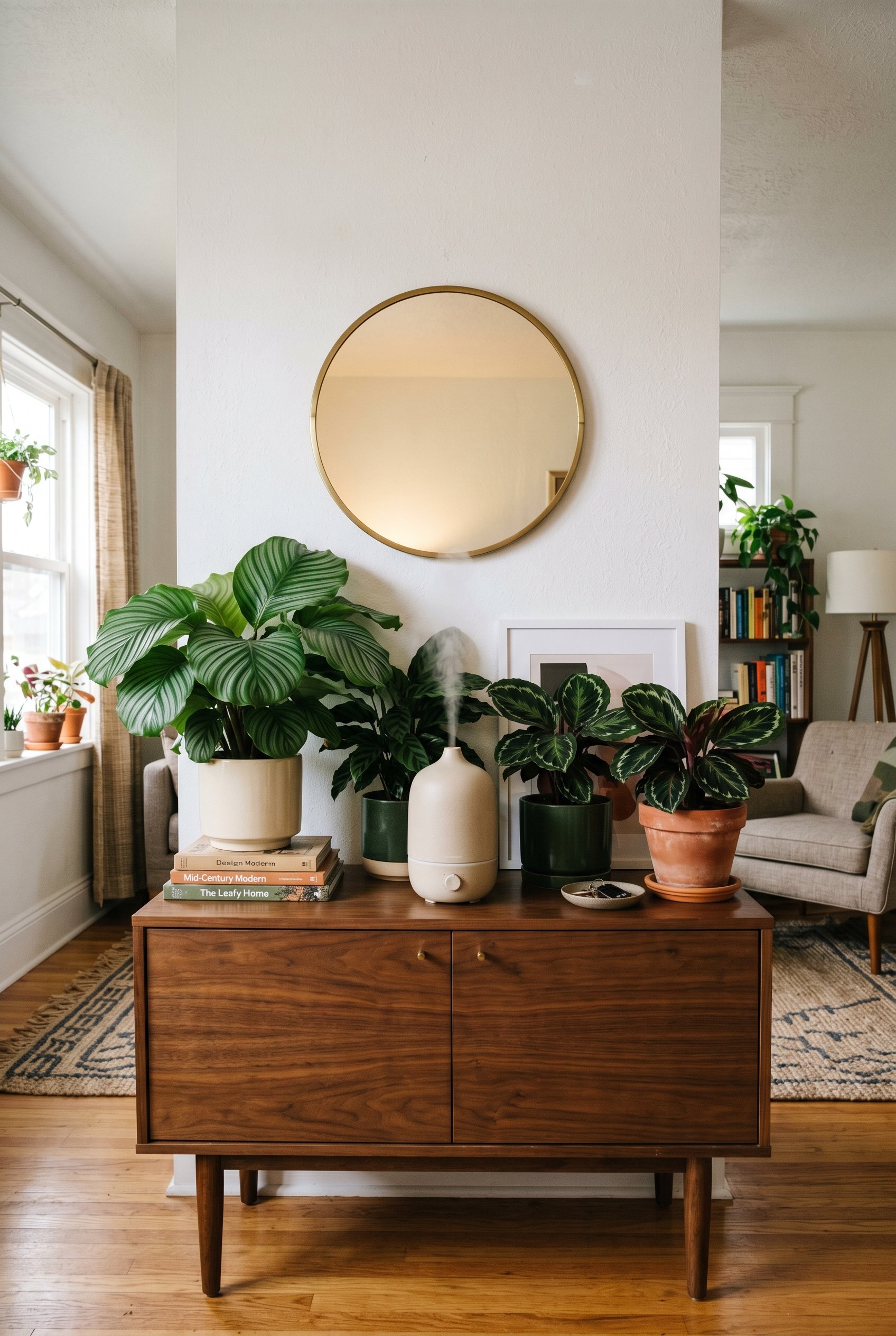
Calatheas and ferns demand high humidity, but running a plastic drugstore humidifier on the floor looks awful. Treat your climate control like decor. I use a long mid-century walnut sideboard as a dedicated humidity station. Put a matte ceramic Vitruvi humidifier right in the center, and group your moisture-loving plants around it. The mist cascading over the walnut wood and green leaves looks moody and intentional.
5. Pest Control on Display
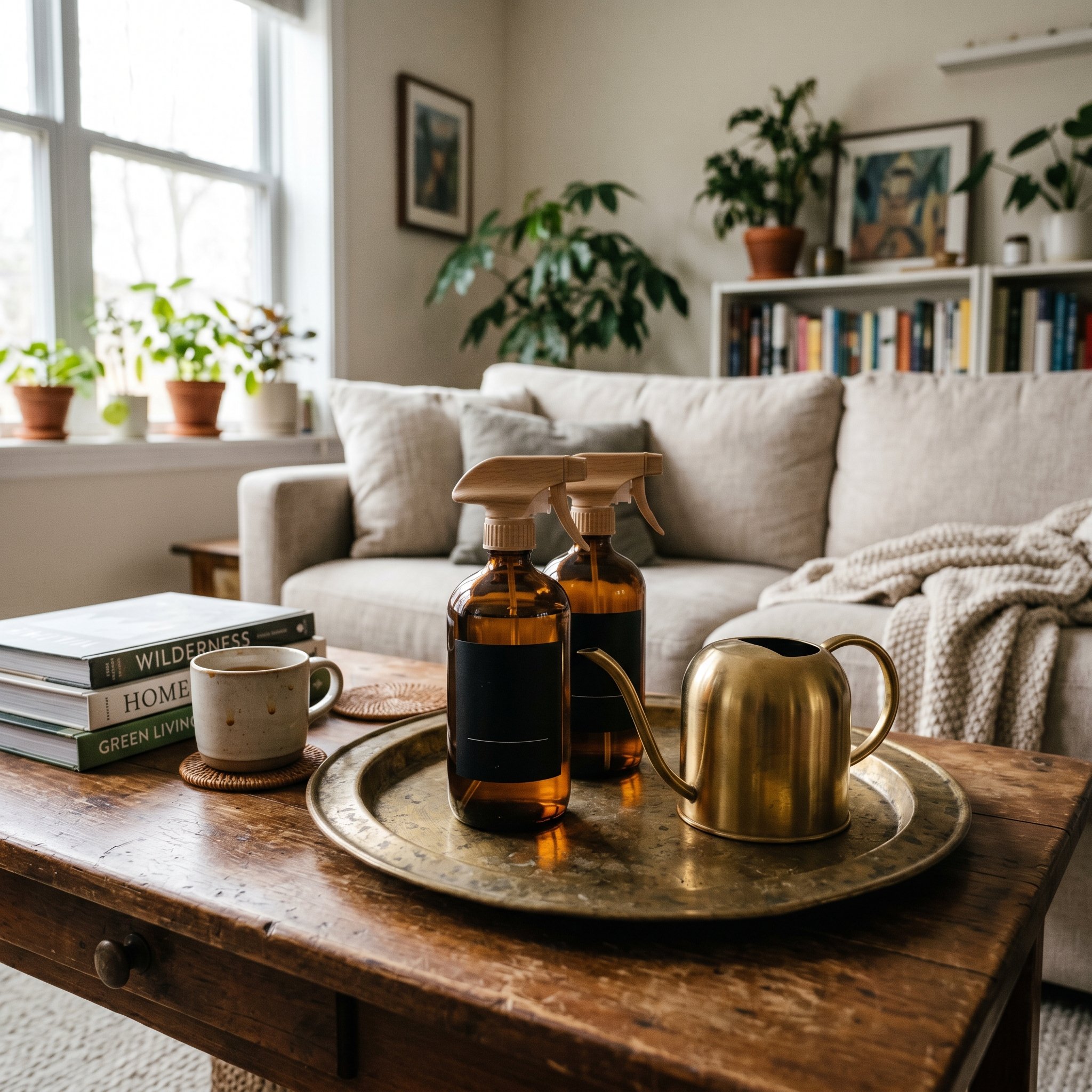
Pest management is the ugliest hurdle in indoor gardening. You always need neem oil or insecticidal soap nearby, but the plastic spray bottles are an eyesore. Decant your treatments into amber or matte black glass spray bottles with minimal labels. Group them on a heavy brass or marble tray alongside your watering can. Now your bug spray looks like high-end apothecary skincare on a vanity.
6. Drainage That Doesn’t Ruin Your Rug
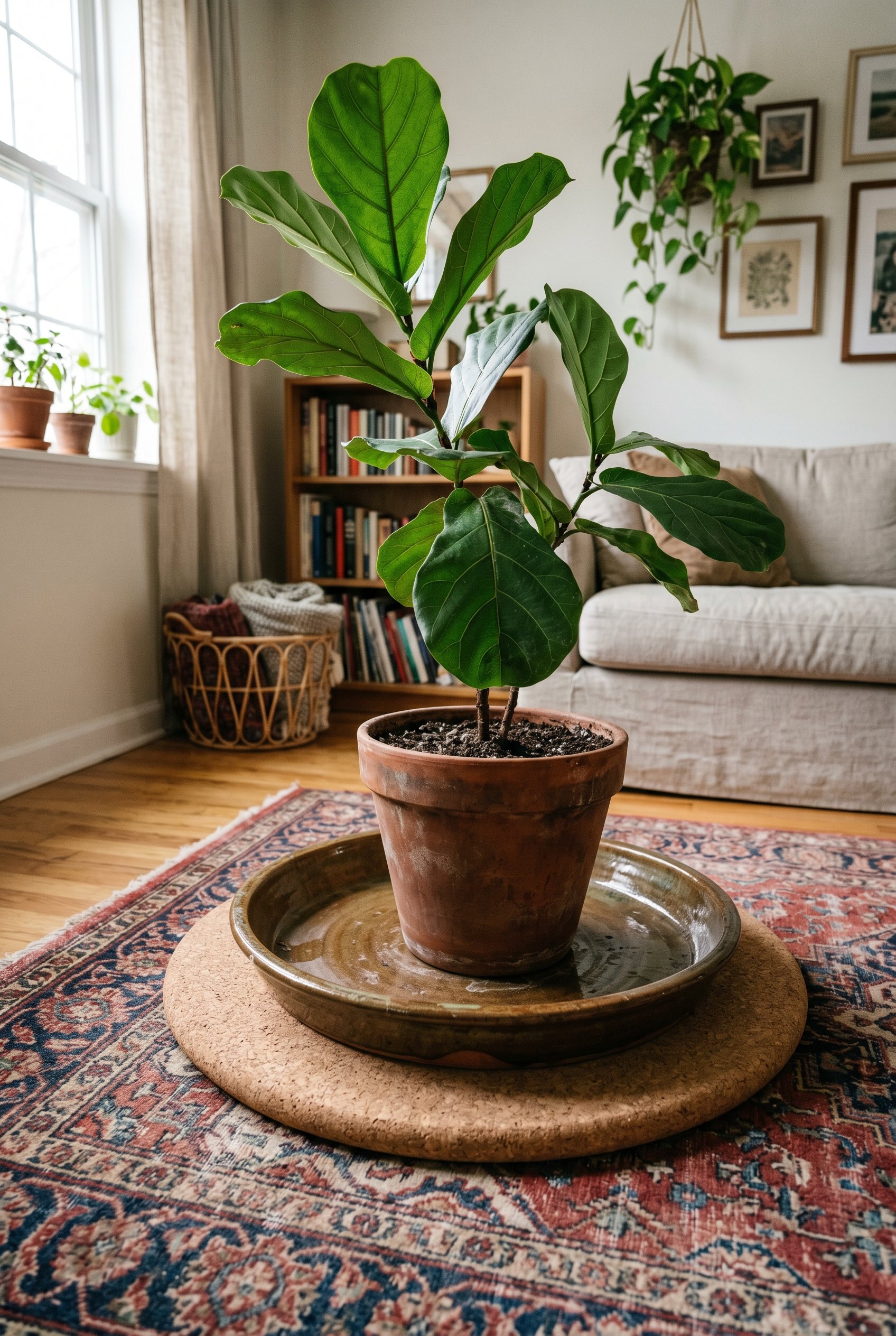
Proper soil drainage is non-negotiable for plant survival, but water rings on hardwood floors or vintage Persian rugs are a disaster. Stop relying on those flimsy clear plastic drip trays. Buy oversized, glazed terracotta saucers that are intentionally two inches wider than your pots. Put a thick cork mat under the saucer. It creates a defined, chunky base for the planter and completely protects your textiles.
7. West-Facing Windows and Linen Curtains
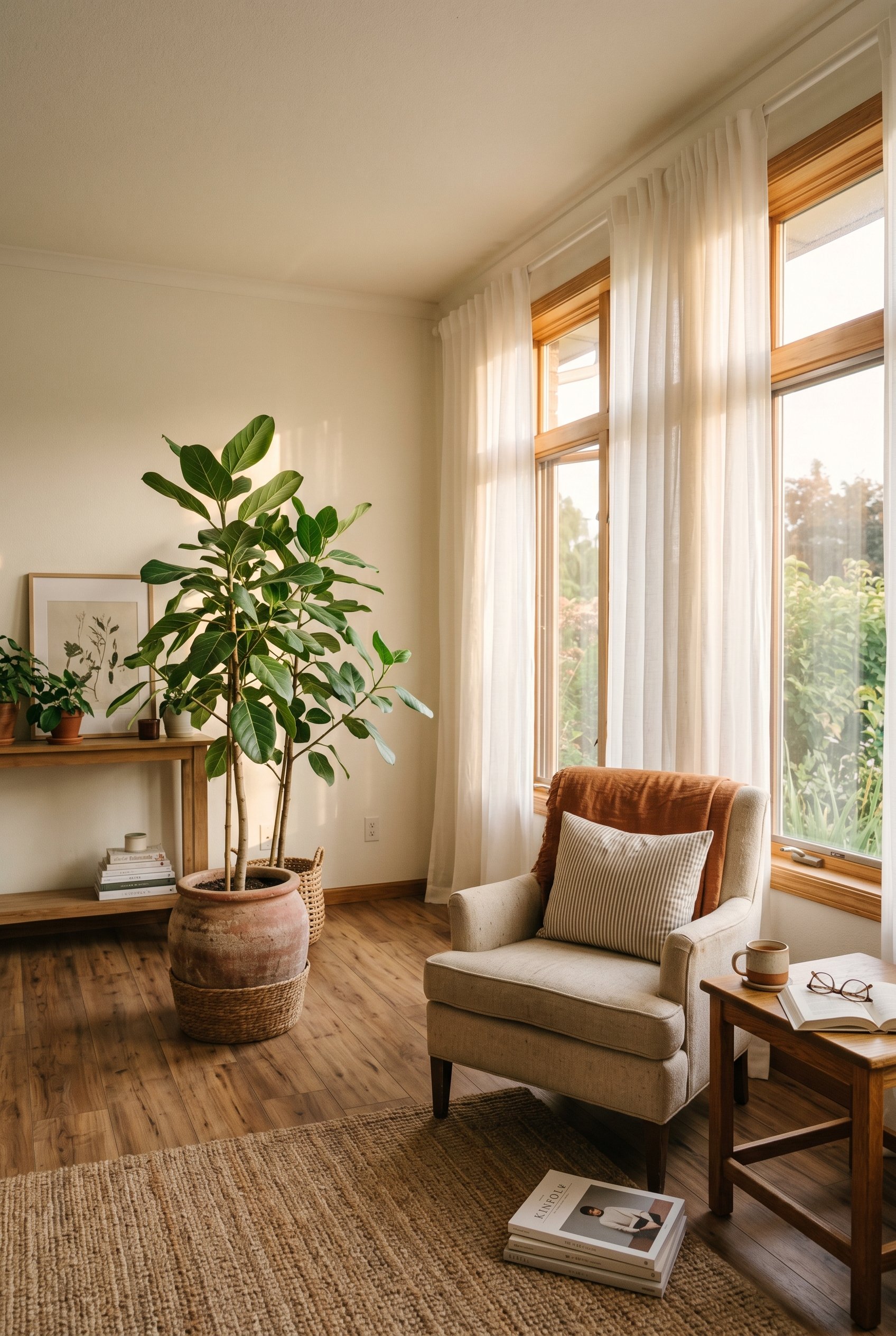
West-facing sunrooms are tricky. The afternoon sun will scorch delicate leaves and bake your furniture. You need tough species here, like a Ficus Audrey or a Rubber Tree. To manage the intense light, hang ceiling-to-floor sheer linen curtains. The fabric acts as a literal UV filter for the plants while softening the harsh afternoon shadows. It completely changes the composition of the room.
8. Top Dressing the Soil
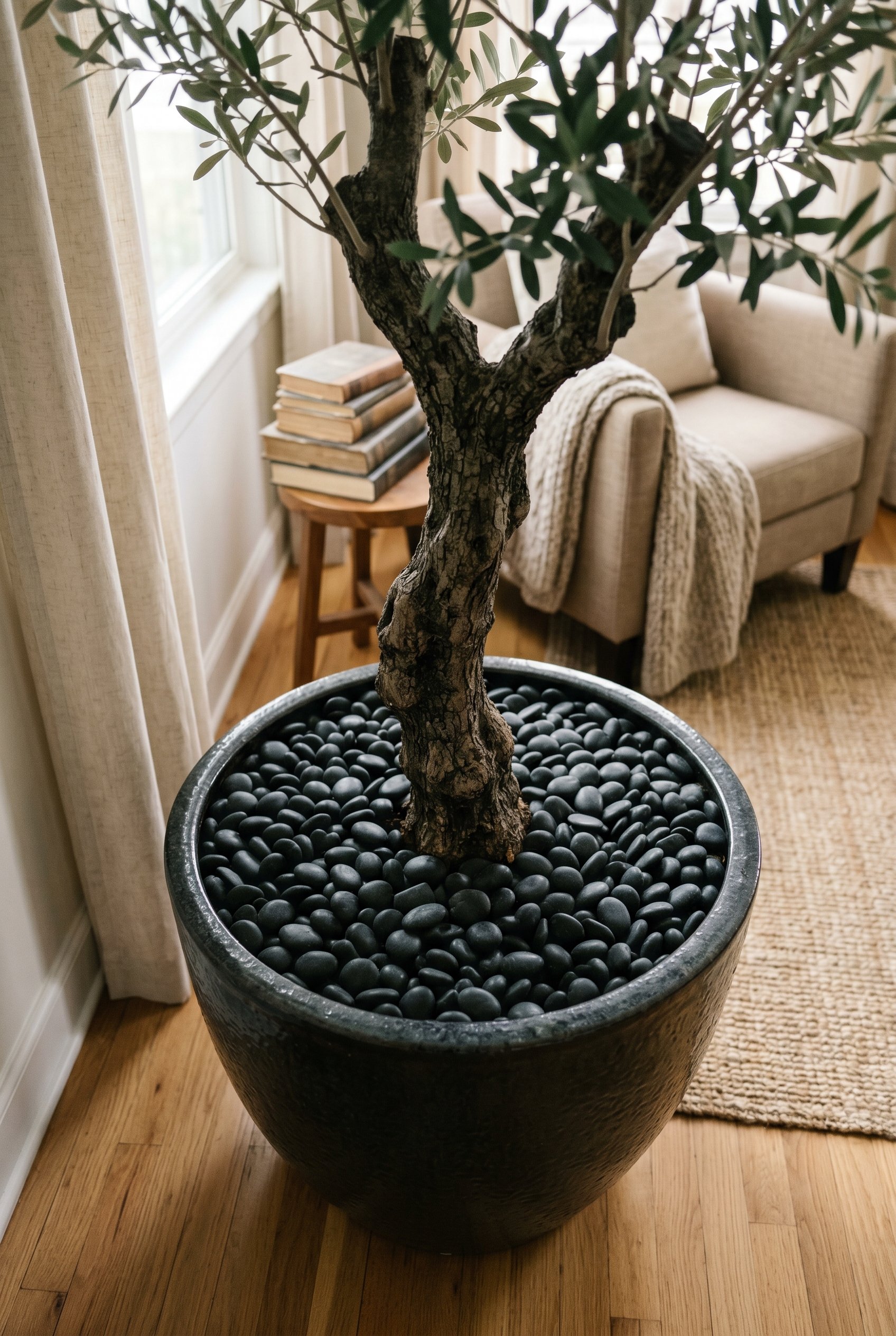
Exposed potting soil usually looks messy and breeds fungus gnats. Top dressing is a styling secret that fixes both problems. Add a thick layer of matte black river rocks or tumbled glass over the exposed dirt in all your floor planters. It blocks pests from laying eggs in the damp soil and gives the base of the plant a clean, finished architectural look.
9. Tension Poles for Vertical Layers
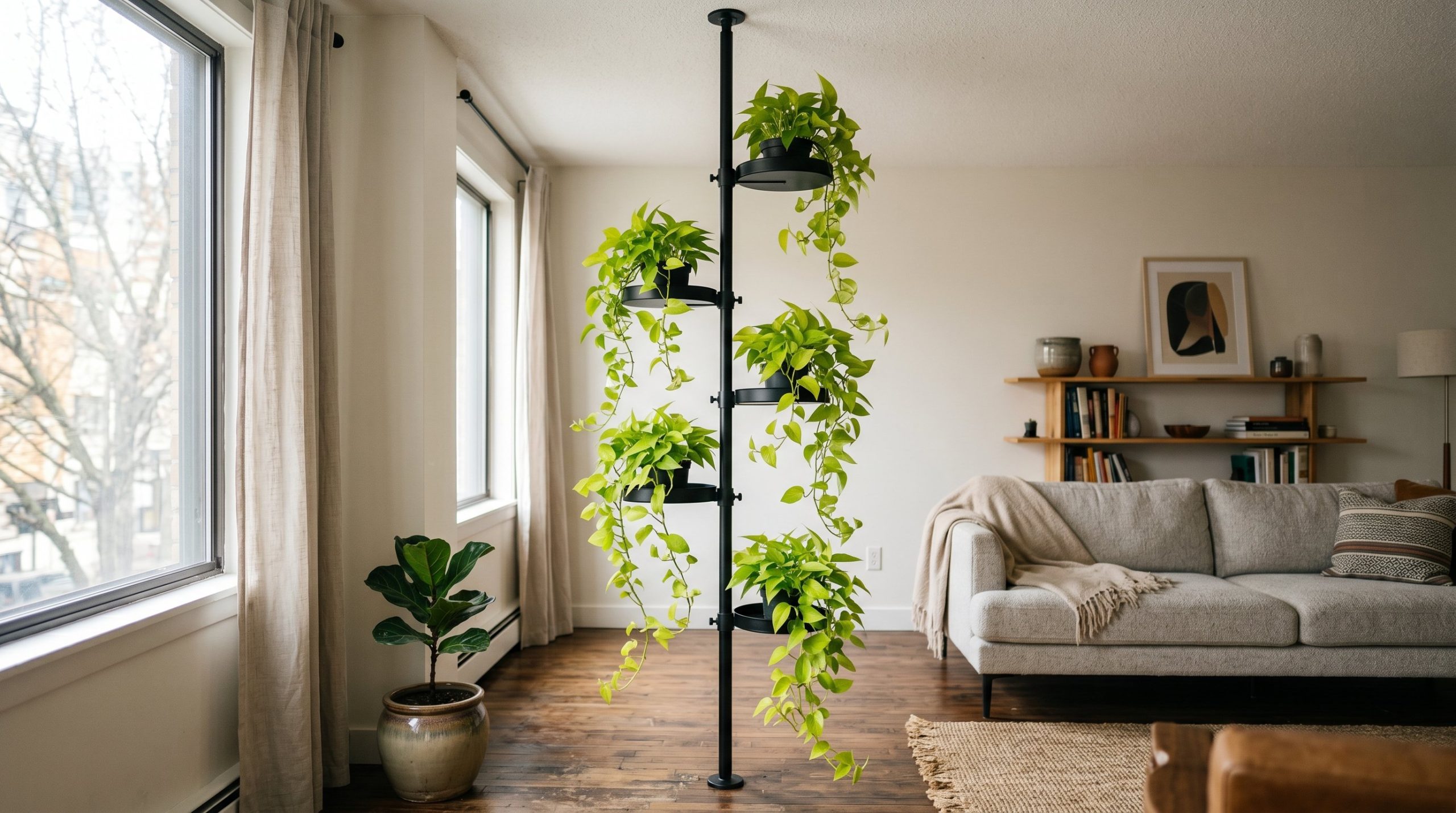
Macrame hanging planters belong in 2015. For vertical decor, I prefer a floor-to-ceiling metal tension pole. You can attach minimal floating trays to it and stagger trailing plants like Neon Pothos or Hoya up the entire length. It draws the eye all the way up to the ceiling and gives you vertical greenery without having to drill a dozen holes into your plaster for ceiling hooks.
10. Seasonal Textile Swaps for Wintering
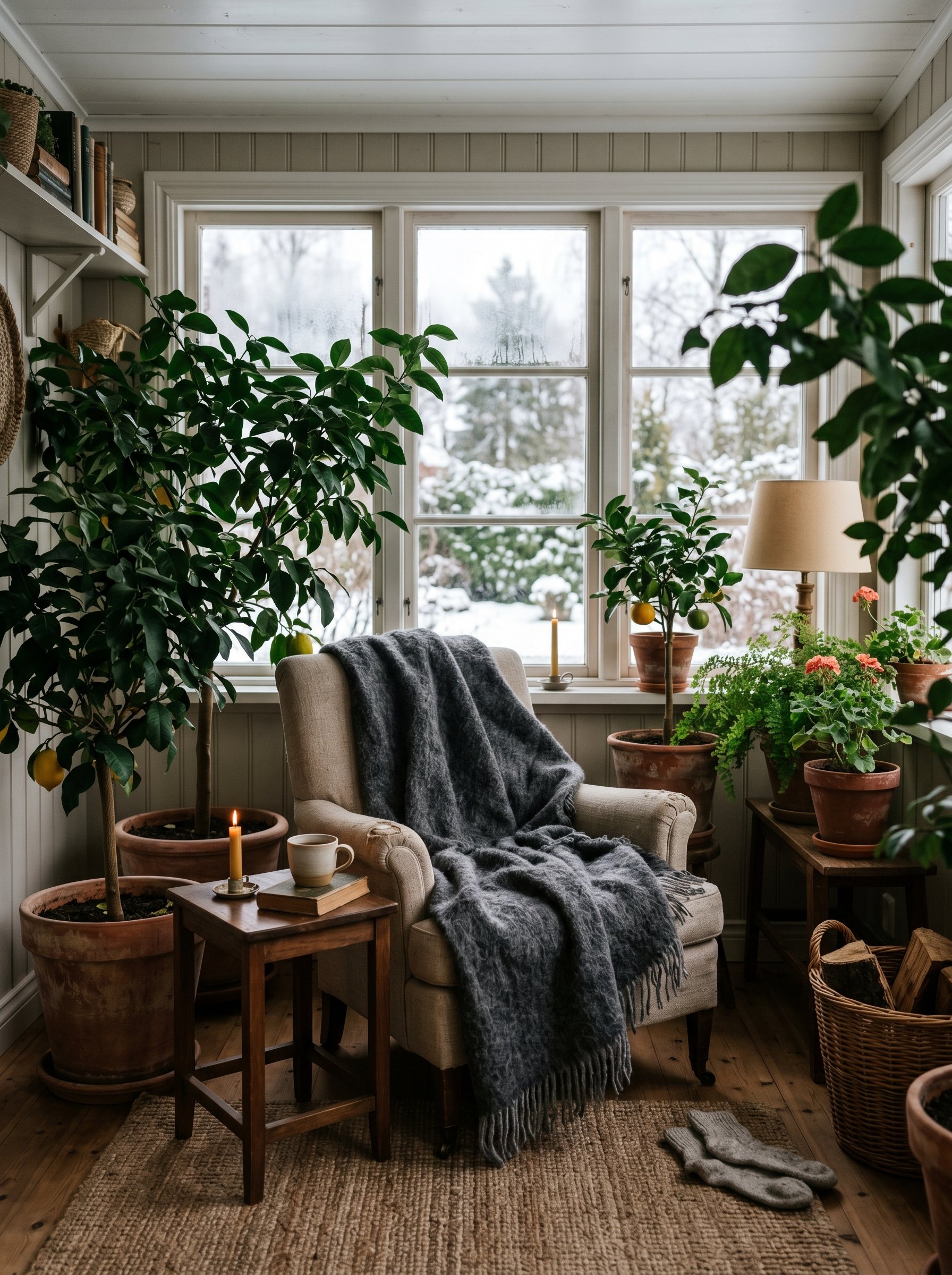
When temperatures drop, you're probably dragging your tender outdoor succulents and citrus trees inside to survive the winter. The room suddenly feels crowded. Match this seasonal shift with your textiles. Pack away the lightweight linen throw pillows and replace them with heavy alpaca wool blankets and dark velvet cushions. If the room is going to look like an overgrown jungle for four months, lean into a dense, cozy, cabin-like aesthetic.
11. Minimalist Metal Hanging Baskets
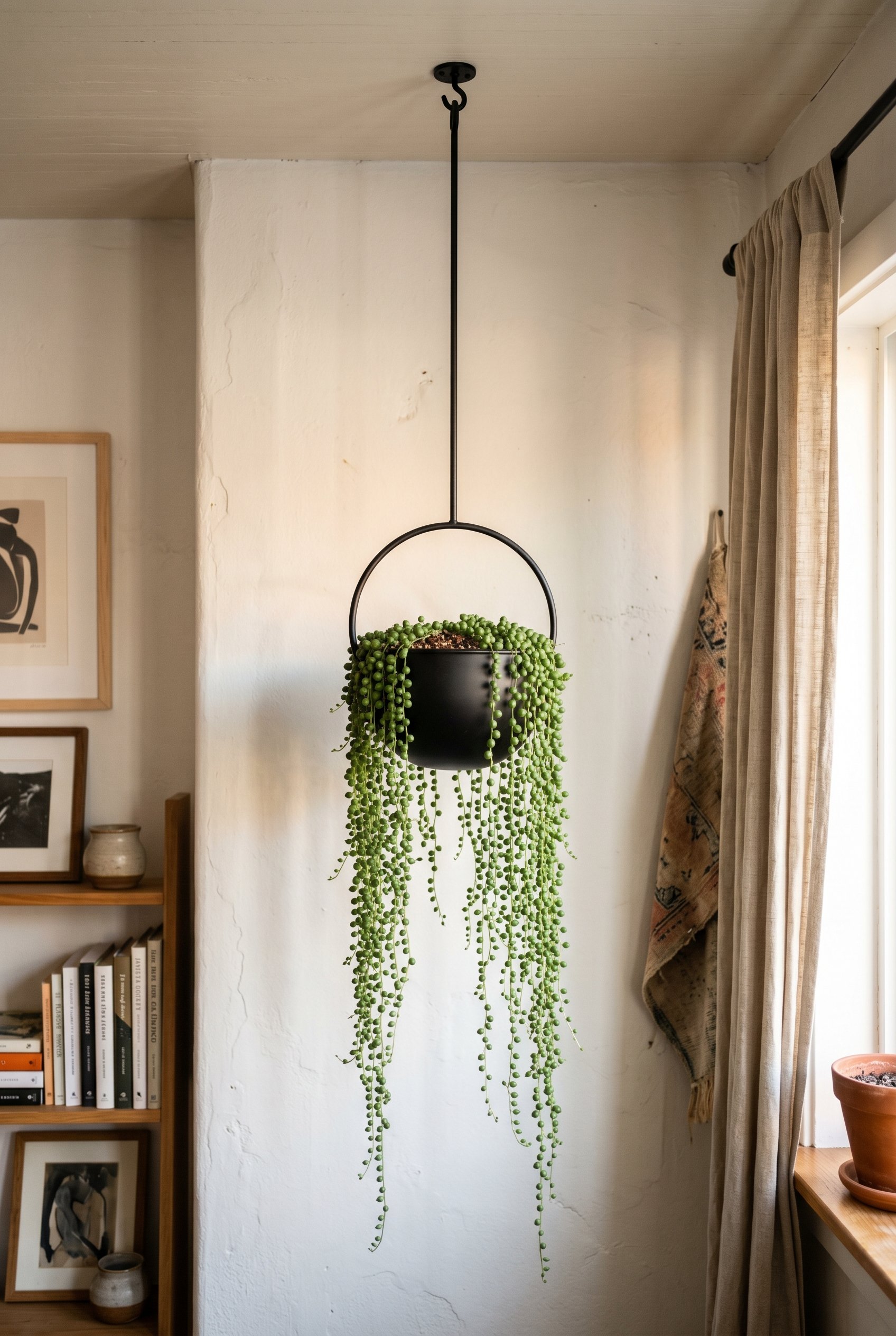
If you must hang plants from the ceiling, the hardware matters. Ferm Living makes these incredible matte powder-coated metal hanging bowls suspended by thin, rigid metal rods instead of rope. Hanging a String of Pearls in a stark, black metal dish provides a harsh industrial contrast to the organic, messy vines.
12. Grouping Low-Maintenance Plants for Impact
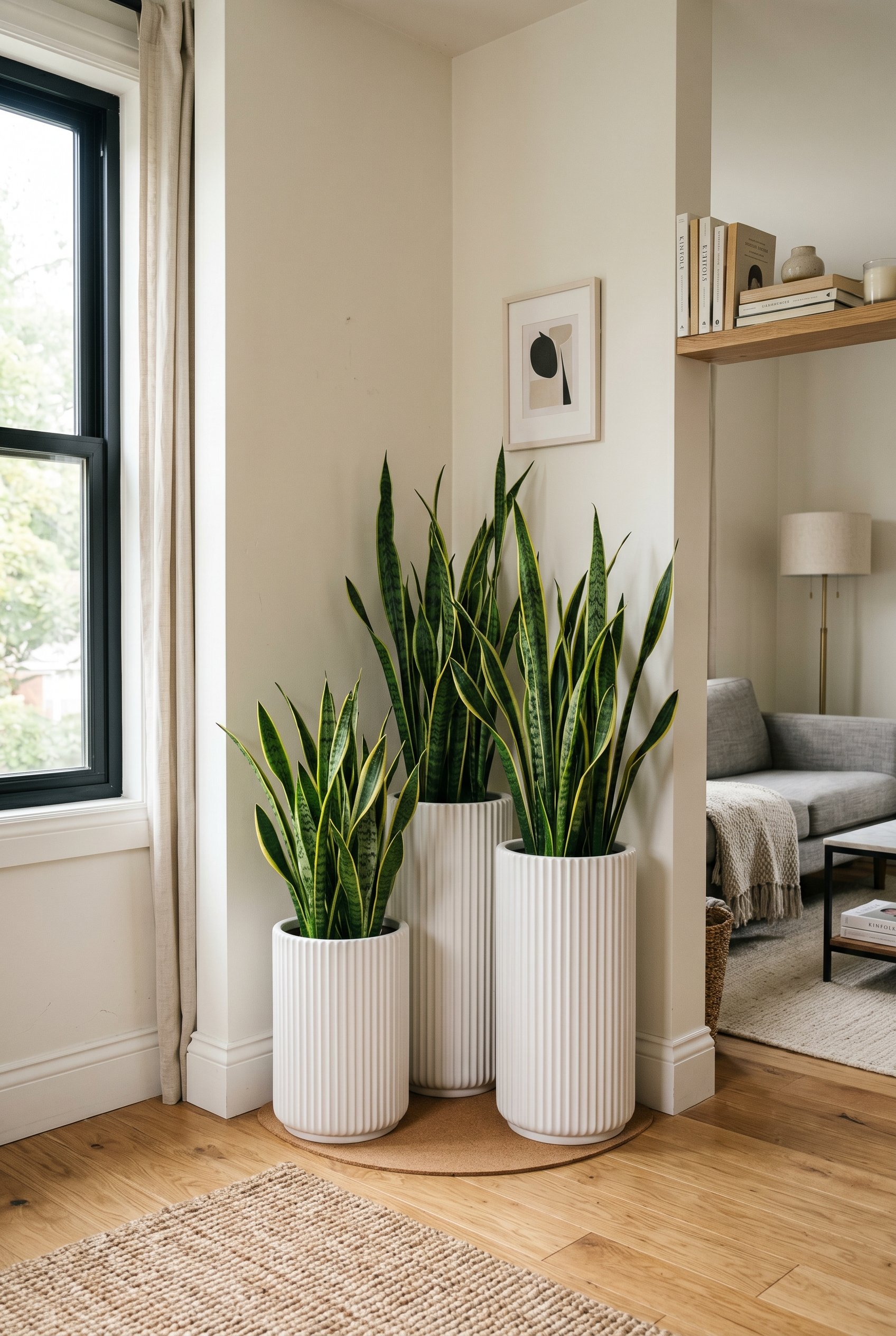
Gardening beginners always scatter small pots all over the room. It looks cluttered. Instead of buying ten tiny, fussy plants, buy three large, unkillable Snake Plants (Sansevieria). Group them tightly in a corner using identical West Elm fluted planters in three different heights. Massing low-maintenance plants in matching architectural pots creates a massive visual impact with zero actual gardening skill required.
13. The IKEA Greenhouse Cabinet Hack
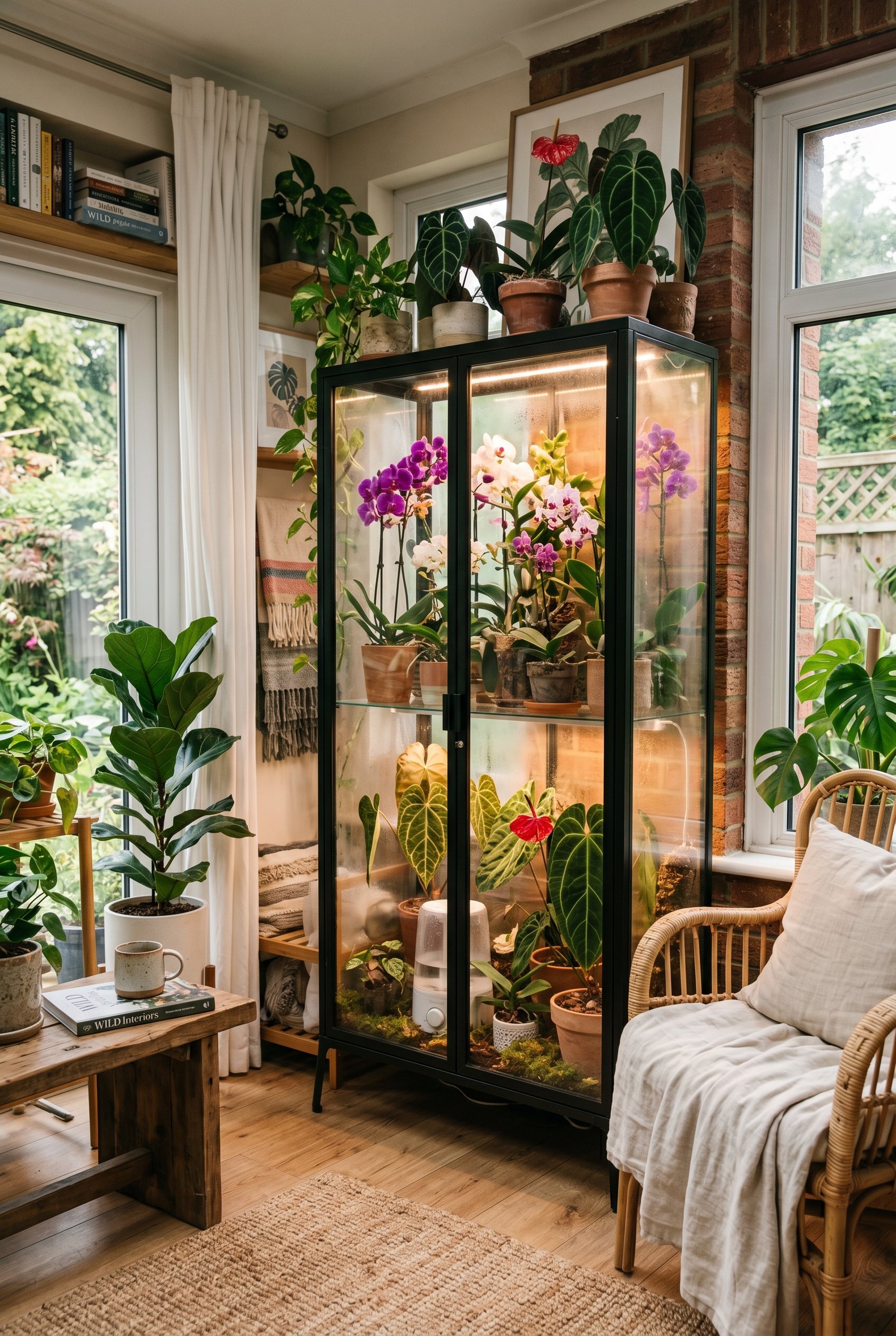
Sometimes your sunroom is too drafty for rare Anthuriums or orchids. The solution is treating a glass display cabinet as functional furniture. Take an IKEA Fabrikör or Milsbo cabinet, seal the glass edges with weather stripping to lock in humidity, and install hidden magnetic grow lights inside. It acts as a controlled micro-climate for picky species while functioning as a gorgeous, glowing curio cabinet in your room design.
Decorating with plants means treating them like actual architectural elements, not just afterthoughts. That IKEA greenhouse cabinet hack is probably my favorite trick on this list—it completely solves the winter draft problem while looking custom.
FAQ
How do you protect sunroom floors from plant water? Use oversized glazed ceramic or terracotta saucers, not thin plastic drip trays. Place a thick, waterproof cork mat directly underneath the saucer to prevent condensation rings on hardwood or tile.
What plants survive a freezing sunroom? If your room isn't heated in the winter, stick to cold-hardy species. Snake plants, ZZ plants, cast iron plants, and jade plants can tolerate significant temperature drops as long as you cut back drastically on watering.
How do you hide ugly grow lights? Ditch the clamp-on purple LEDs entirely. Buy pendant-style grow lights with full-spectrum white bulbs, like those from Soltech, and hang them from the ceiling like normal light fixtures. Run the cords down the wall using rigid cable concealers painted to match your wall color.
Are sunrooms too hot for houseplants in the summer? Yes, south and west-facing rooms can bake plants. Manage the heat by installing sheer linen curtains to filter direct UV rays, running a ceiling fan for air circulation, and moving delicate plants (like ferns and Calatheas) away from the glass.