17 How To Style An Orange Couch Living Room
Orange Couch Living Room ideas that actually look good!
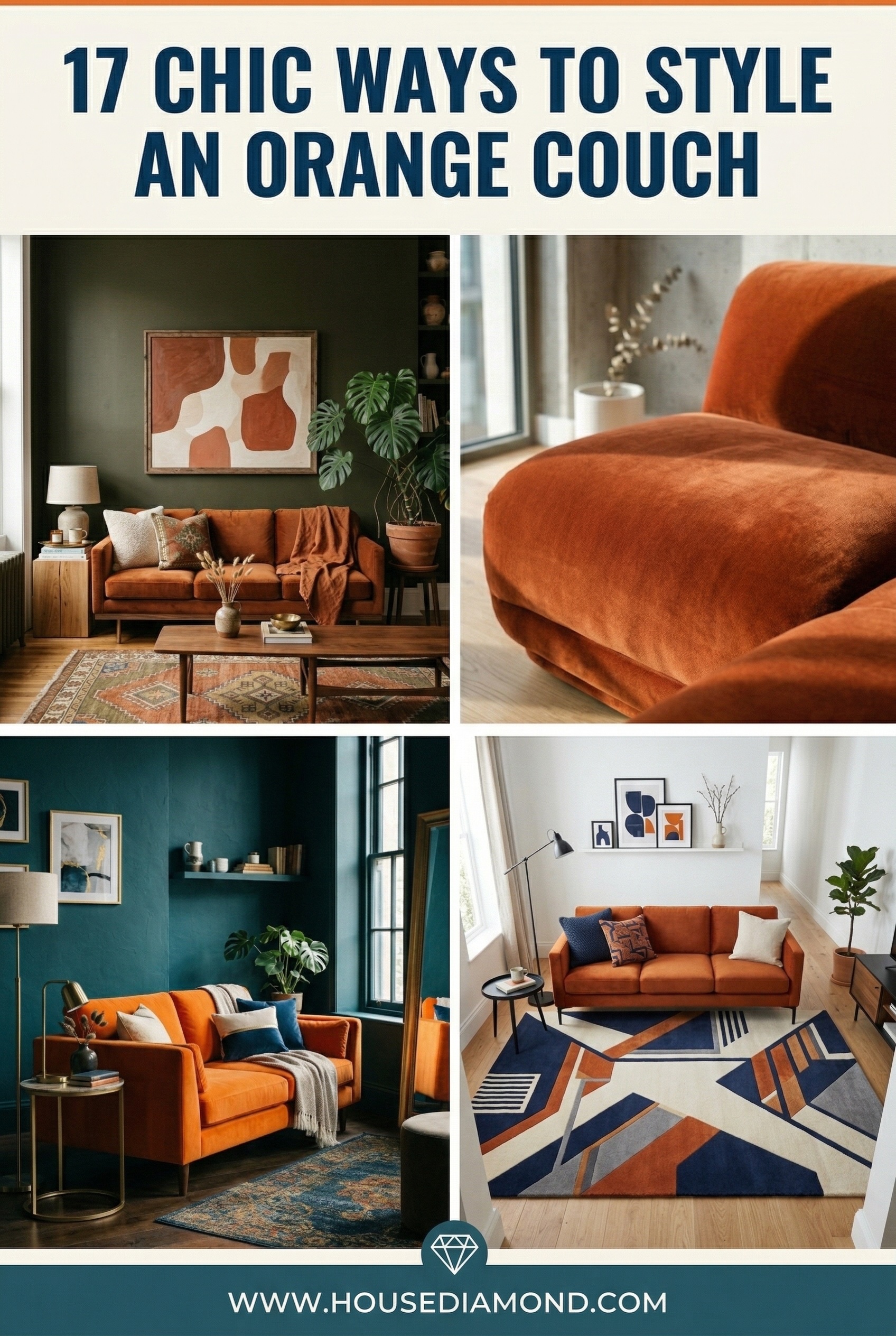
I constantly see people buy a bold orange sofa, panic when it gets delivered, and then bury it under boring grey pillows to try and tone it down. Don't do that. An orange couch is a massive, unapologetic focal point that forces you to make actual design decisions. We are getting into the exact wall paints, rug proportions, and lighting tricks that make these pieces look intentional instead of accidental.
1. Grounding With Warm Whites
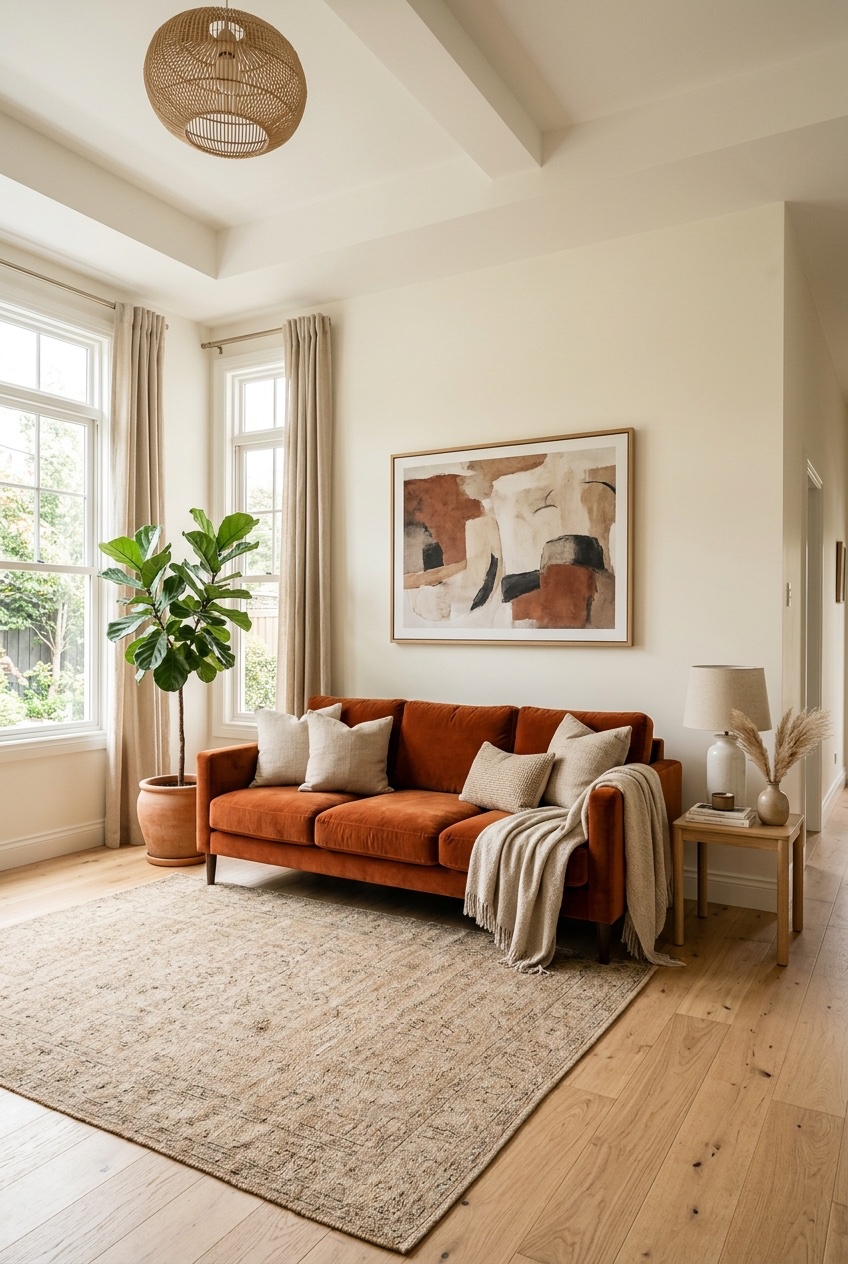
Stark, hospital-white walls behind an orange couch will instantly make your room look like a cheap waiting area. You need a creamy, warm white to bridge the gap. Benjamin Moore's Swiss Coffee or White Dove are my go-to choices here. The subtle yellow undertones soften the harsh contrast, making a bright tangerine or burnt rust sofa look perfectly at home instead of jarring.
2. The Dark Teal Contrast
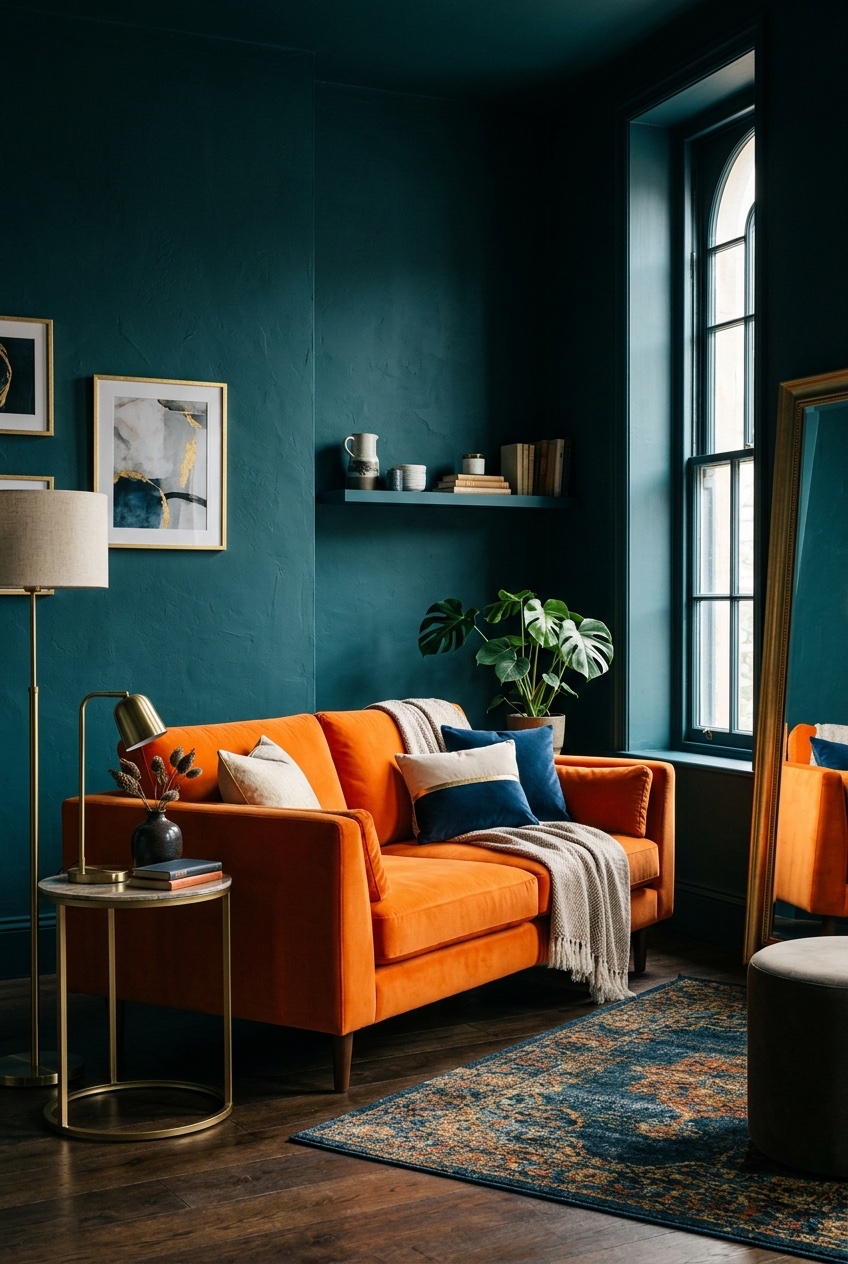
Complementary color theory never fails. Blue and orange sit opposite each other on the color wheel, but bright primary blue feels too childish. Dark, moody teal is the grown-up version. Painting the wall directly behind a burnt orange velvet sofa in something deep like Farrow & Ball's Hague Blue is incredibly striking. I love this approach for darker rooms that don't get much natural sunlight anyway.
3. The Velvet Scratch Test
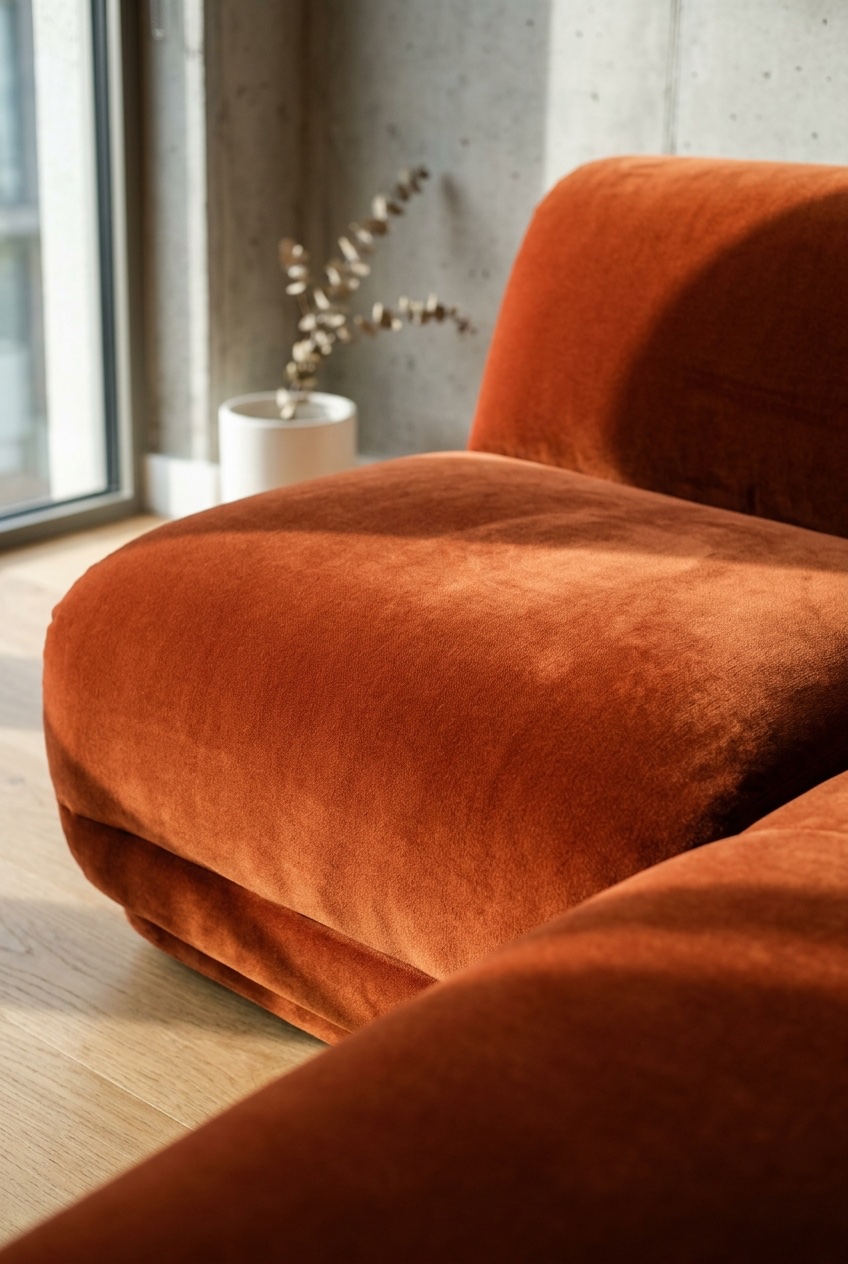
Let's talk pets. If you have cats, you want a tight-weave synthetic velvet orange sofa (like the ones from Article or Joybird). Cats generally hate sinking their claws into velvet because there are no woven loops to catch. Plus, pet hair wipes off velvet with a damp rubber glove in about ten seconds. It is secretly the most durable family fabric out there.
4. Mid-Century Walnut Pairings
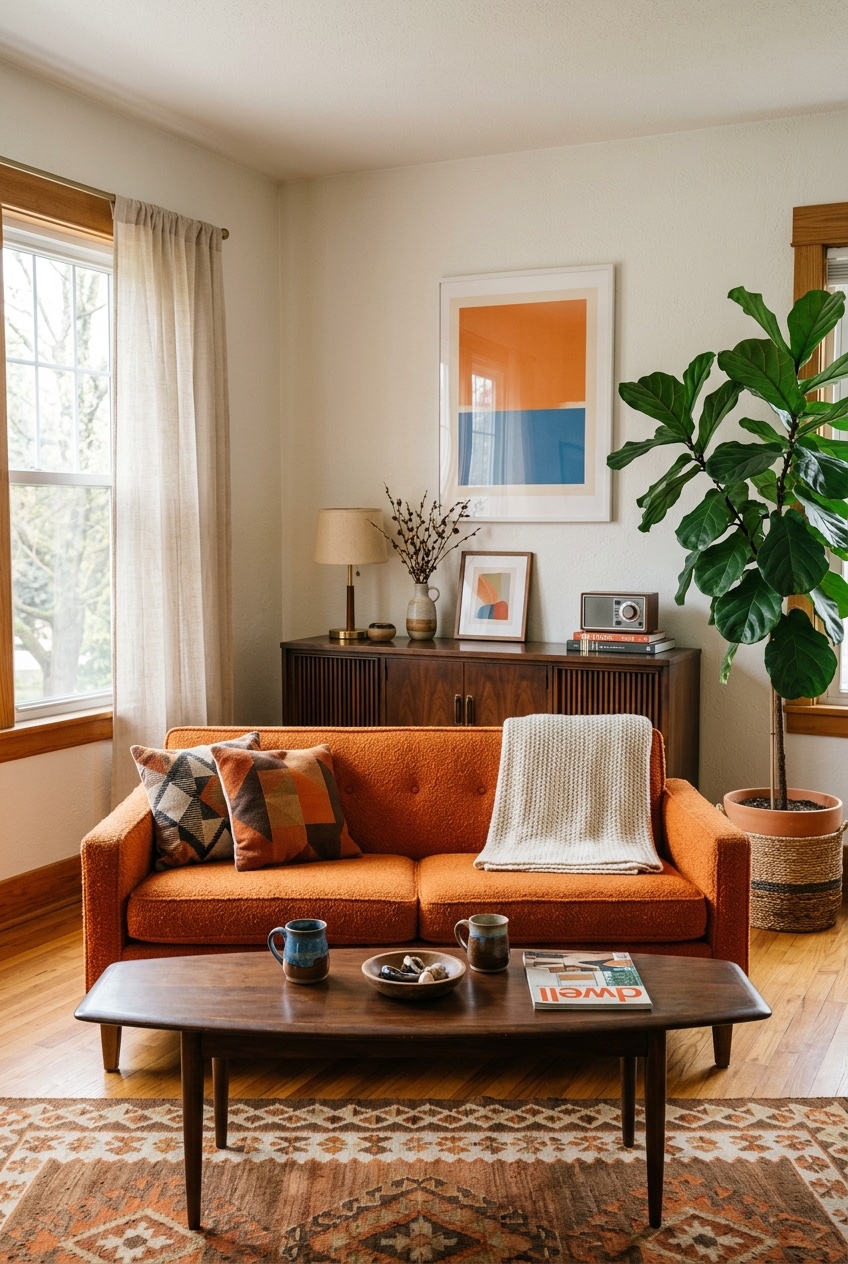
Orange and walnut wood is the ultimate Mid-Century Modern pairing. The dark, rich grain of a vintage walnut coffee table or a classic West Elm media console grounds the brightness of the upholstery. Skip light pine or cherry wood here—those tones clash hard. Stick to deep, ashy browns to let the sofa do all the talking.
5. Anchor With an Oversized Persian Rug
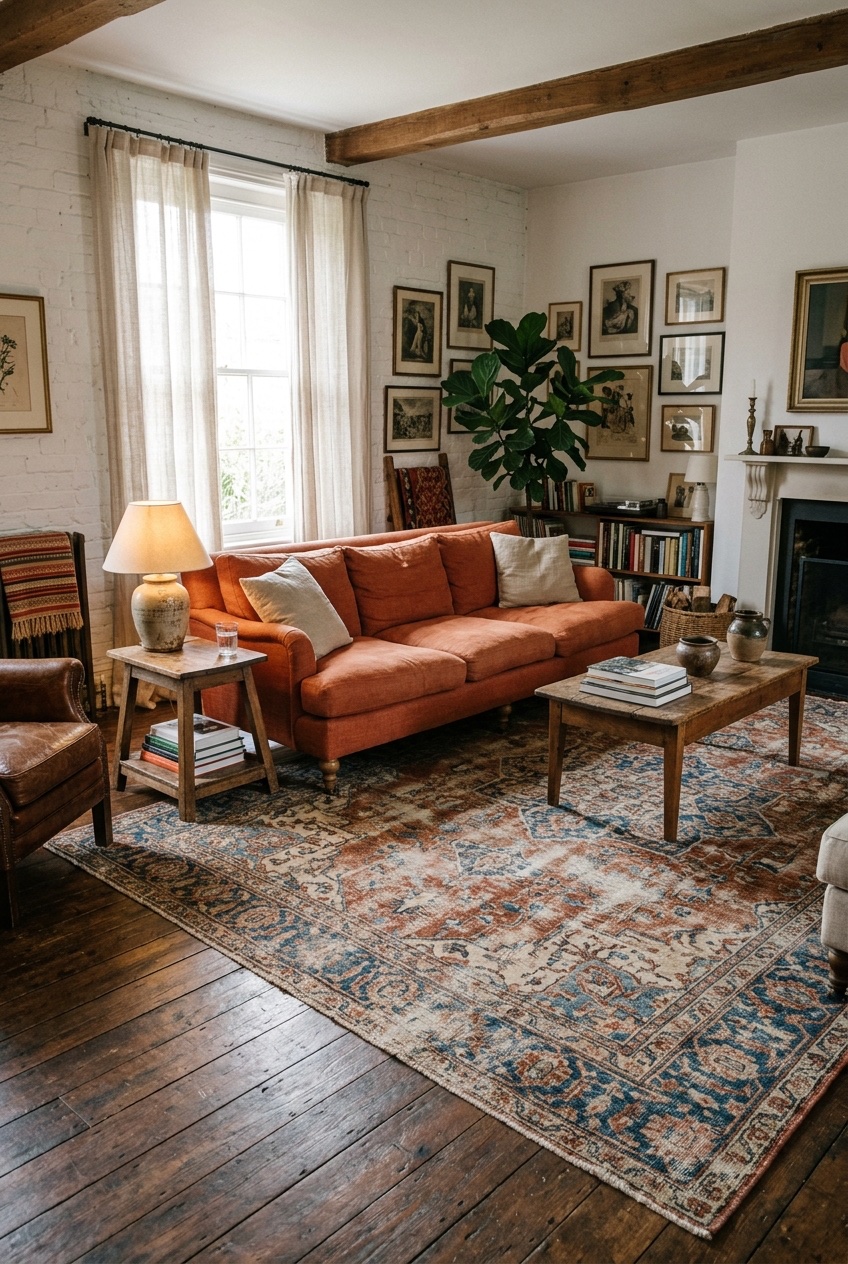
Scale ruins more living rooms than bad color choices. A dinky 5×7 rug floating in front of an orange sofa looks ridiculous. You need an 8×10 or 9×12 to anchor a heavy color. I always search Etsy for oversized, vintage distressed Persian rugs that have tiny flecks of rust or apricot woven into their mostly neutral or blue patterns. It ties the massive orange blob into the rest of the floor plan.
6. Floating the Sofa to Zone Open Concepts
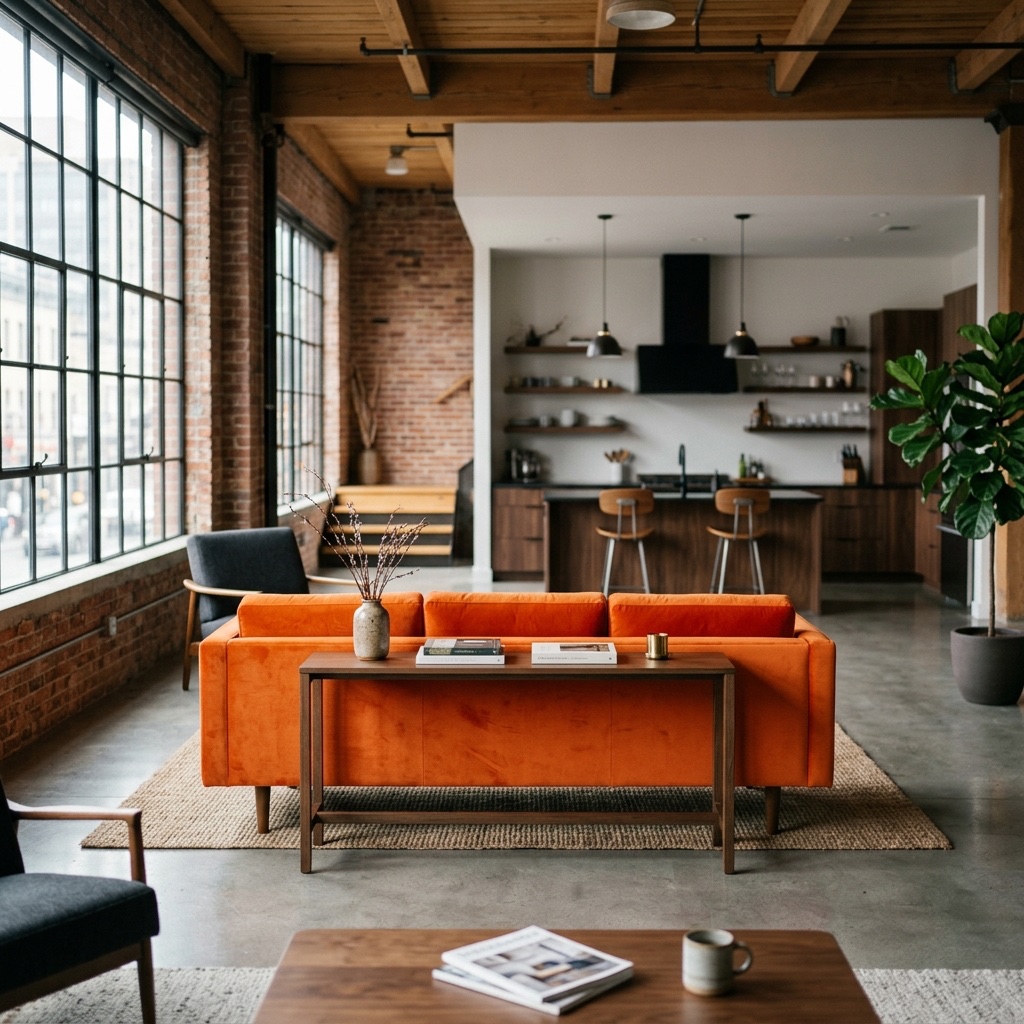
Open-concept floor plans are notoriously hard to layout. A brightly colored sofa is actually your best tool for zoning. Float your orange couch right in the middle of the room, facing away from the kitchen. The sheer visual weight of the color acts like a physical wall, clearly dividing your lounging area from your dining area. Back it with a slim, neutral console table to finish the look.
7. The Lightbulb Dilemma
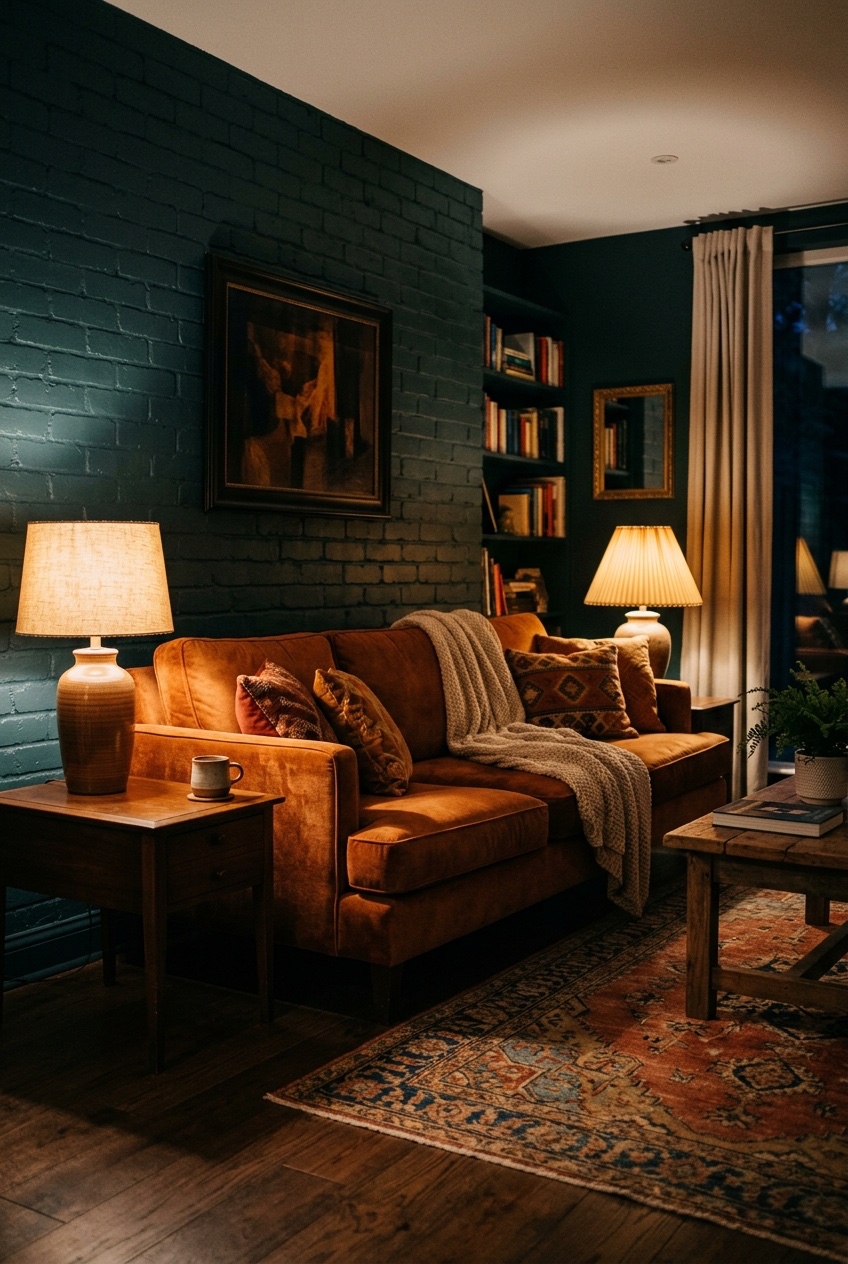
Lighting completely dictates how orange reads in a room. If you use cool, blue-toned LED bulbs (4000K and up), your couch will look like a radioactive traffic cone. It is horrible. Stick strictly to warm white bulbs (2700K or 3000K). Warm light enhances the rich, earthy undertones in rust and terracotta fabrics, especially at night.
8. Transitioning to Winter With Heavy Knits
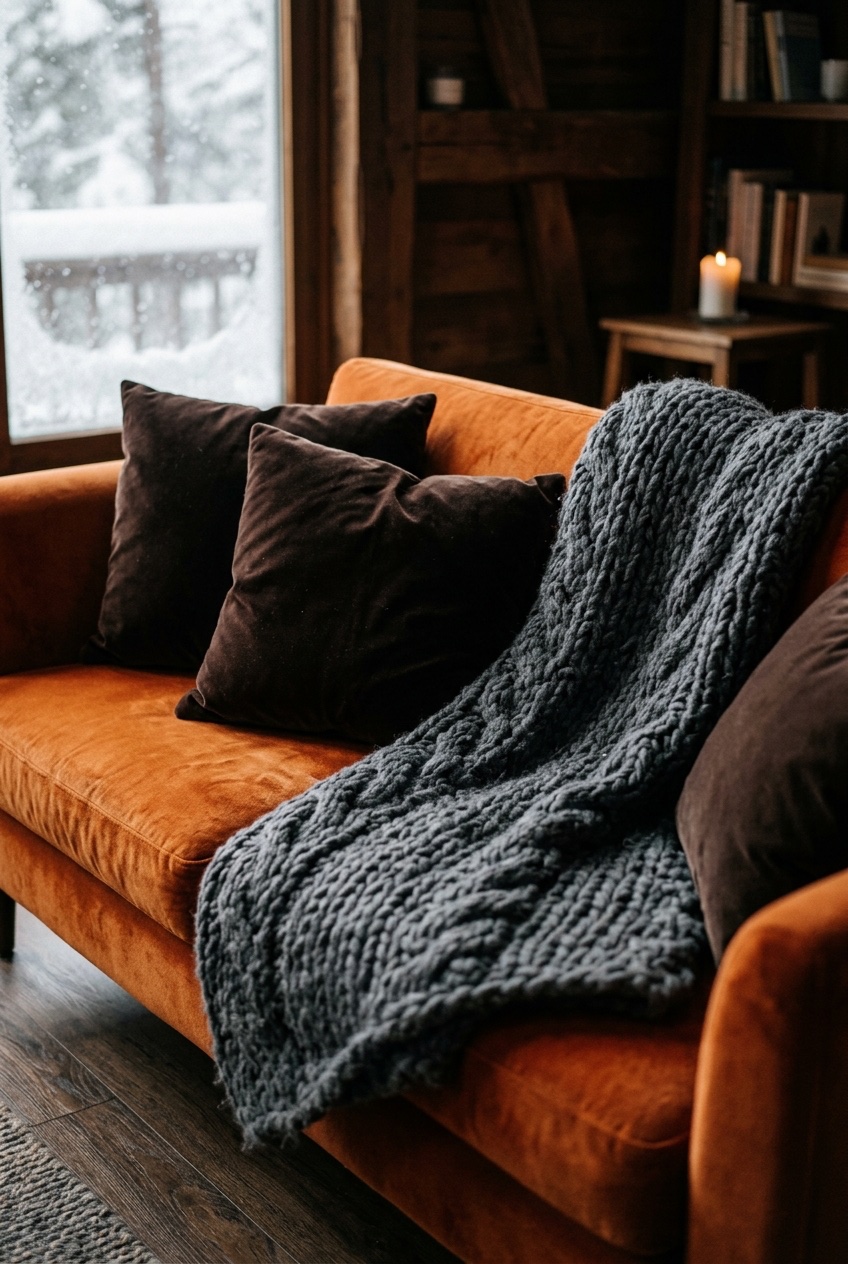
A bright orange sofa can feel intensely summery, which makes it tricky in November. You shift the season through texture. Swap out your lightweight throw blankets for heavy, chunky knit wool or faux fur from CB2 or West Elm in deep chocolates, charcoals, or warm creams. The visual weight of the heavy textiles instantly grounds the bright color for winter.
9. The Ribbed Corduroy Comeback
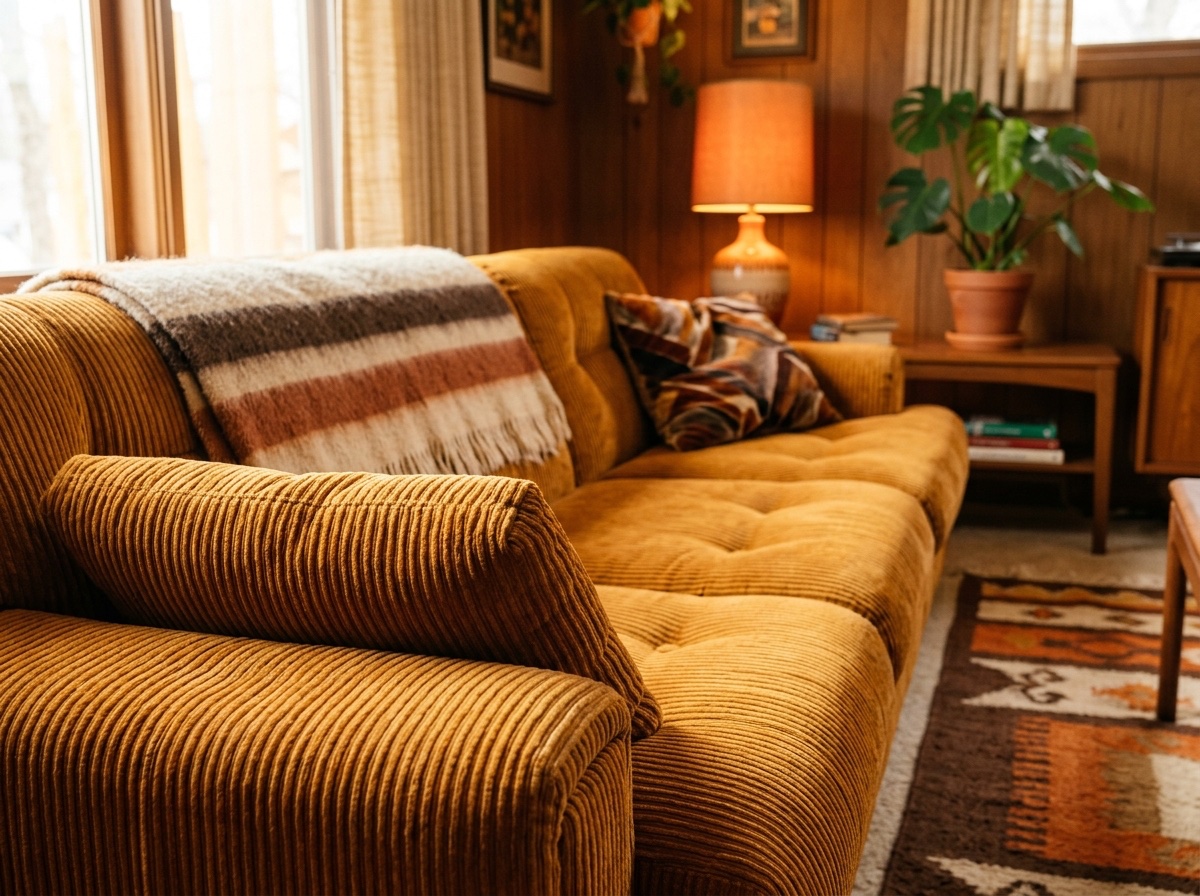
Flat fabrics on a bright couch can sometimes look cheap. Texture absorbs and reflects light, giving the color depth. Wide-wale corduroy in a burnt orange or mustard-orange is massively popular right now, leaning heavily into the 70s revival. It is incredibly comfortable and hides everyday wrinkles way better than standard cotton blends.
10. Olive Green and Rust Pairings
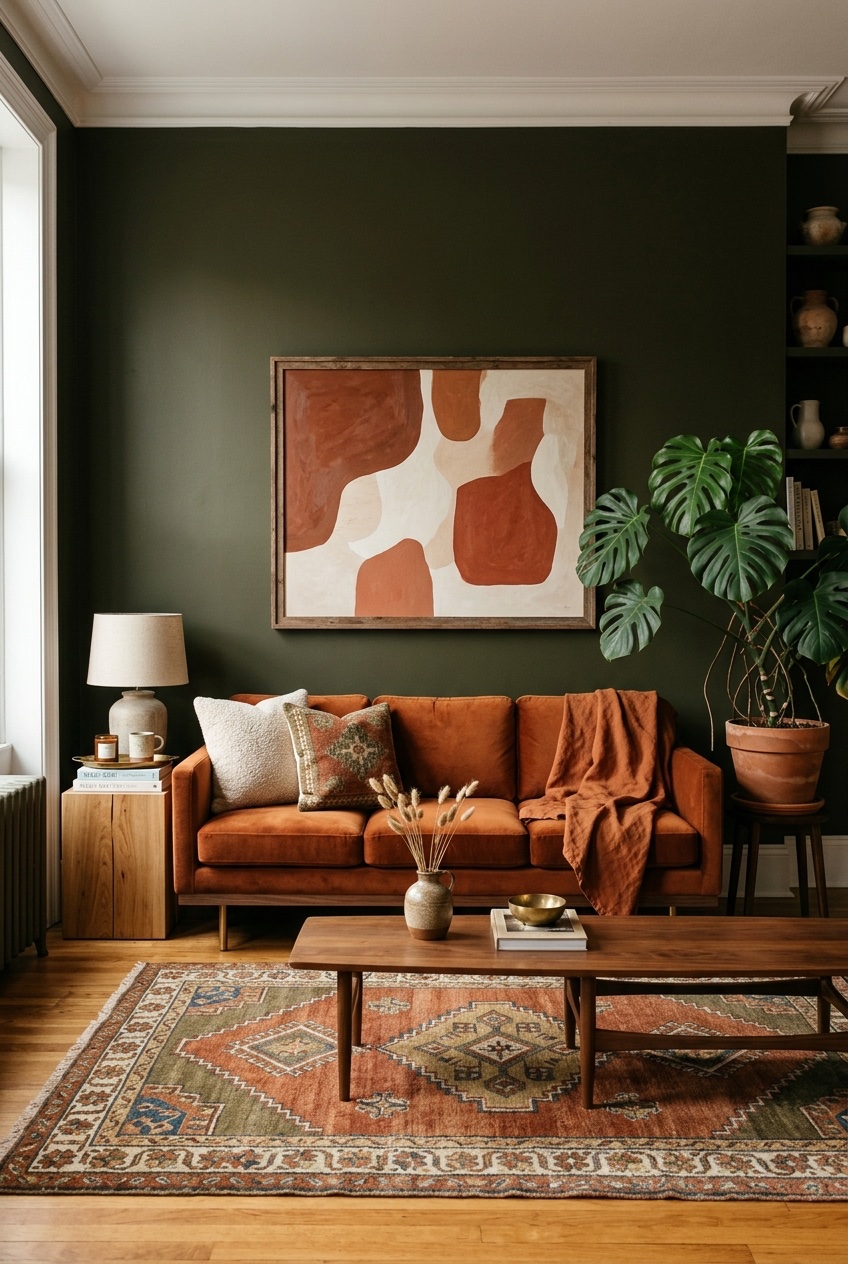
If the blue-and-orange complementary look is too bold for you, pivot to warm earth tones. Olive green walls, heavy green linen curtains, or just massive leafy indoor plants surrounding a rust orange sofa create a moody, organic vibe. It feels rooted in nature. This is my favorite palette for spaces with lots of natural wood.
11. Spring Styling With Linen Slips
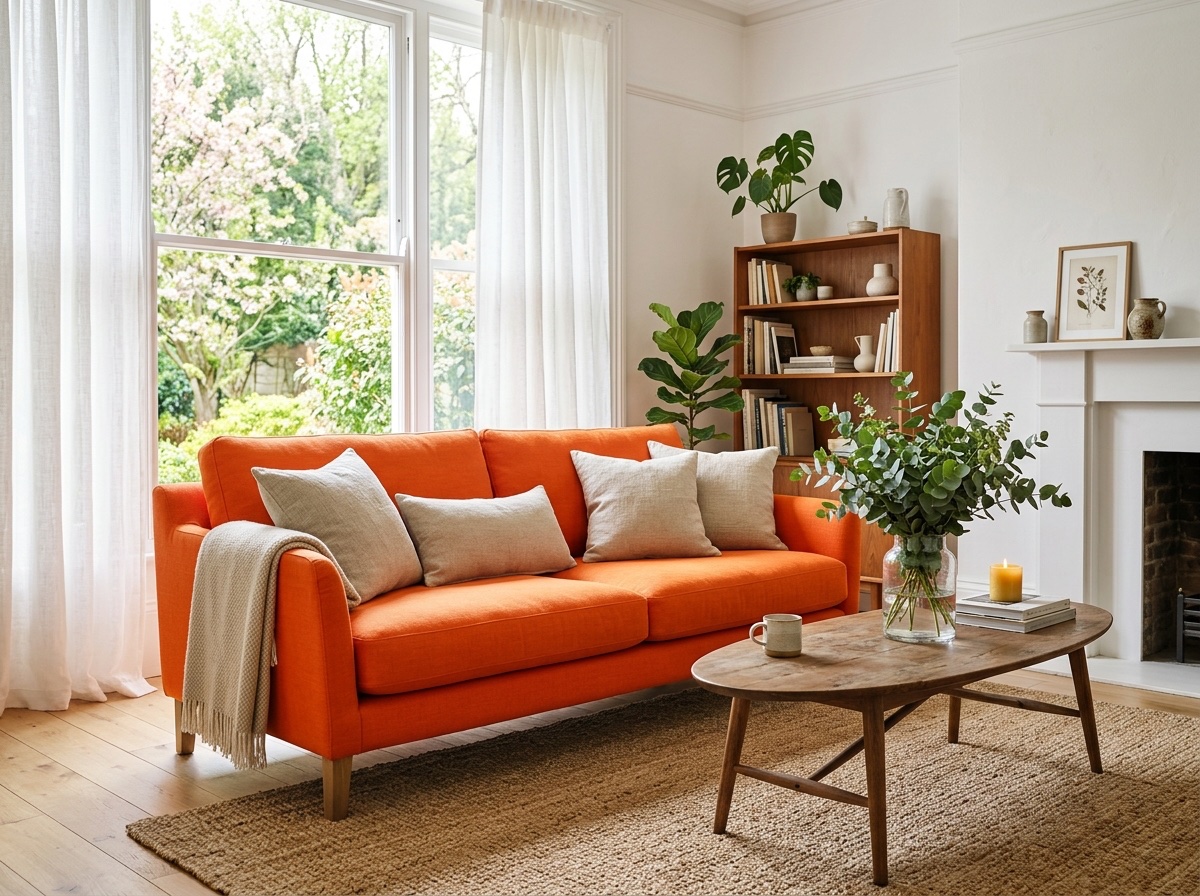
When April rolls around, those heavy winter textures need to go. Lighten up the orange sofa by introducing raw linen throw pillows and lightweight cotton blankets in oat or beige. I frequently recommend stripping down the surrounding decor—fewer heavy books on the coffee table, more glass vases with fresh eucalyptus. It lets the orange breathe and feel vibrant for spring.
12. Distressed Leather for Kids and Dogs
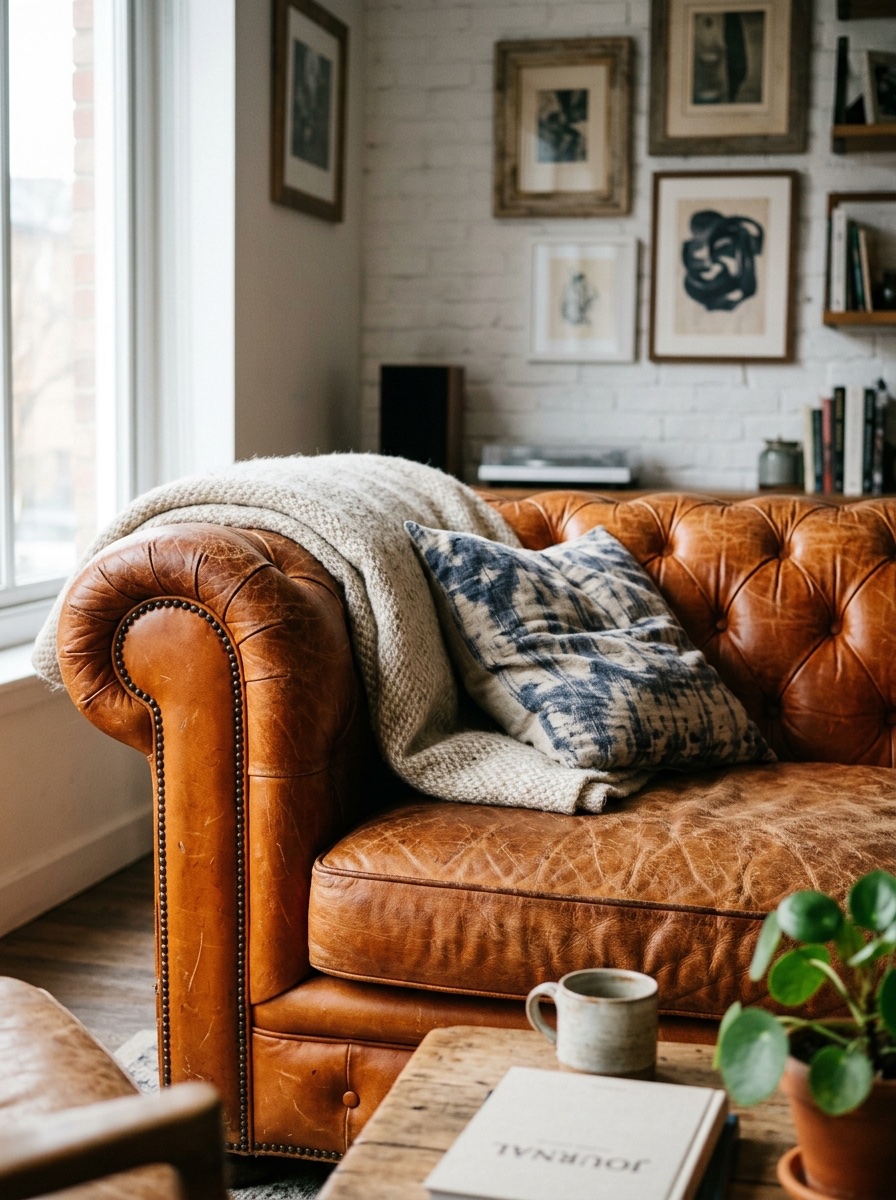
If you have big dogs or messy kids, a pure orange fabric couch will show every single stain. Go for a heavily distressed, cognac-orange leather instead. Brands like Poly & Bark make fantastic ones. The beauty of raw, untreated leather is that scuffs, dog nail scratches, and spilled drinks just blend into the patina over time. It gets better the more you beat it up.
13. The Navy Blue Contrast
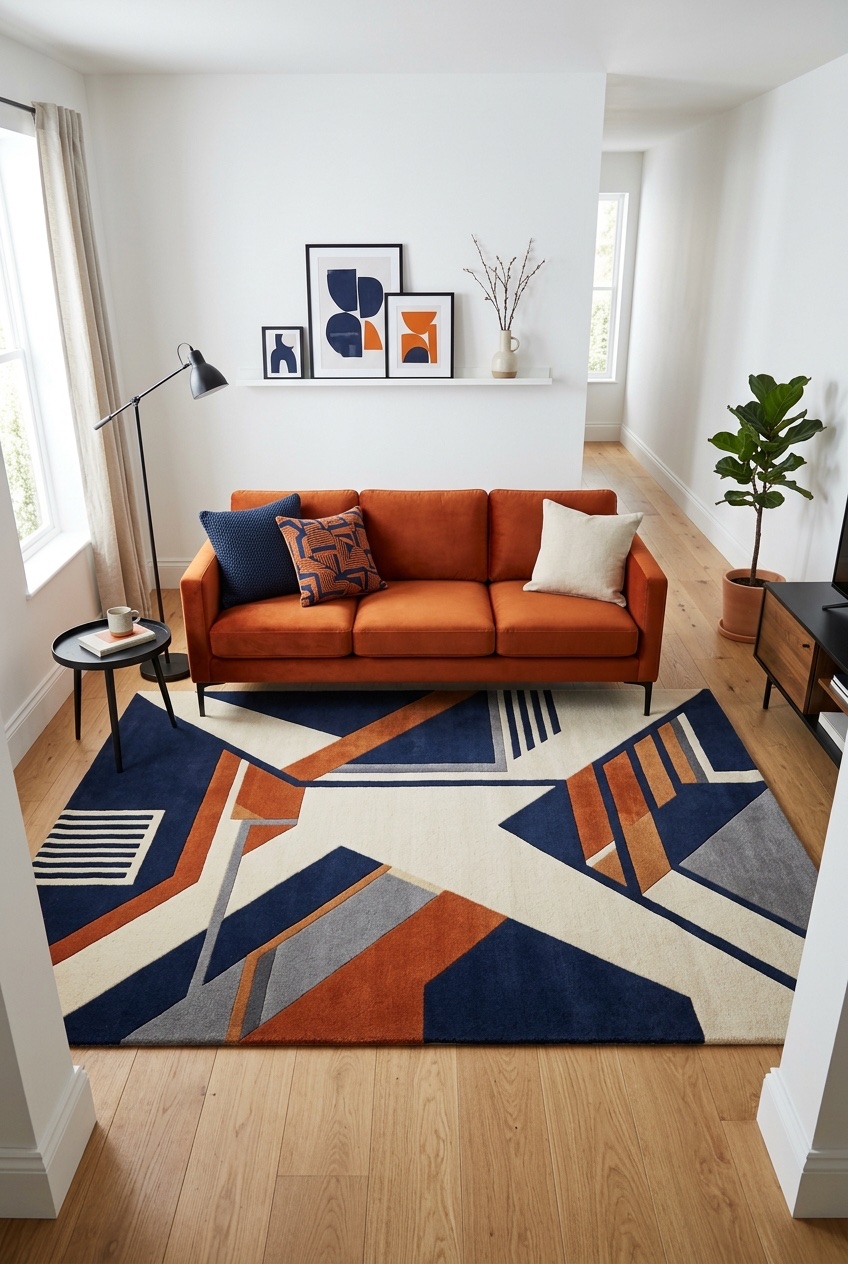
While teal is moody, classic navy blue is crisp. A burnt orange sofa sitting directly on a massive, geometric navy blue rug creates a very sharp, tailored aesthetic. It feels slightly more traditional and preppy than the boho options on this list. Keep the surrounding walls white so the room doesn't feel like a dark cave.
14. Pale Oak Scandi Vibes
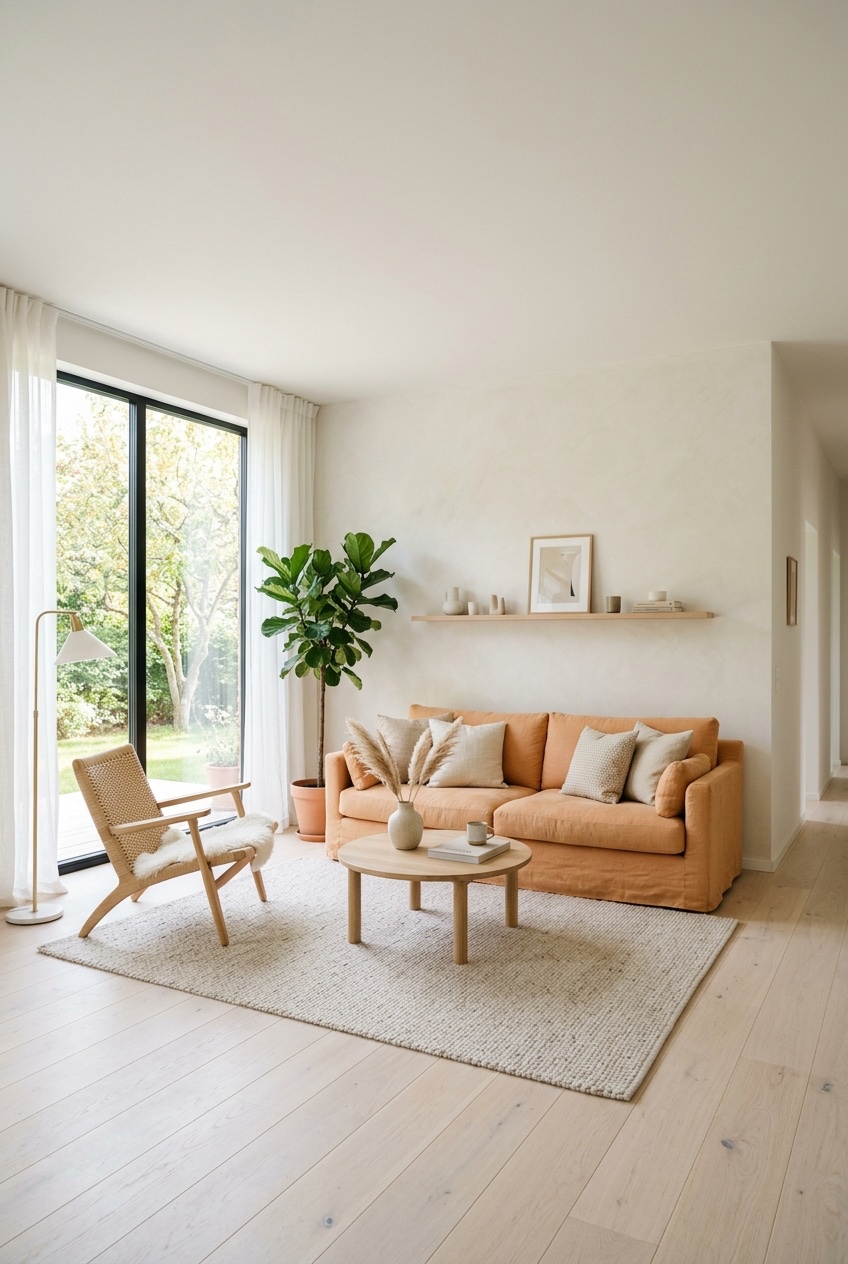
You don't always have to go dark with your wood tones. Pairing a soft, muted apricot or terracotta sofa with ultra-pale white oak floors and raw ash wood furniture creates a very warm, Scandinavian feel. It is light, airy, and skips the heavy retro vibe entirely.
15. Boho Rattan and Terracotta
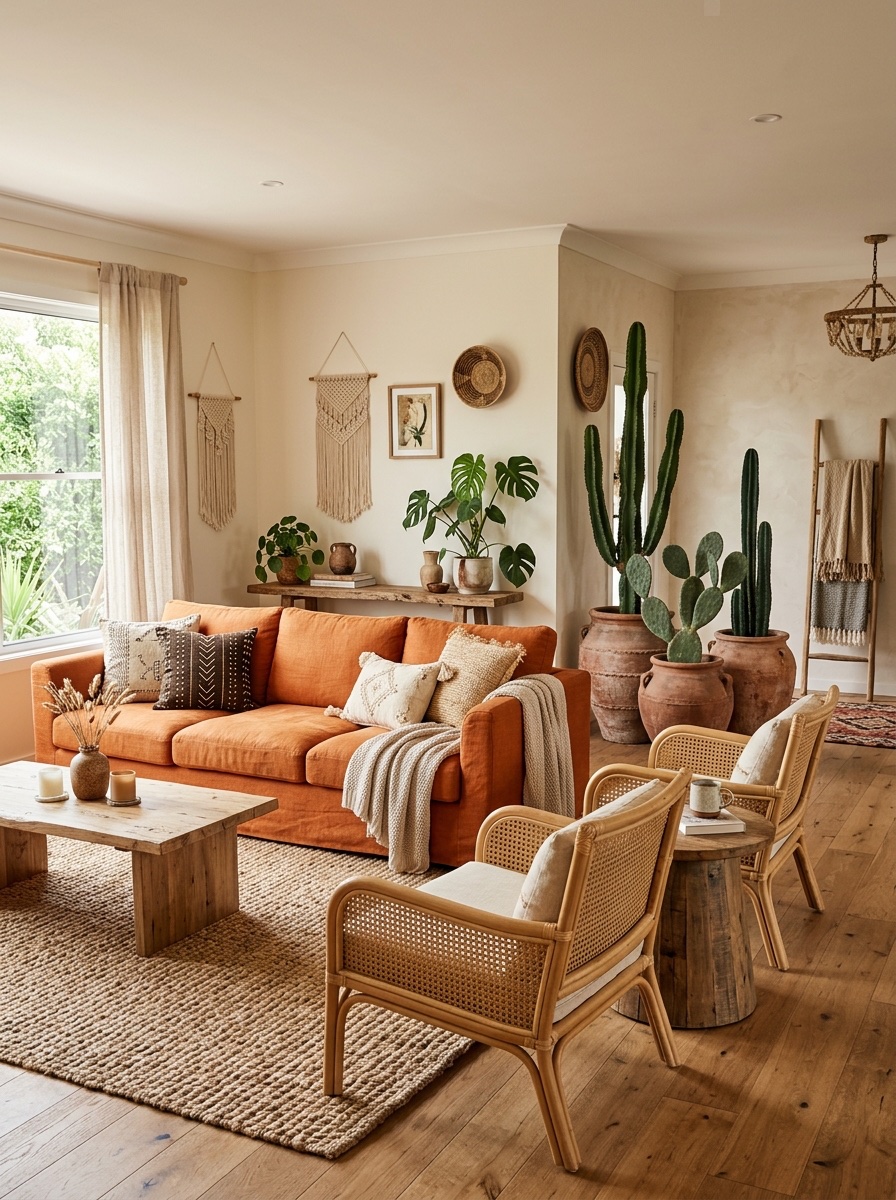
Lean into the warmth of the couch by surrounding it with natural, woven materials. Rattan accent chairs, jute rugs, and raw terracotta planters pull the orange hues out of the sofa and distribute them around the room. This stops the couch from looking like one isolated bright spot and turns the whole room into a cohesive, warm space.
16. Modern Checkerboard Rugs
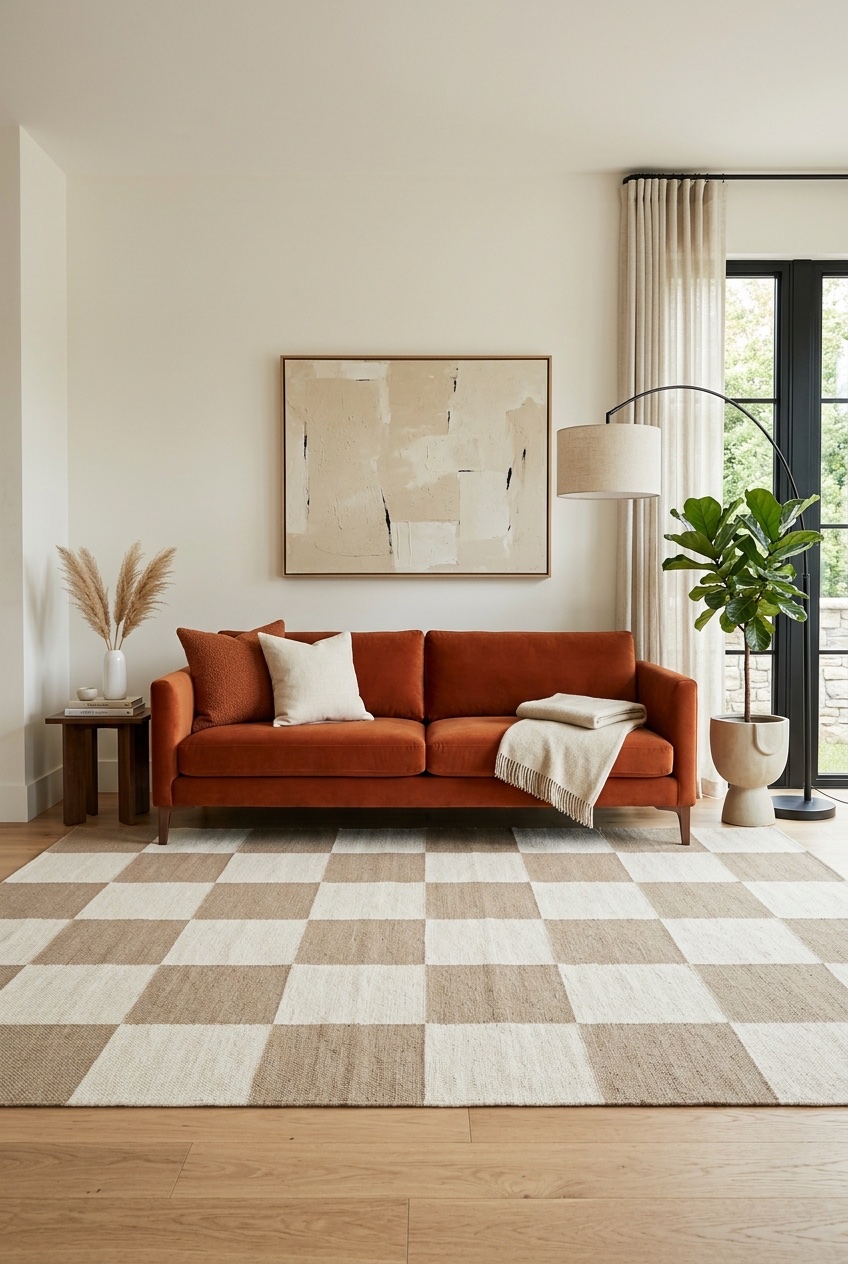
Matching patterns to a solid bright couch is intimidating. Right now, I'm obsessed with pairing rust-orange sofas with neutral, large-scale checkerboard rugs. It is graphic, slightly trendy, and breaks up the solid block of color on the sofa without introducing complicated floral or vintage patterns that might clash.
17. Dramatic Directional Lighting
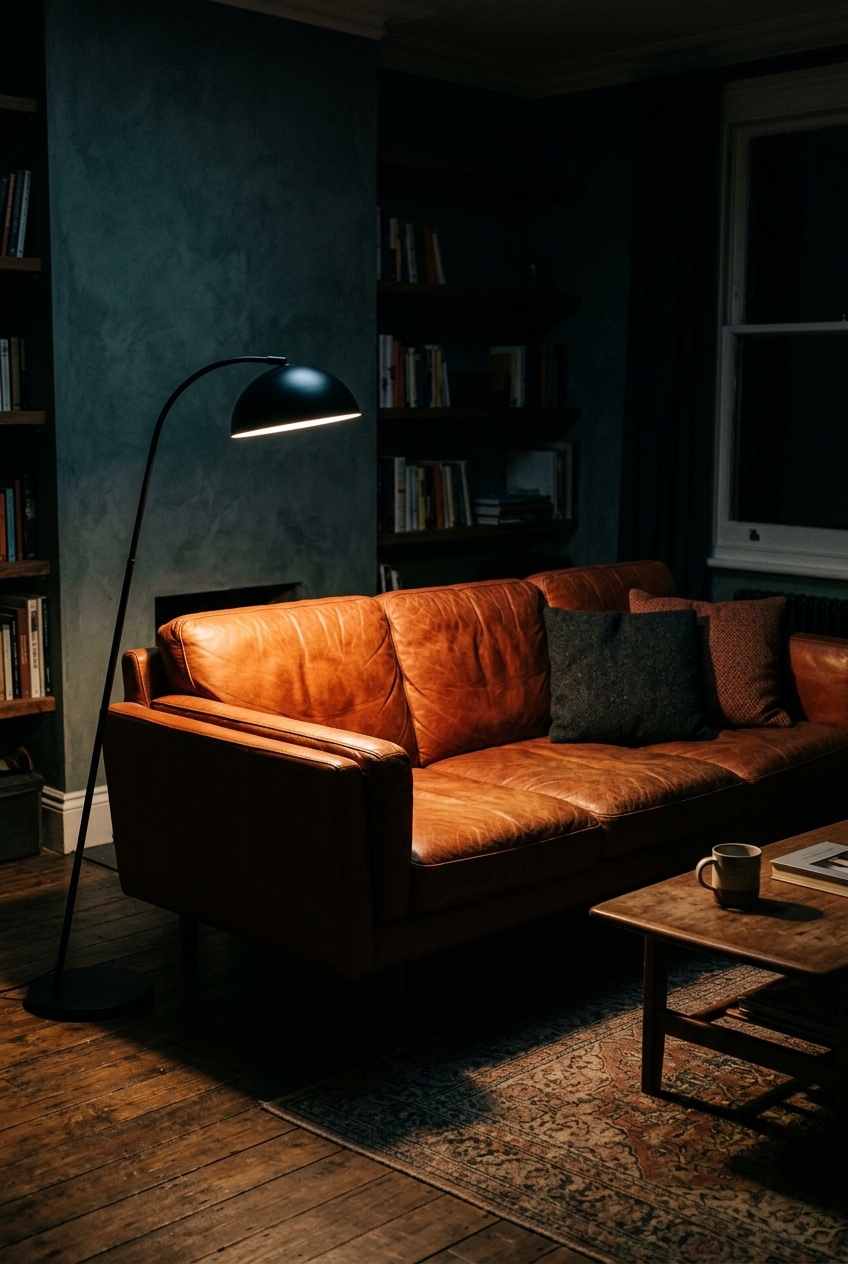
A single overhead light makes everything look flat. To really make an orange fabric pop—especially velvet or leather—you need directional lighting. Place a low, metal floor lamp right next to the sofa casting light across the seat cushions. The shadows this creates will highlight the texture of the fabric and give the orange deep, varied tones instead of one flat shade.
You don't have to play it safe with beige just because everyone else does. Lean hard into the warmth, pick the right supporting textures, and that orange couch will easily be the best purchase you make for your home. Personally, the olive green and rust combo wins every time.
FAQ
What colors go best with an orange couch? Navy blue, dark teal, olive green, and warm creamy whites are your best bets. Blue tones offer a sharp contrast, green tones create a natural earthy vibe, and warm whites provide a neutral backdrop that doesn't clash.
How do I tone down a bright orange sofa? You don't. Trying to hide it with grey pillows just makes it look awkward. Instead, balance the room's visual weight by anchoring the couch with an oversized, dark-toned rug and incorporating heavy, textured throw blankets in deep neutrals like charcoal or chocolate brown.
Is leather or velvet better for an orange couch? Velvet offers a richer, more saturated color and is highly resistant to cat scratches. Leather leans more toward a natural cognac/rust color, ages beautifully, and is much easier to wipe clean if you have kids or dogs prone to muddy paws.
What kind of wood furniture matches an orange sofa? Dark walnut is the classic choice for a Mid-Century look. If you prefer a lighter, more modern Scandinavian style, pale white oak or ash wood works beautifully with softer terracotta or apricot shades. Avoid cherry or red-toned woods, as they will compete with the couch.