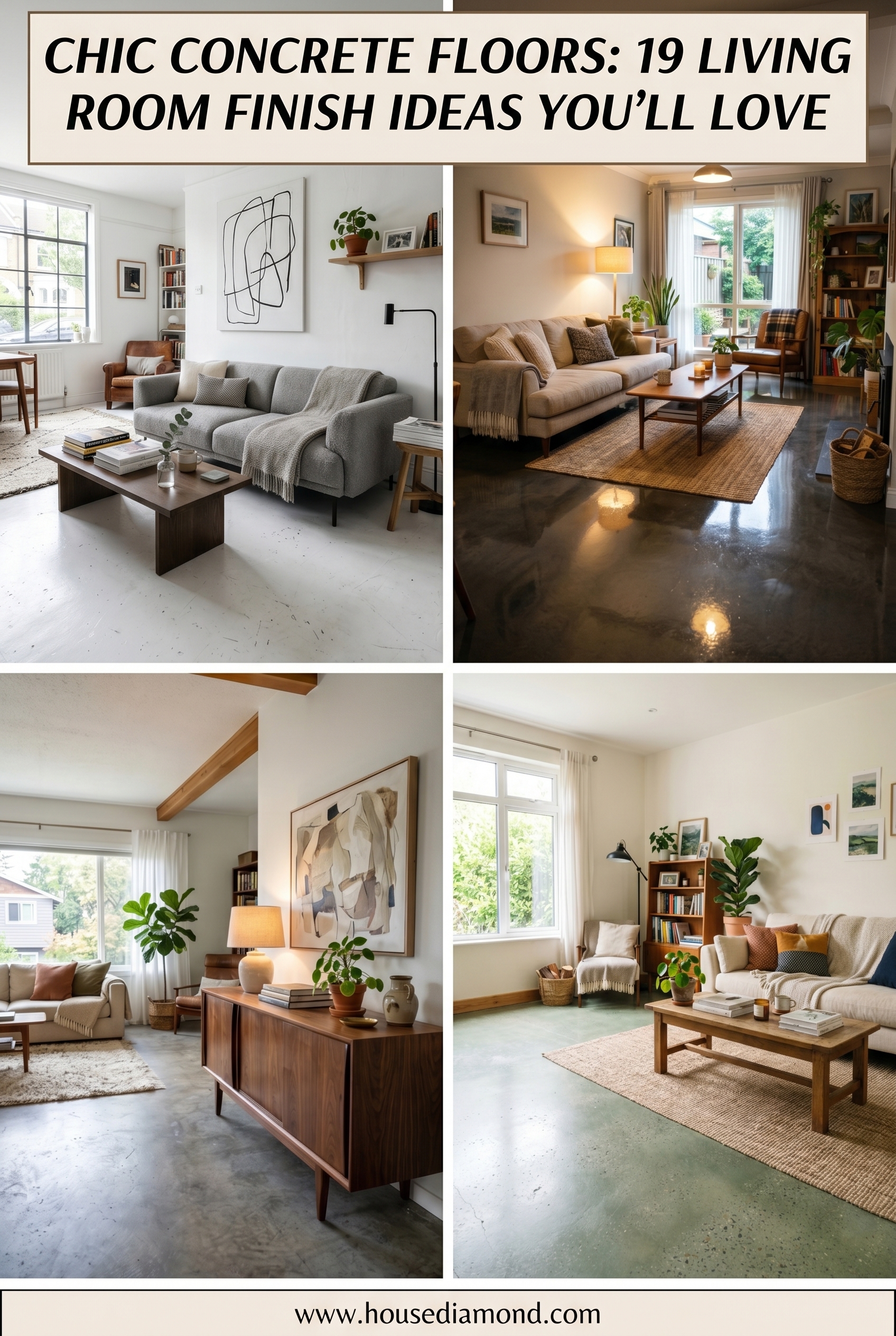
19 Concrete Floor Finish Ideas For Living Rooms
Our favorite Concrete Floor Finish Ideas Living Room ideas!
Everyone assumes concrete floors mean you're living in a drafty warehouse. It’s an entirely unfair reputation. When handled properly, concrete is an indestructible, pet-proof canvas that grounds your entire living room. The trick is getting the finish right and knowing exactly how to handle the inevitable temperature drops and acoustic echoes. Let's get into the specifics of making hard floors look effortlessly intentional.
1. High-Gloss Polished Minimalism
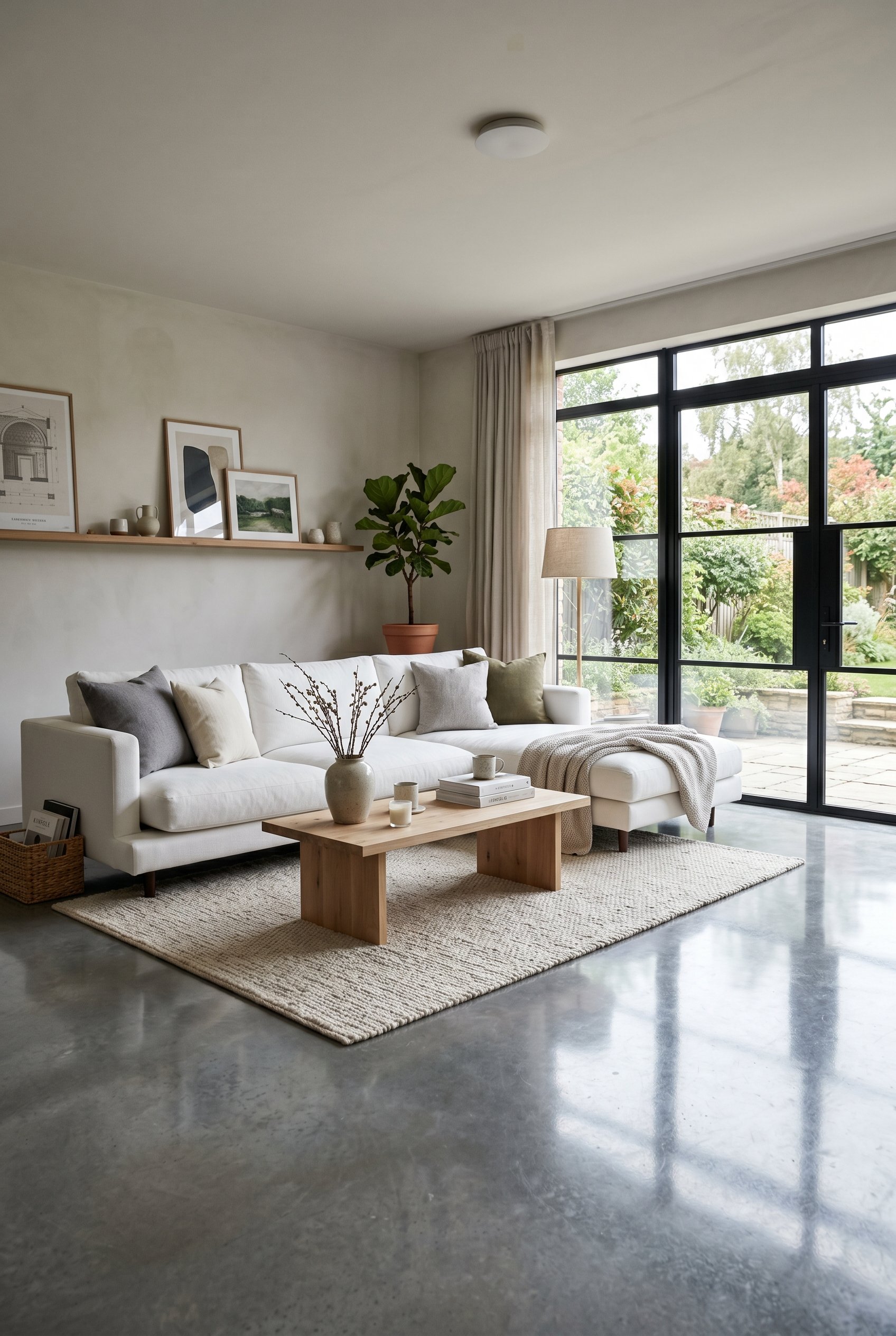
This is the holy grail of modern architectural flooring. Polished concrete isn’t just sealed; it’s mechanically ground down with progressively finer diamond pads until it literally shines like a mirror. I absolutely love how a high-gloss finish bounces natural light around a dark room.
Pros: Practically indestructible and never needs reapplying. Cons: Very slippery in socks. DIY or Pro? Professional only. You do not want to learn how to operate a heavy planetary grinder in your own living room. Cost: Expect to pay $5 to $12 per square foot depending on the level of shine.
2. Integrating Underfloor Radiant Heating
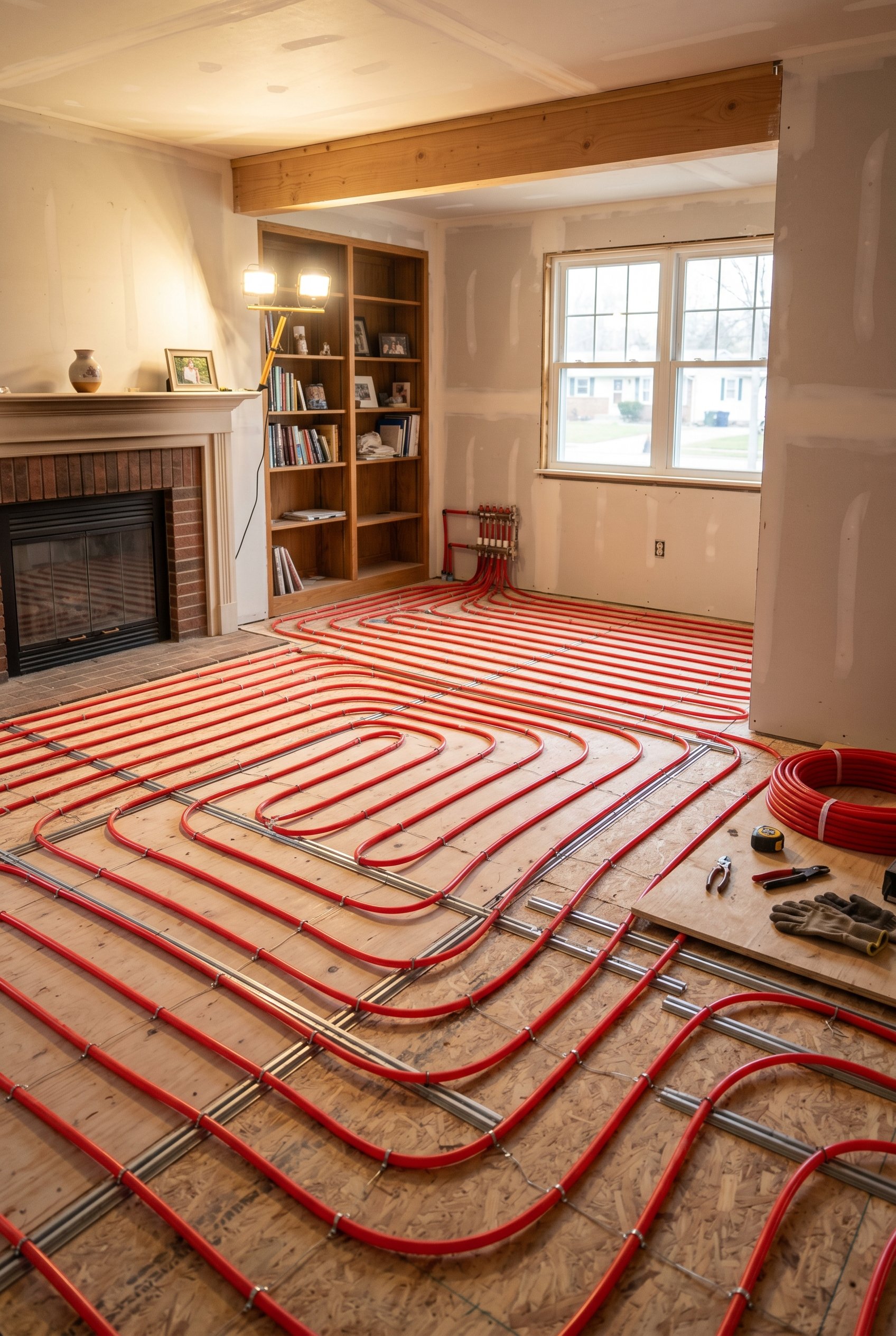
The number one complaint about concrete is that it feels like an ice rink in January. If you are pouring a new slab or doing a major gut renovation, hydronic radiant heating is mandatory in my book. The concrete acts as a massive thermal mass, holding onto the heat and radiating it slowly into the room. A warm concrete floor under bare feet completely breaks the "cold industrial" stereotype. It costs about $10 to $20 per square foot for installation, but your heating bills will actually drop.
3. Low-VOC Matte Eco-Sealers
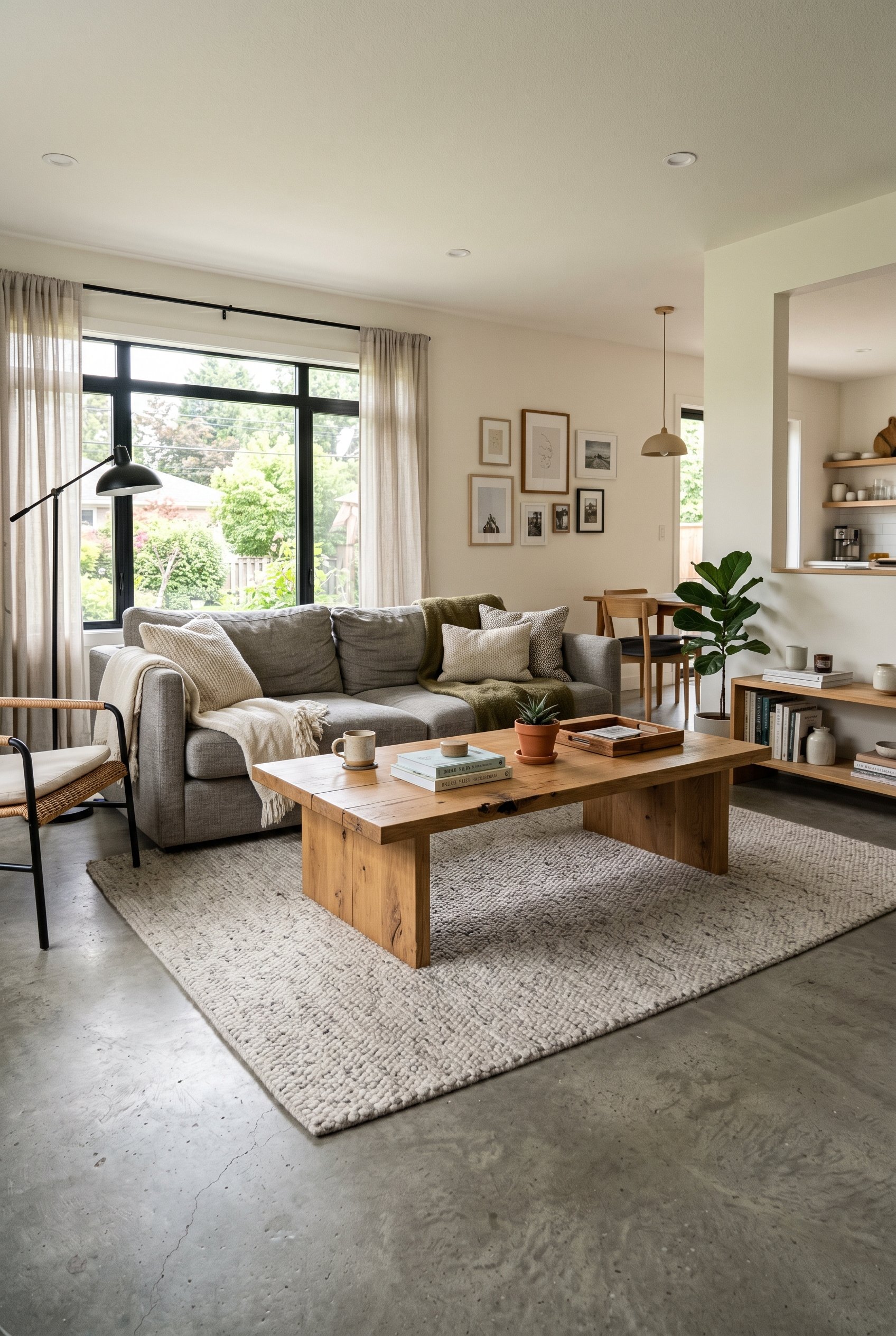
Not everyone wants a shiny floor. A flat matte finish leaves the concrete looking raw, dusty, and delightfully brutalist—but you still have to seal it, or it will stain the second you spill coffee. I highly recommend low-VOC, water-based penetrating sealers like AFM Safecoat. They soak directly into the pores rather than sitting on top. It’s completely pet-safe, won't off-gas terrible chemical smells, and keeps the raw aesthetic intact.
4. Copper and Rust Acid Staining
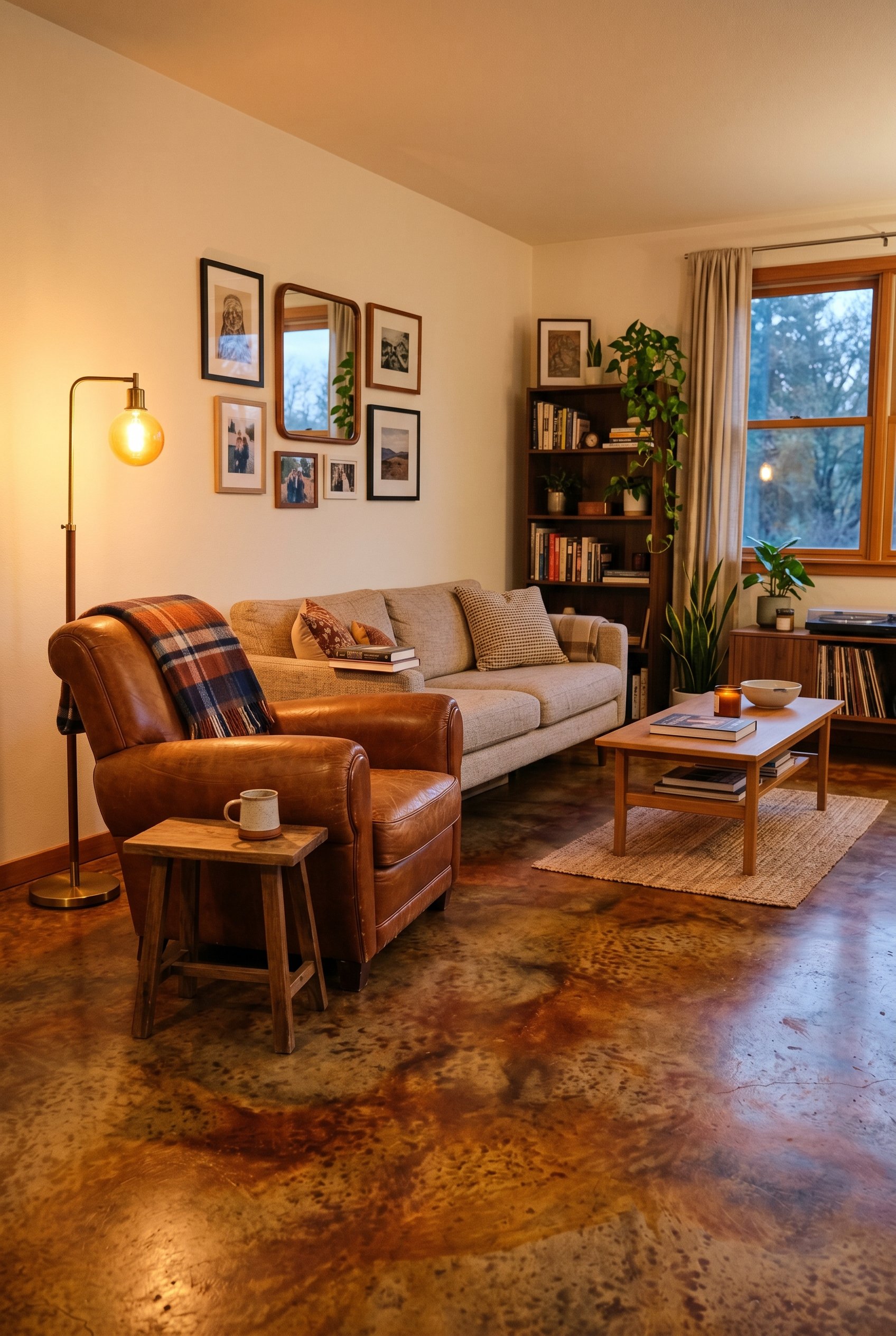
Acid staining is wild because it’s a chemical reaction, not a paint. The metallic salts in the acid react with the lime in the concrete, creating a mottled, organic pattern that looks a bit like natural marble or worn leather. Rust, amber, and copper tones instantly warm up a stark living room.
Cost: Usually around $3 to $5 per square foot. The Catch: You have zero control over exactly how the color takes. If you are a perfectionist who needs an even, solid color, skip this.
5. DIY Painted White Floors
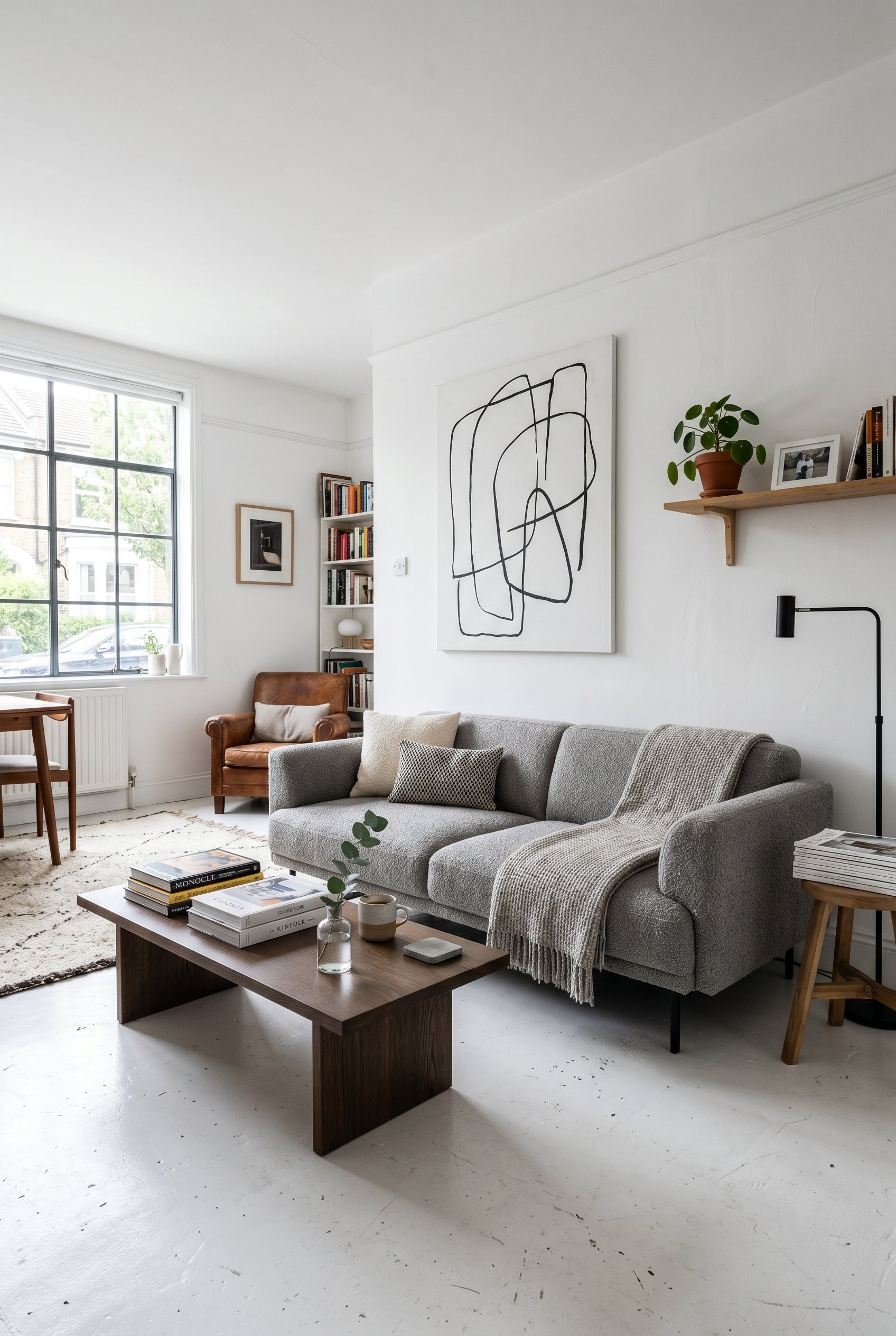
This is my favorite budget hack for ugly, previously stained concrete. A solid coat of crisp white porch and floor enamel (Sherwin-Williams makes a great one) completely erases whatever visual mess is going on underneath. It gives the room a stark, gallery-like feel.
Pros: Extremely DIY-friendly and cheap ($1 to $2 per square foot). Cons: It will scuff. You have to be okay with a patina developing over time, or be prepared to repaint high-traffic areas every few years.
6. Acoustic Management with Heavy Vintage Rugs
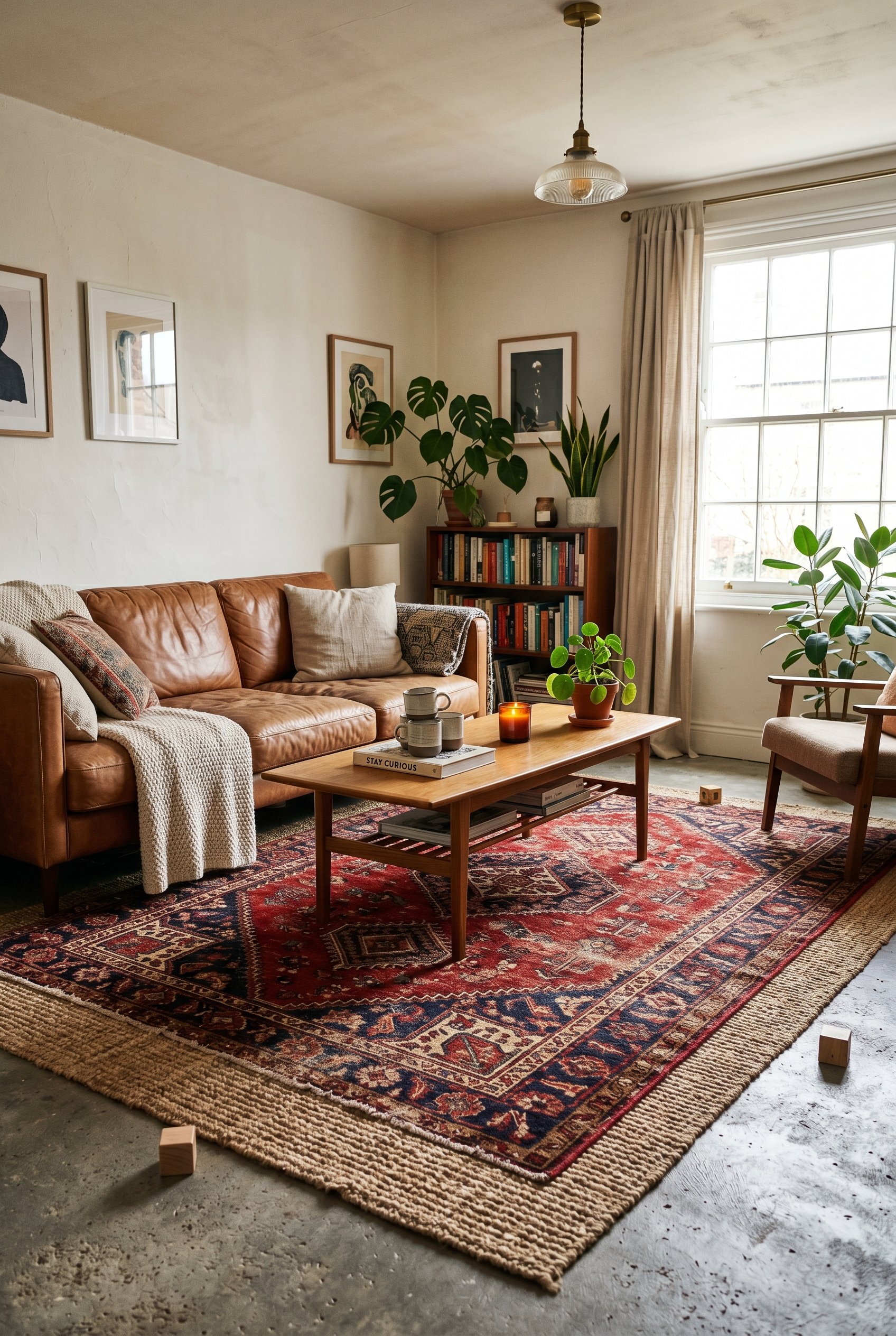
Here is a harsh reality: concrete floors turn living rooms into echo chambers. To fix the acoustics, you need heavy textiles. I love tossing a massive, distressed Persian rug or a thick Turkish kilim directly over raw concrete. The contrast between the cold, hard gray floor and the warm, heavily patterned wool is incredible. Plus, a proper half-inch felt rug pad underneath will absorb a ridiculous amount of sound bounce.
7. The Exposed Aggregate Terrazzo Look
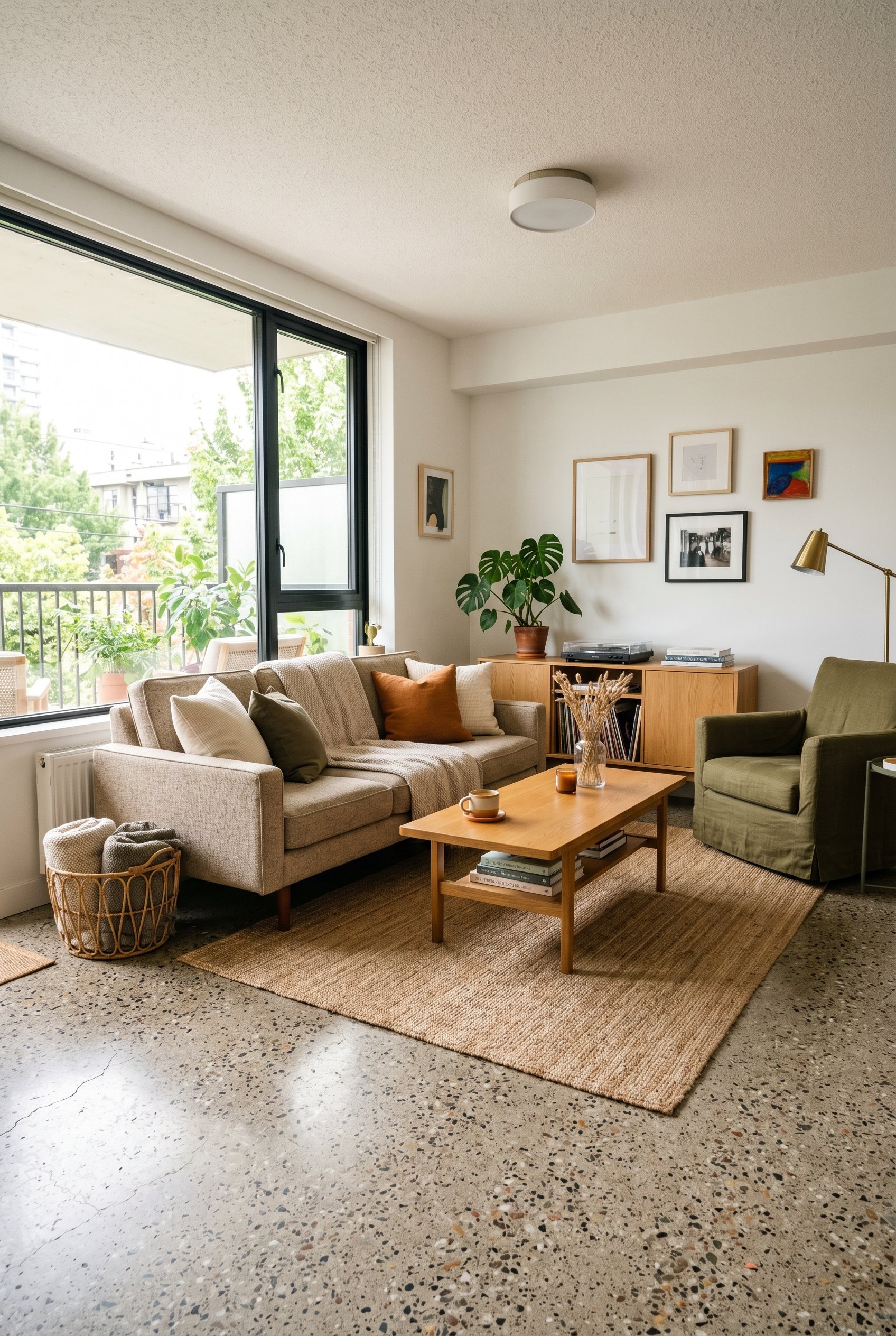
Instead of a smooth gray finish, contractors grind the top few millimeters off the concrete slab to expose the crushed stones and pebbles underneath. It mimics the look of high-end terrazzo without the absurd price tag. You get a highly textured, speckled finish that hides dirt and pet hair brilliantly. This costs around $6 to $10 per square foot, but the visual depth is unmatched.
8. Microcement Overlays for Damaged Floors
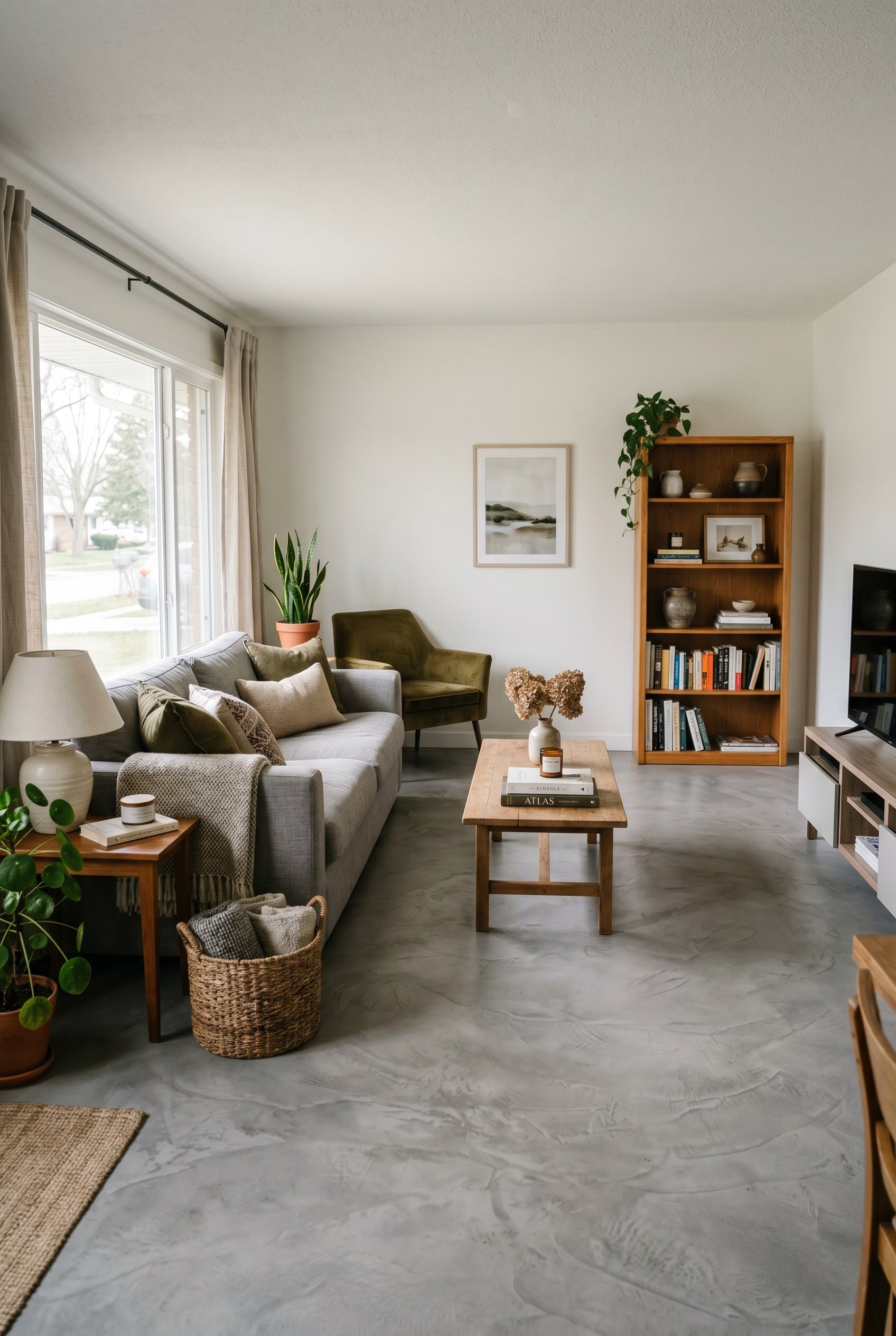
If your existing concrete is severely cracked, pitted, or covered in old adhesive, polishing it will look terrible. Microcement is the fix. It’s a polymer-modified cement skim coat applied just a few millimeters thick. You trowel it on by hand, which leaves these gorgeous, subtle sweeping marks. It’s an intermediate DIY project if you have a steady hand, but a pro will make it look flawless for about $7 to $12 per square foot.
9. Moody Midnight Black Water-Based Dye
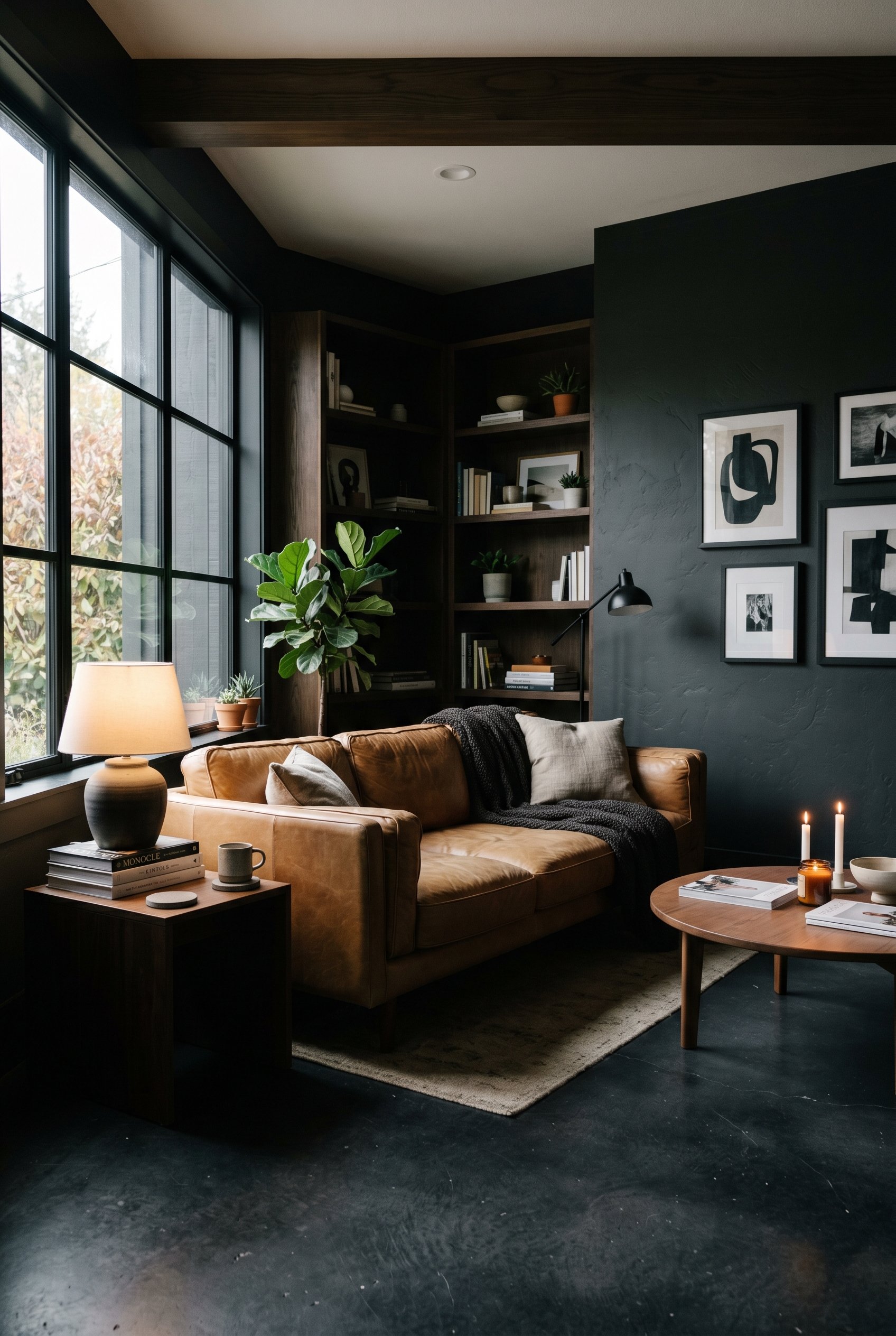
Unlike acid stains, water-based dyes penetrate the concrete to deliver a predictable, uniform color. A matte black dyed concrete floor is incredibly edgy and grounds bright, sunlit living rooms perfectly. Pair it with a tan leather sofa from Article or West Elm, and the color contrast is just stunning. Dyes dry incredibly fast, so you can walk on them the same day.
10. High-Contrast Styling with Velvet and Bouclé

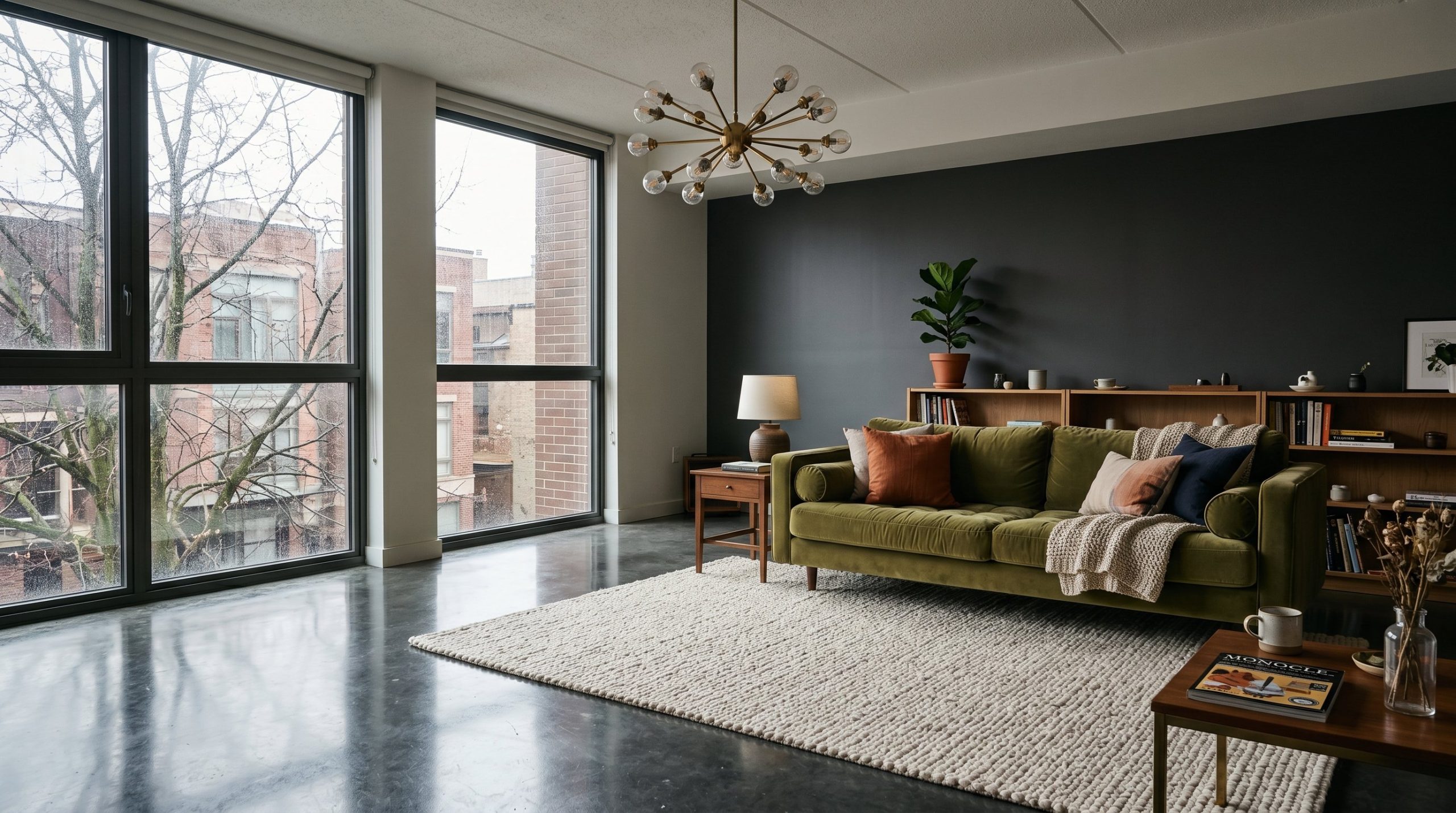
The finish on the floor dictates what you put on top of it. Raw or lightly sealed gray concrete is an understated backdrop that demands bold, tactile furniture. A plush, olive green velvet sofa or an oversized white bouclé armchair suddenly looks much more expensive when sitting on a brutalist floor. The visual tension between soft upholstery and hard flooring is what makes the room work.
11. Scored Faux-Tile Grids
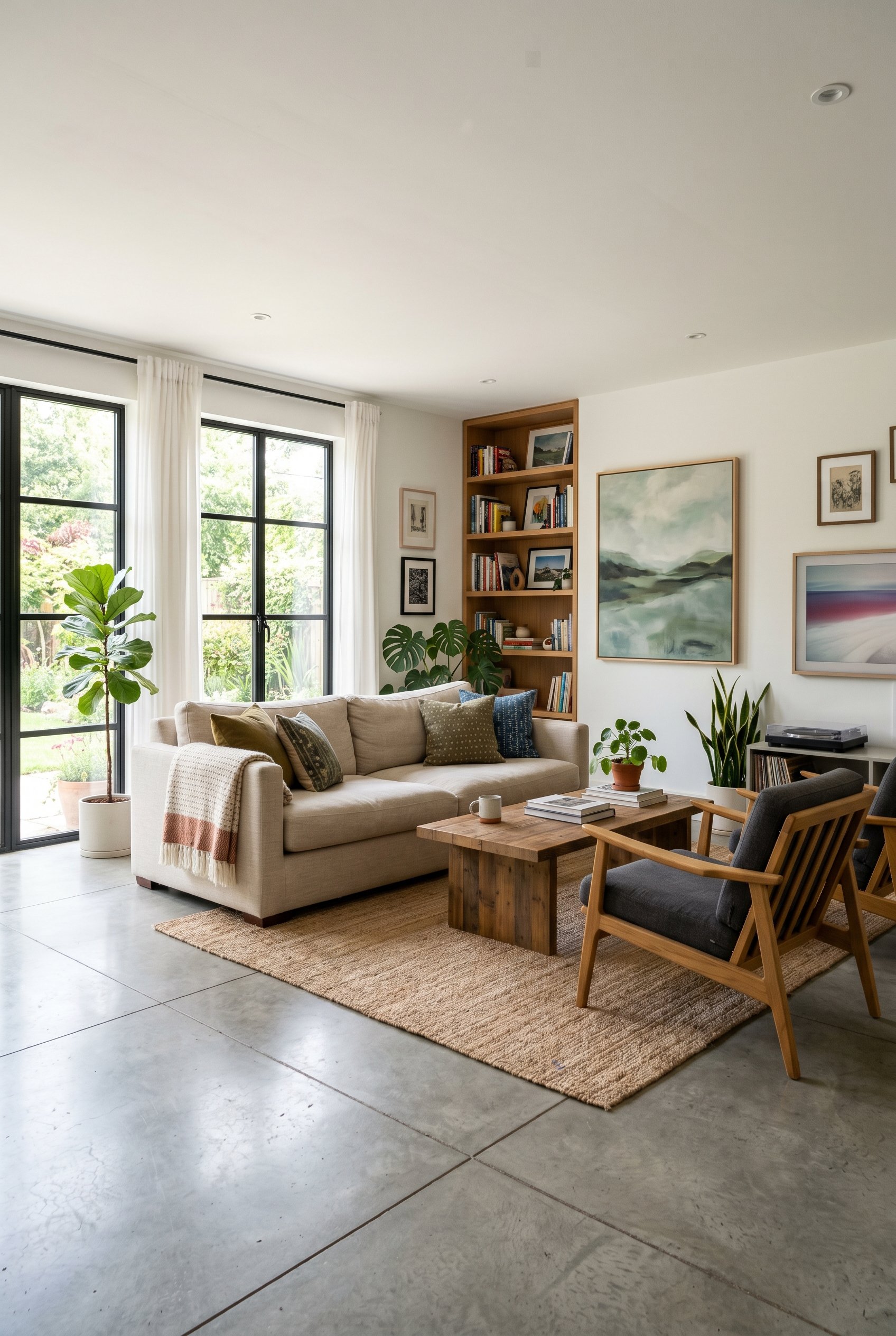
If a massive, unbroken slab of concrete feels too commercial, you can score it. A pro uses a concrete saw to cut shallow grid lines into the surface, mimicking the look of massive 4×4 foot tiles. Once it's sealed, it gives the floor architectural rhythm and scale. It's a great trick for huge, open-concept living rooms that need a bit of visual structure.
12. The Polyurethane “Wet Look”
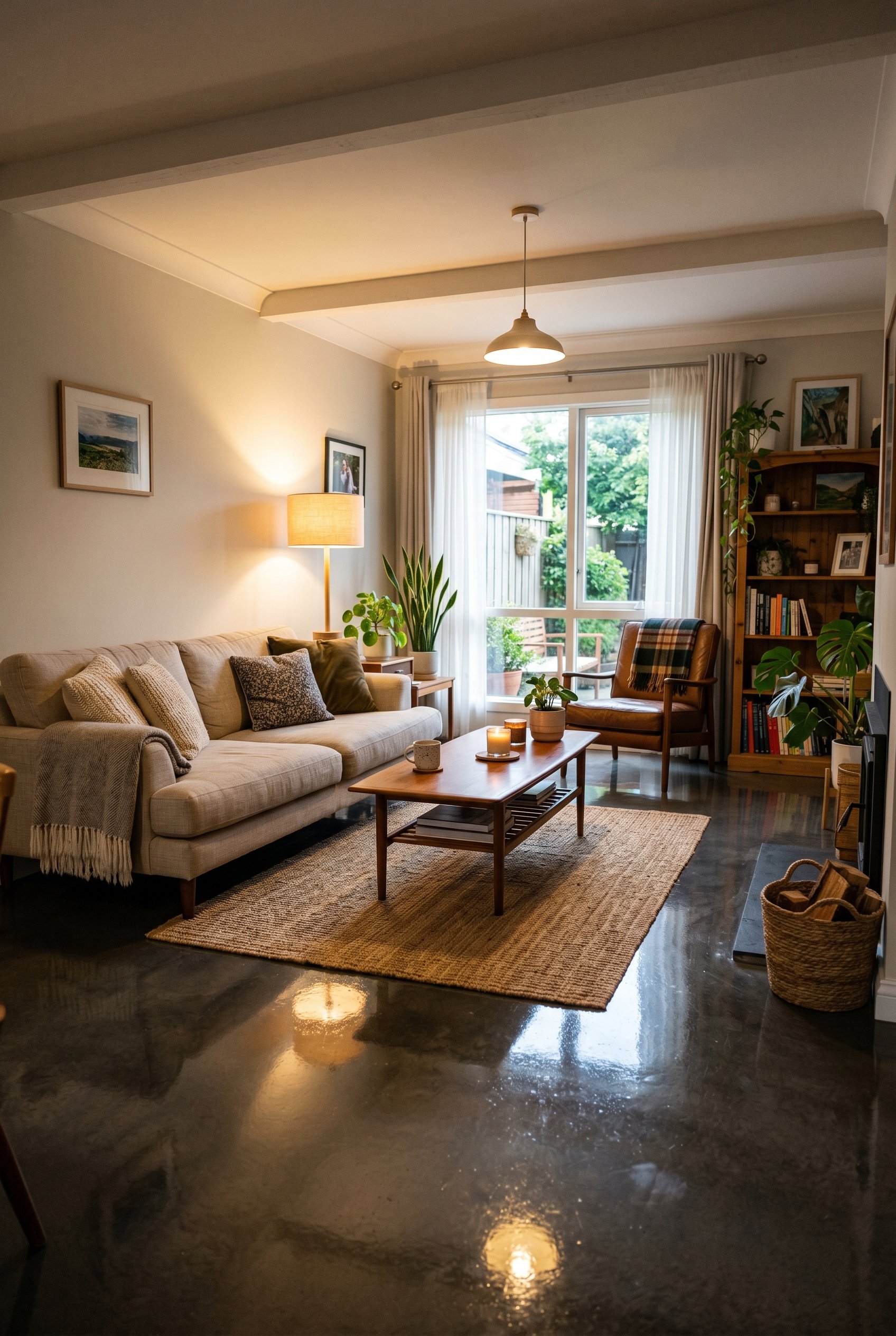
This is a high-gloss topical sealer that sits on the surface of the concrete, making it look permanently wet. It’s significantly cheaper than mechanical diamond polishing (around $2 to $4 per square foot to apply).
Pros: Deepens the natural gray color beautifully and blocks all stains. Cons: Solvent-based polyurethanes have extremely high VOCs. You will need to vacate the house for a few days while it cures, and it can scratch if you drag heavy furniture across it.
13. Stenciled Faux Cement Tiles
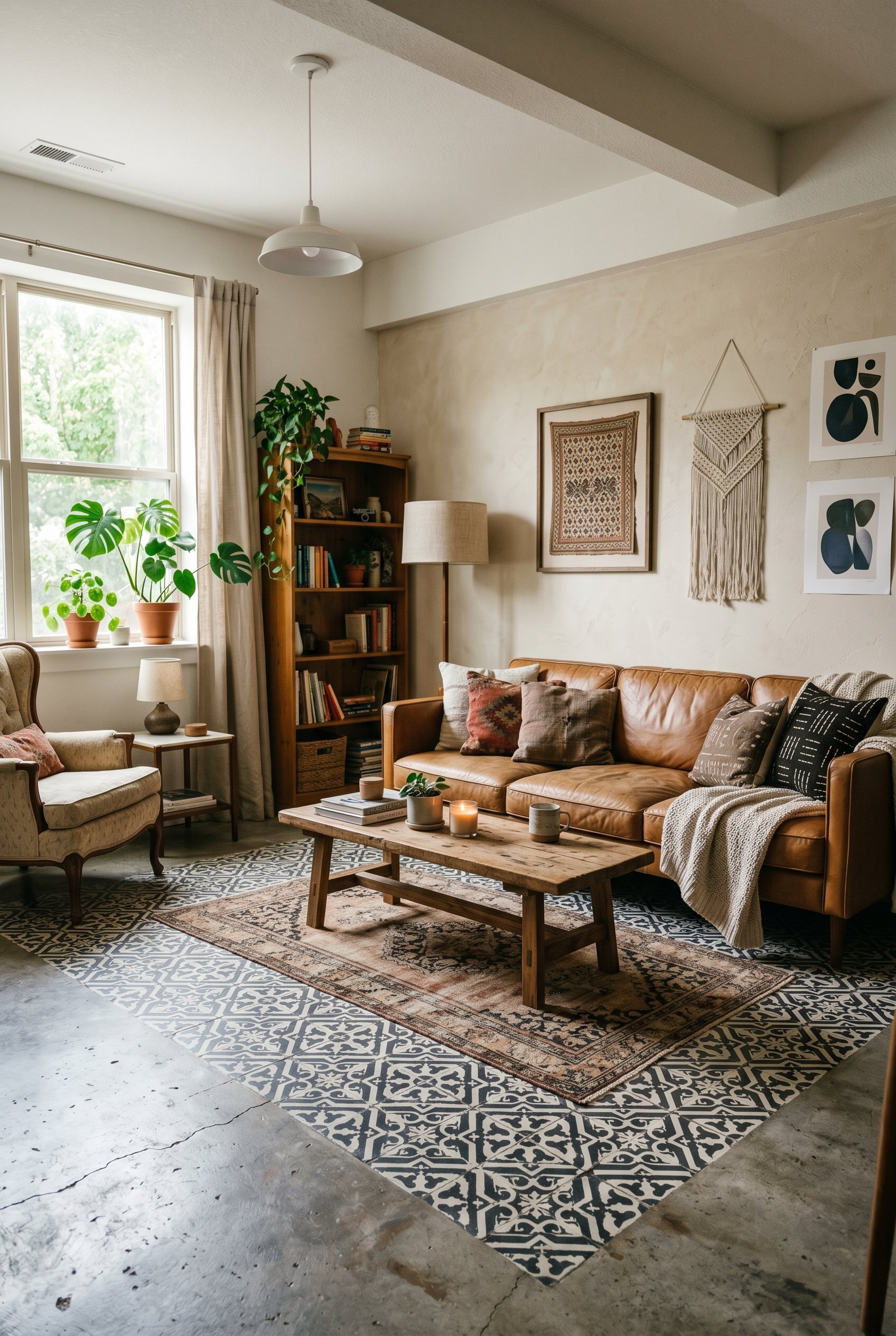
If you love the look of expensive patterned encaustic cement tiles but hate the $15 per square foot price tag, just paint them on. You can buy large floor stencils online, map out a grid, and roll on specific patterns using standard floor paint. It takes a solid weekend of tedious work, but the results are incredibly charming—especially in smaller living rooms or sunrooms.
14. Tinted Acrylic Sealers
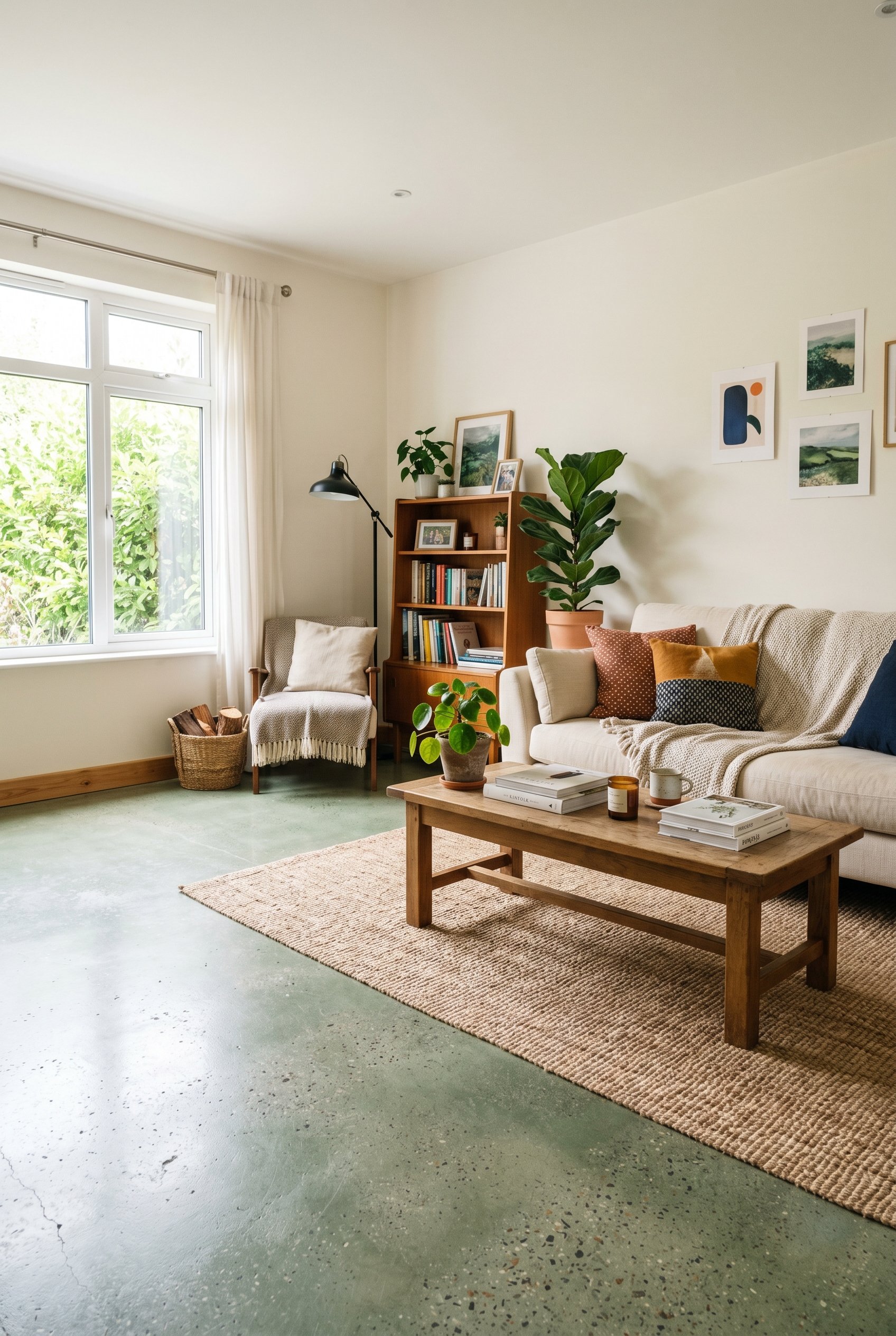
Think of this as a colored wash rather than a heavy paint. Tinted sealers add a subtle, semi-transparent layer of color (like warm beige, charcoal, or sage green) while still letting the natural texture and imperfections of the concrete show through. It’s very easy to roll on yourself with a standard paint roller and dries to a nice satin finish.
15. Sound-Dampening Curtains and Baffles
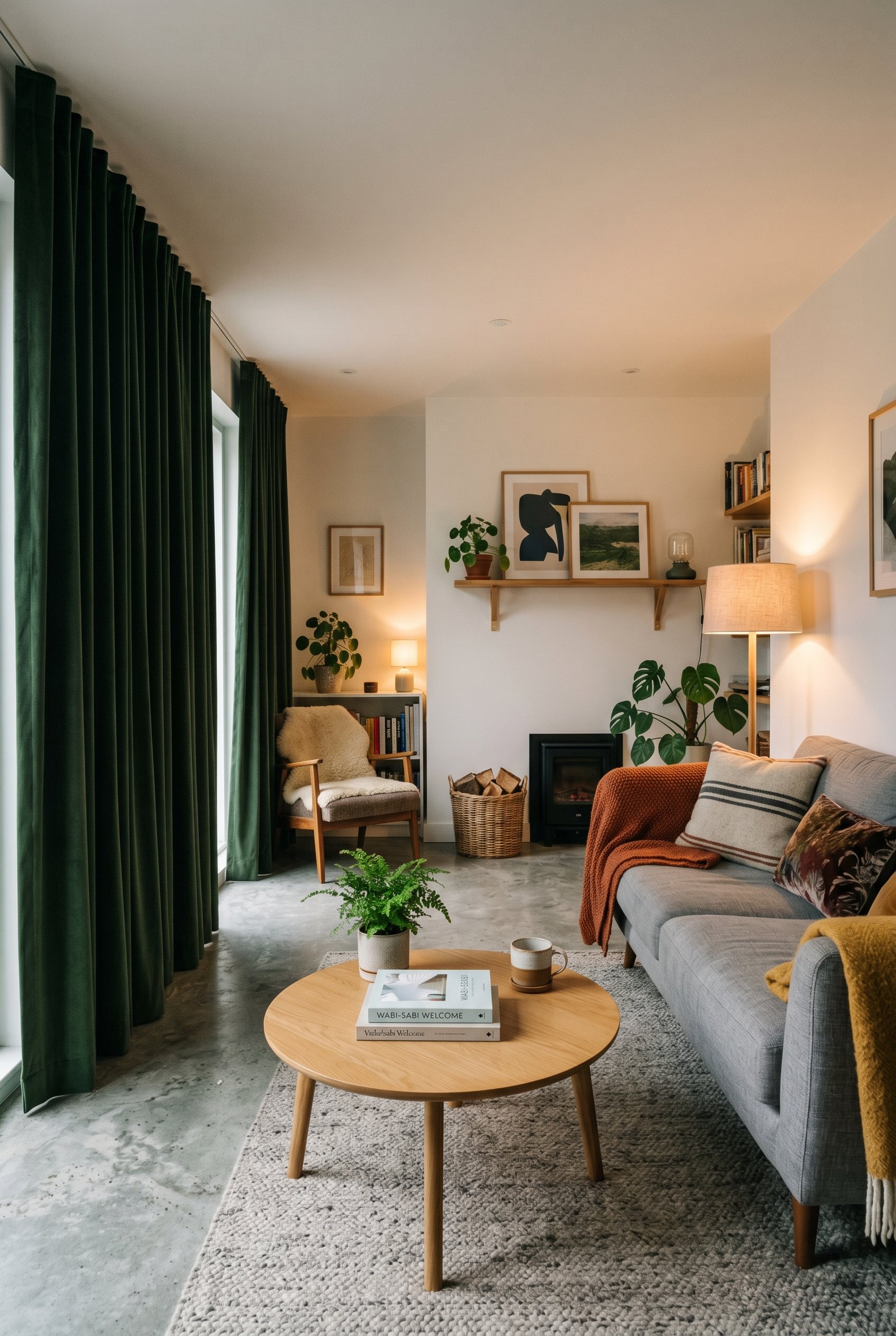
Back to the acoustic problem. If you refuse to cover your beautiful concrete floor with rugs, you have to absorb the sound elsewhere. Heavyweight velvet blackout curtains on the windows and fabric acoustic panels mounted on the walls or ceiling are non-negotiable. Without them, having a conversation in the room will sound like you’re sitting in an empty swimming pool.
16. Seamless Indoor-Outdoor Pours
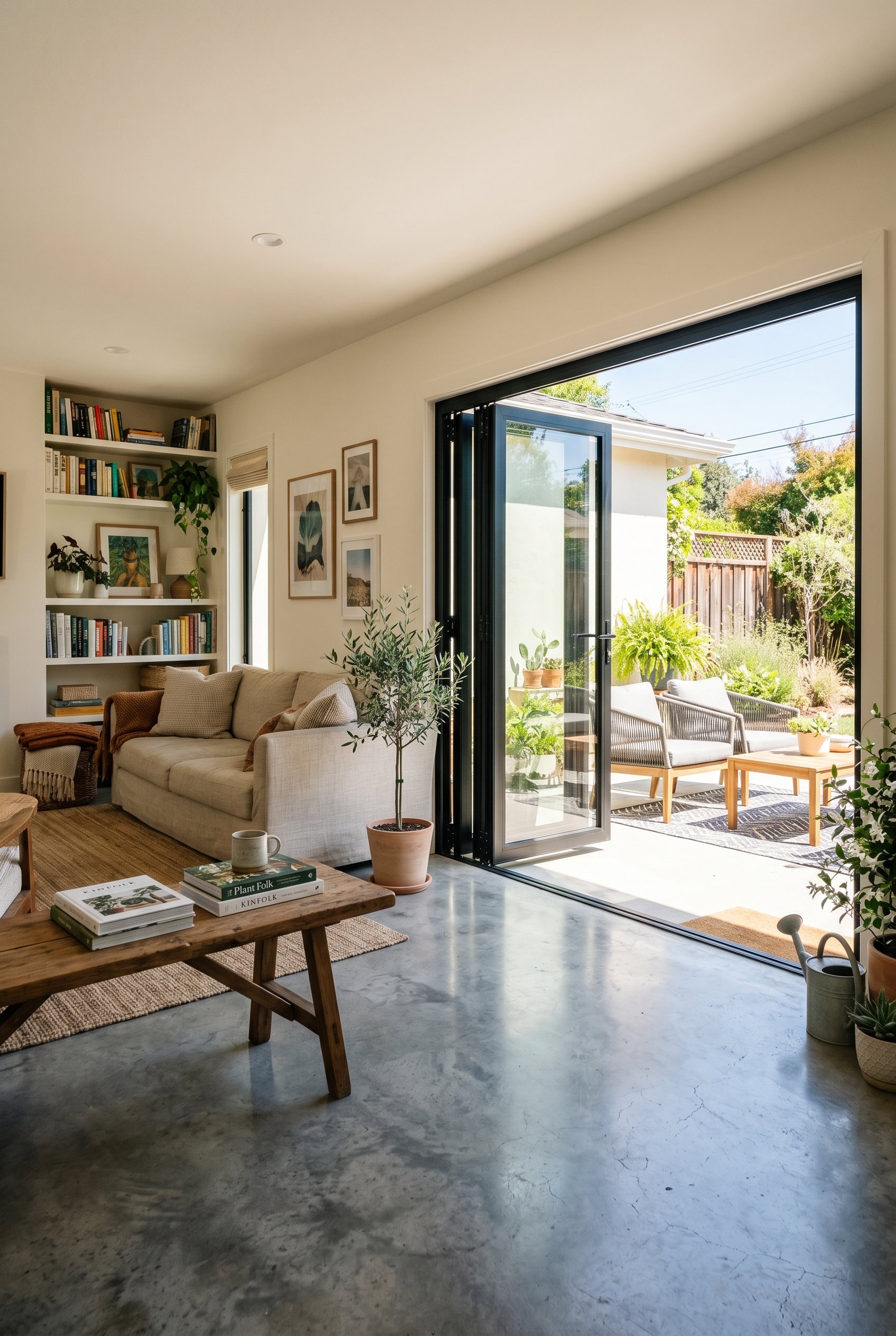
If your living room opens up to a patio via sliding glass or bi-fold doors, running the exact same concrete finish from the inside to the outside is a brilliant architectural trick. It blurs the line between the spaces and makes the living room feel twice as large. Just make sure the exterior portion is sealed with a UV-stable, slip-resistant finish so nobody wipes out when it rains.
17. Solid Color Epoxy Coatings
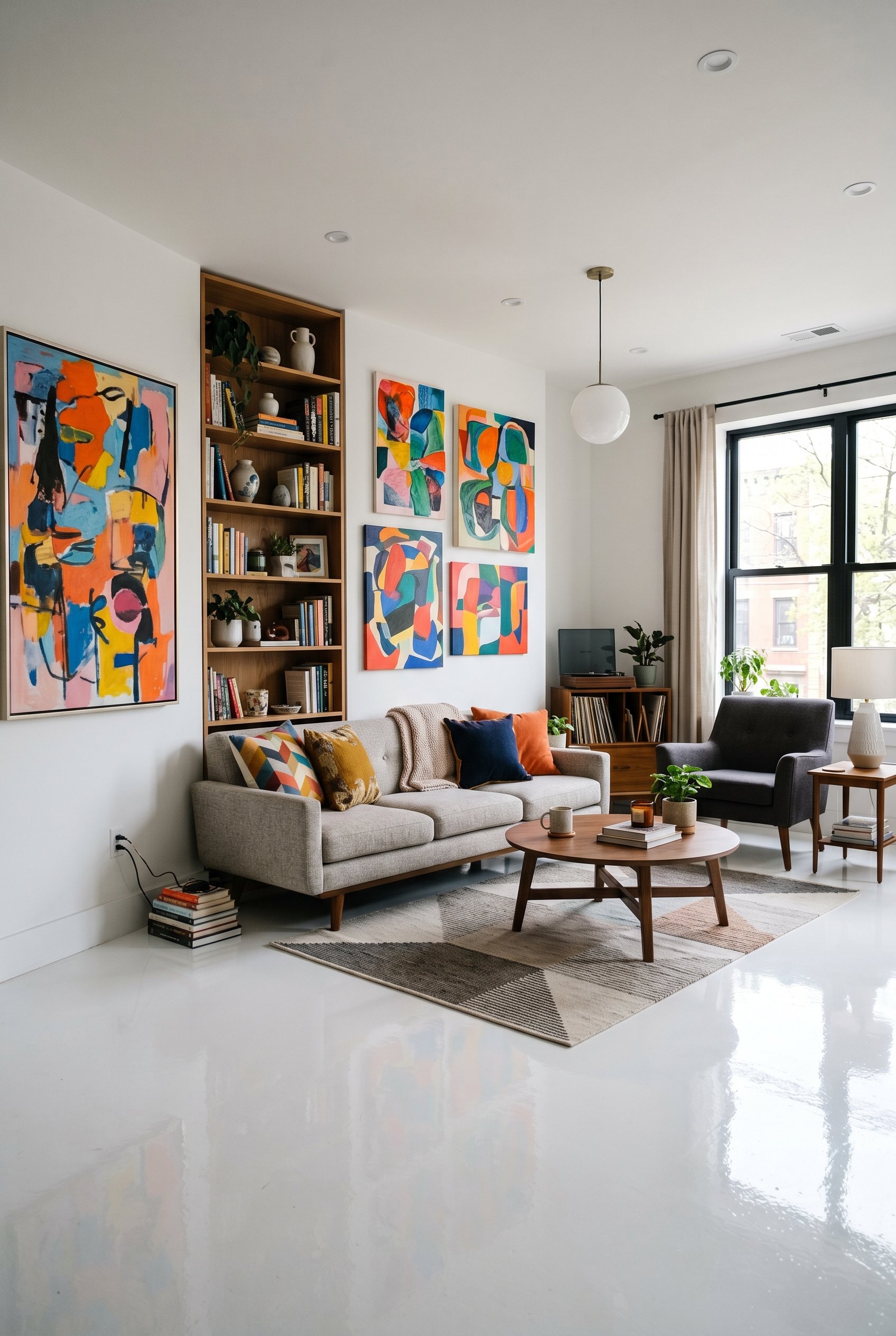
Epoxy isn't just for garages. A solid, self-leveling epoxy coating in a bright, glossy color (like stark white or even a bold primary color) gives a living room a very modern, European gallery aesthetic. It is completely non-porous, meaning red wine and pet accidents wipe right off. Expect to pay $4 to $9 per square foot for a professional installation.
18. Warm Walnut Wood Accents
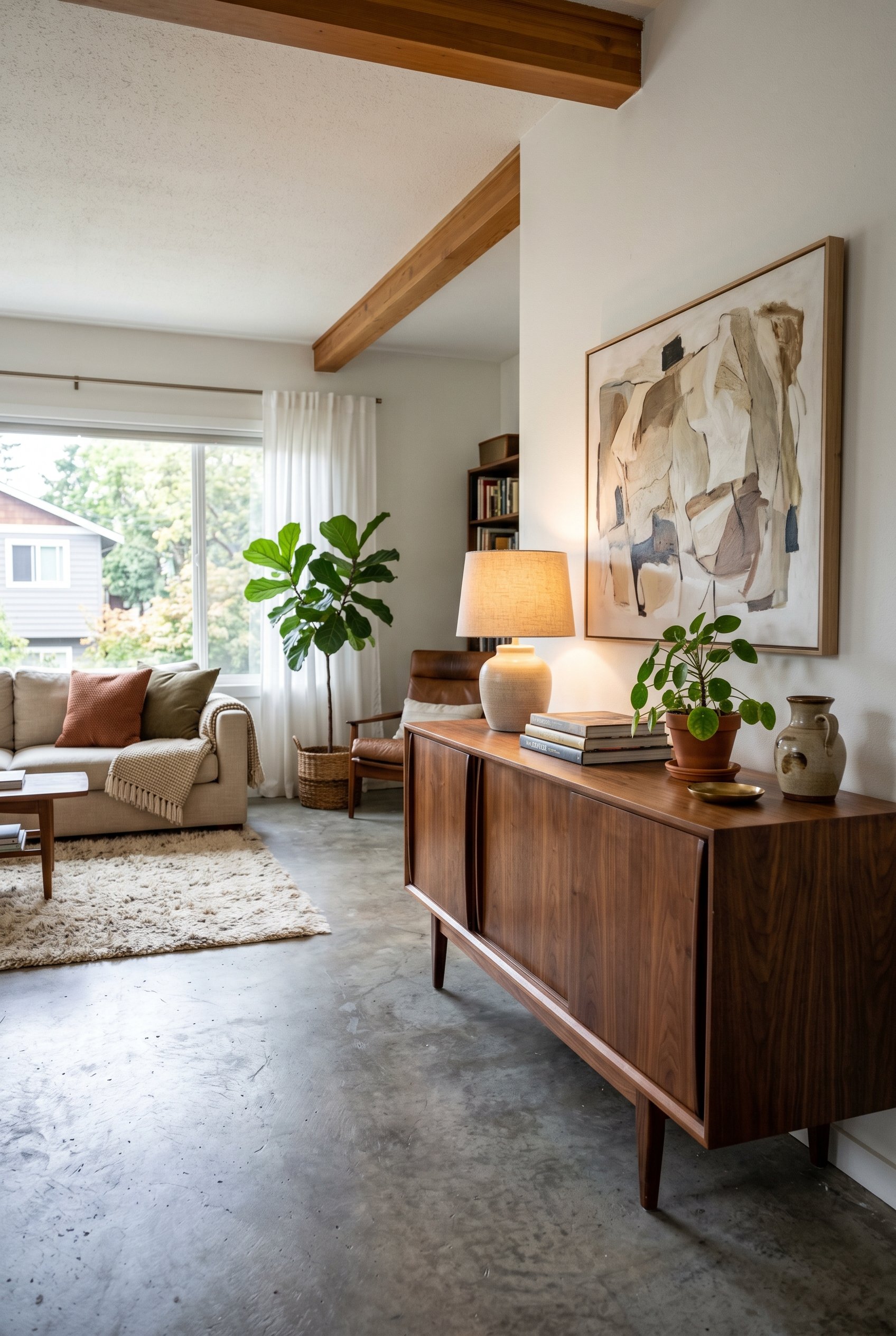
You can't have a gray concrete floor and cold metal furniture without the room looking like a prison. The antidote is mid-century modern wood tones. A large walnut credenza, a teak coffee table, and wood-slat wall paneling instantly inject necessary warmth. The rich browns play perfectly off the cool, flat gray of the floor.
19. Wabi-Sabi Distressed Concrete
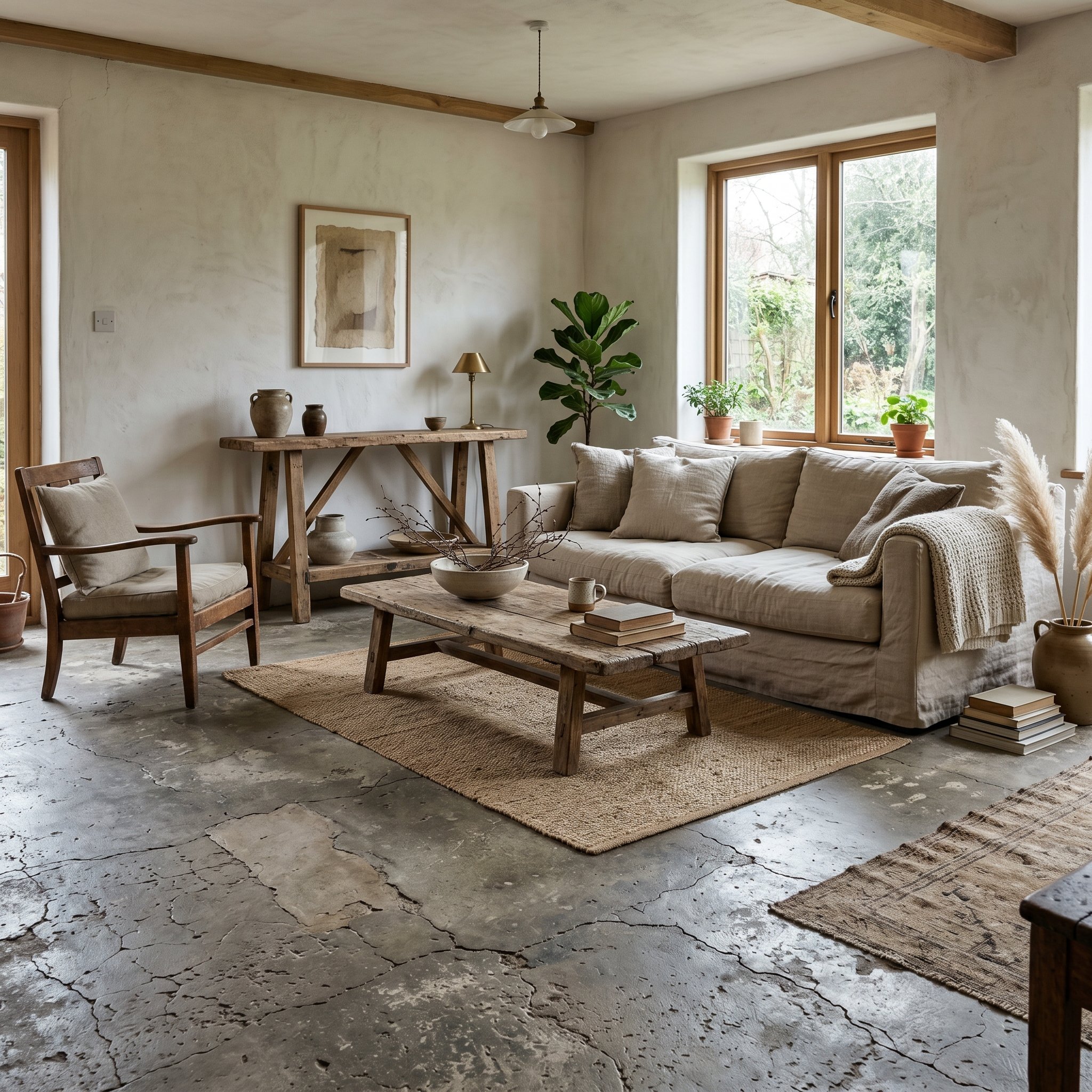
Sometimes the best finish is doing almost nothing at all. If you pull up old carpet and find cracked, glue-stained, chipped concrete, you can just clean it, patch the worst trip hazards, and seal it exactly as-is with a matte topcoat. Embracing the ugly history of the floor fits perfectly into a wabi-sabi or heavily industrial aesthetic. It’s raw, honest, and completely free.
Concrete is heavily unforgiving if you get the finish wrong, but it’s completely bulletproof once you nail it. Honestly, my favorite approach will always be a low-VOC matte sealer paired with a massive, vintage wool rug to kill the echo. Choose the finish that fits your tolerance for maintenance, and don't skip the heating coils if you live somewhere cold.
FAQ
Is it cheaper to polish concrete or install laminate flooring? Laminate is generally cheaper. Mechanical concrete polishing costs between $5 and $12 per square foot, plus the cost of fixing any cracks. Basic laminate usually runs $3 to $7 per square foot fully installed.
How do I stop my concrete floors from echoing? You need soft materials to absorb the sound waves bouncing off the hard floor. Thick wool rugs with heavy felt pads, velvet curtains, upholstered sofas, and acoustic wall panels will instantly kill the echo.
Can I DIY a polished concrete floor? True polished concrete requires renting a 400-pound planetary grinder, managing massive amounts of concrete dust, and using chemical densifiers. It is highly labor-intensive and easy to ruin. Stick to DIY paint or acrylic sealers and leave the diamond polishing to professionals.
Are concrete floors too cold for a living room? Yes, unless you plan ahead. They act as a thermal mass, matching the temperature of the ground underneath. If you live in a cold climate, you absolutely need rugs or underfloor radiant heating systems.
What is the best pet-safe sealer for indoor concrete? Look for water-based, low-VOC penetrating sealers. Brands like AFM Safecoat or Eco Advance are non-toxic, emit virtually zero harsh fumes during application, and cure quickly.