12 Authentic Rustic Mexican Home Decor Ideas
Here’s everything about Rustic Mexican Home Decor!
Authentic Mexican decor is getting buried under cheap, mass-produced knockoffs. Those peel-and-stick geometric tiles? We can do better. Real rustic Mexican design relies on raw, heavy materials, centuries-old artisan traditions, and deep, earthy tones that look baked in the sun. Getting this right takes specific sourcing and a little maintenance knowledge, but it beats a generic catalog look every single time.
1. Earthy Limewash Walls
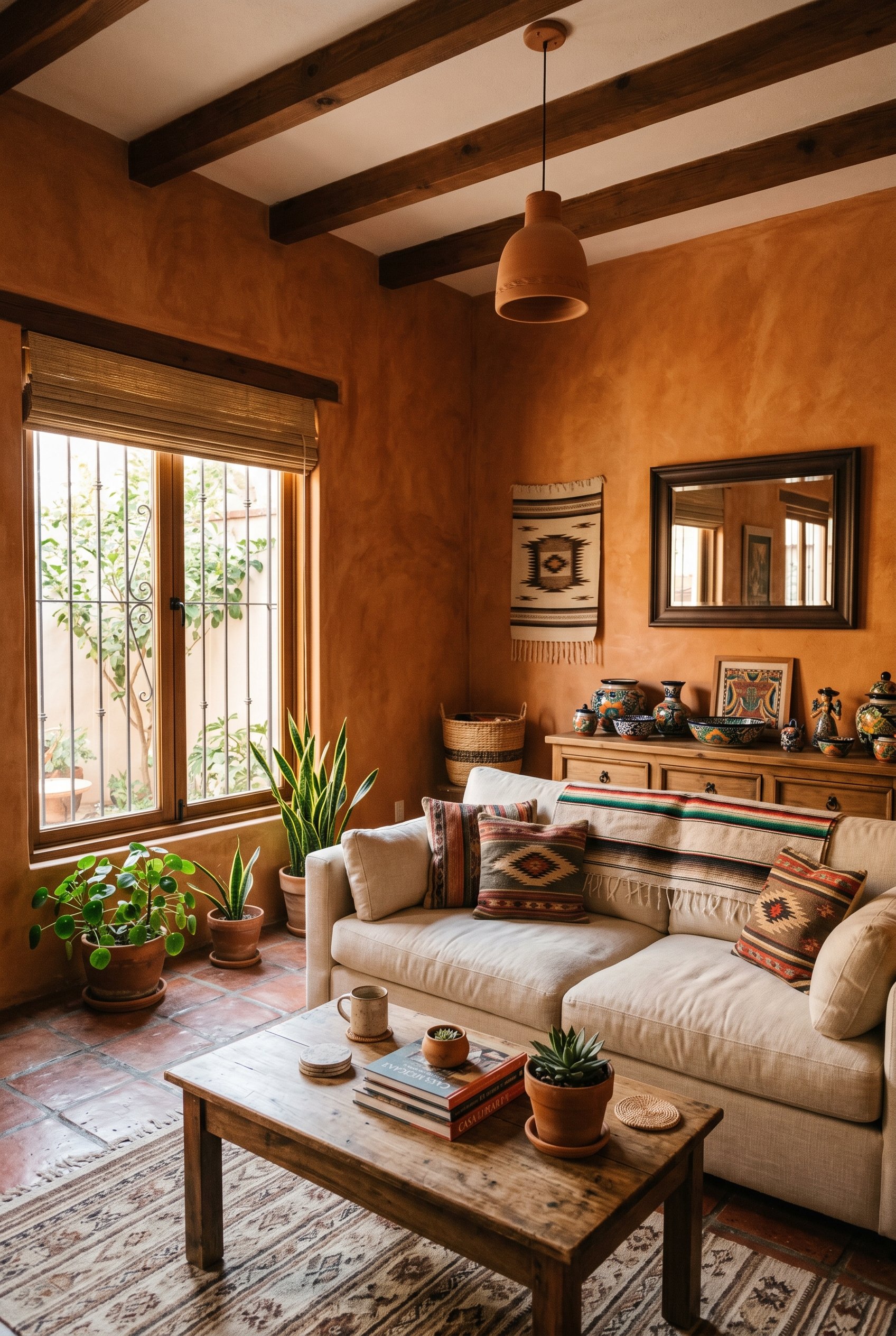
Standard matte paint looks aggressively flat in a rustic space. True Mexican interiors need texture on the walls that feels old and slightly imperfect. I highly recommend using a limewash or a Roman clay finish. Portola Paints has excellent shades in deep burnt oranges, rich ochres, and muted terracottas. Applying it in random, sweeping strokes gives you that mottled, plaster-like depth you just can't get from a standard roller.
2. Authentic Talavera Tiles
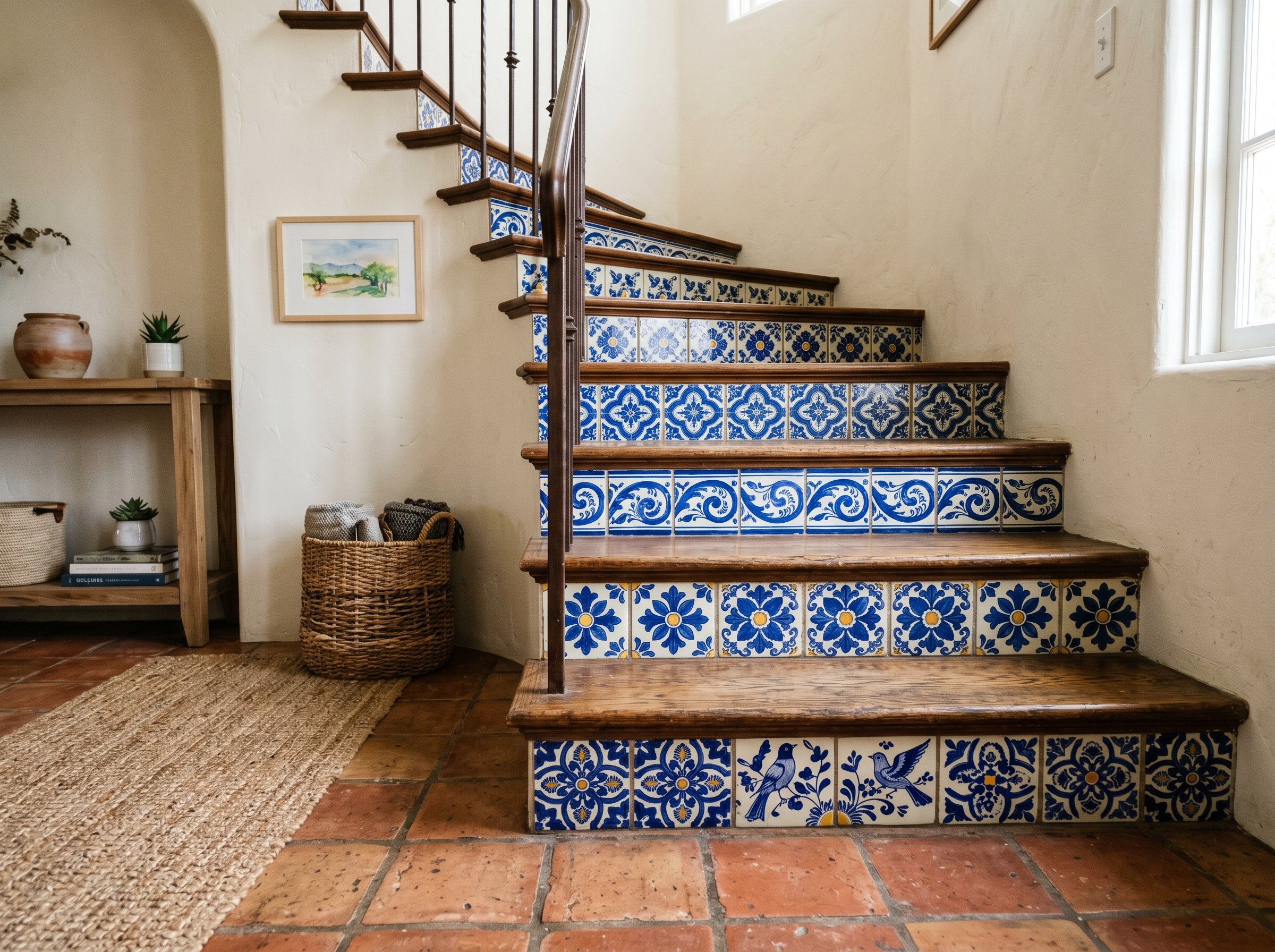
Vinyl decals are a hard no. Real hand-painted Talavera ceramic tiles have slight wobbles and glaze imperfections that make them beautiful. Use them on stair risers, as a kitchen backsplash, or bordering a bathroom mirror. Expect to pay around $1.50 to $3.00 per authentic tile from a specialty importer. It costs more upfront, but the heavy, glossy ceramic texture is impossible to fake.
3. Chunky Reclaimed Wood Furniture
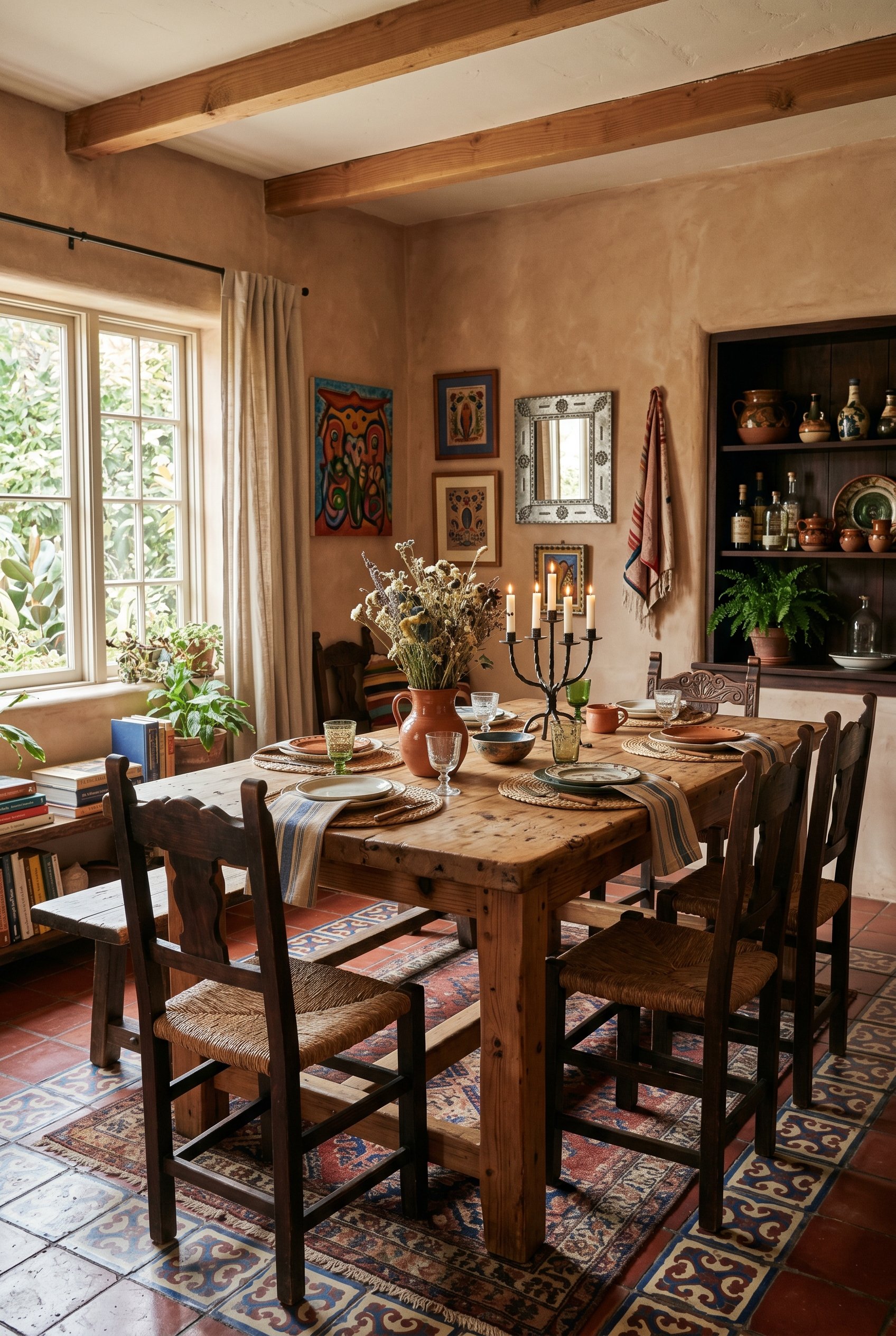
Flimsy veneer has no place here. You want thick, raw pine or mesquite wood for dining tables, sideboards, and benches. The maintenance trips people up: skip the glossy polyurethane clear coats. Real rustic wood should be fed with a natural beeswax polish every six months to keep it hydrated and rich without looking like it's wrapped in plastic.
4. Fair Trade Zapotec Wool Rugs
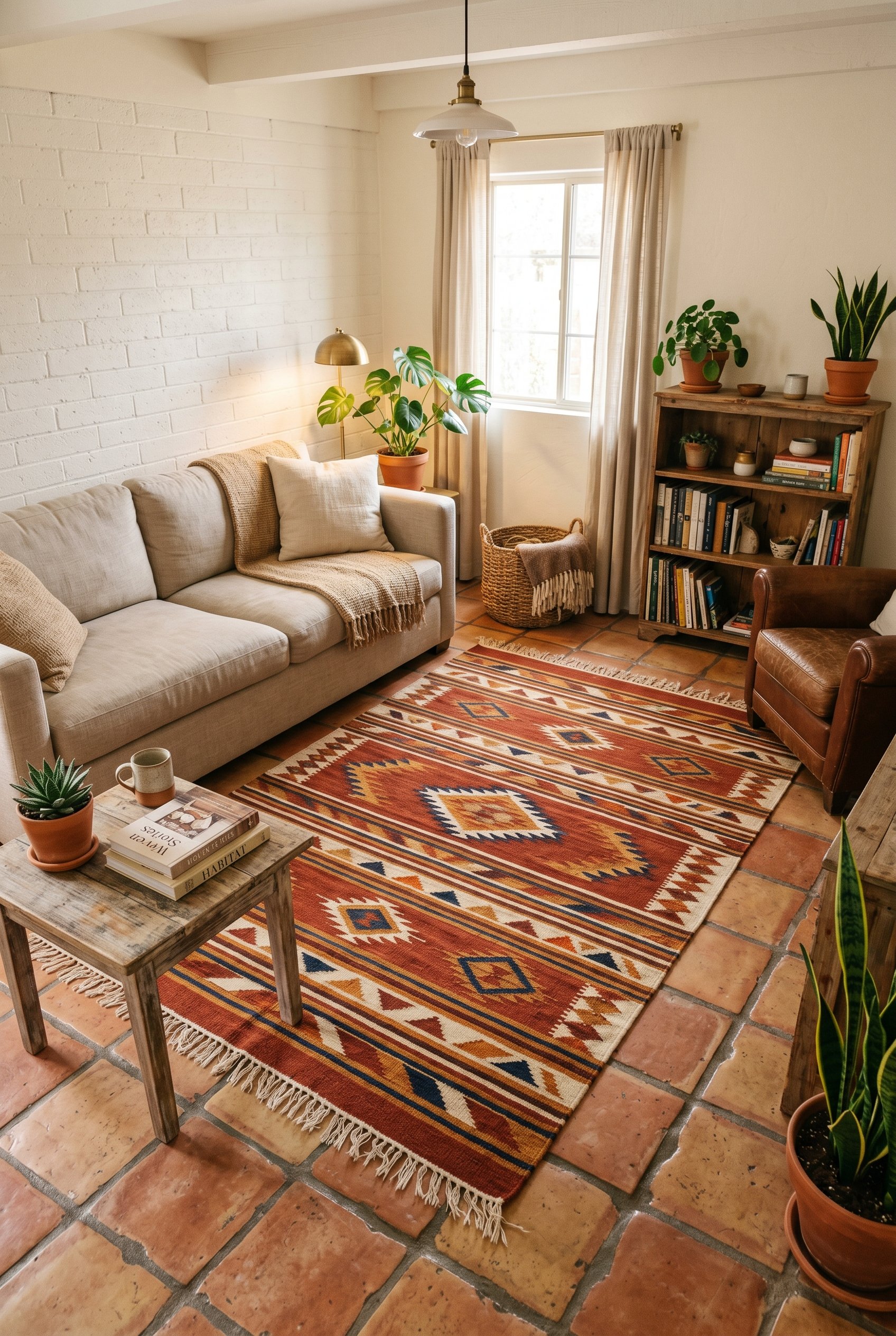
Machine-washable printed rugs from big box stores completely lack the weight and history of a real Zapotec rug. These are hand-loomed from sheep's wool in Oaxaca, usually dyed with natural elements like crushed cochineal insects or marigolds. Search Etsy for shops based directly in Mexico to ensure your money actually goes to the artisans. Wool is naturally stain-resistant, so vacuuming and occasional spot cleaning is all the maintenance they need.
5. Matte Wrought Iron Hardware
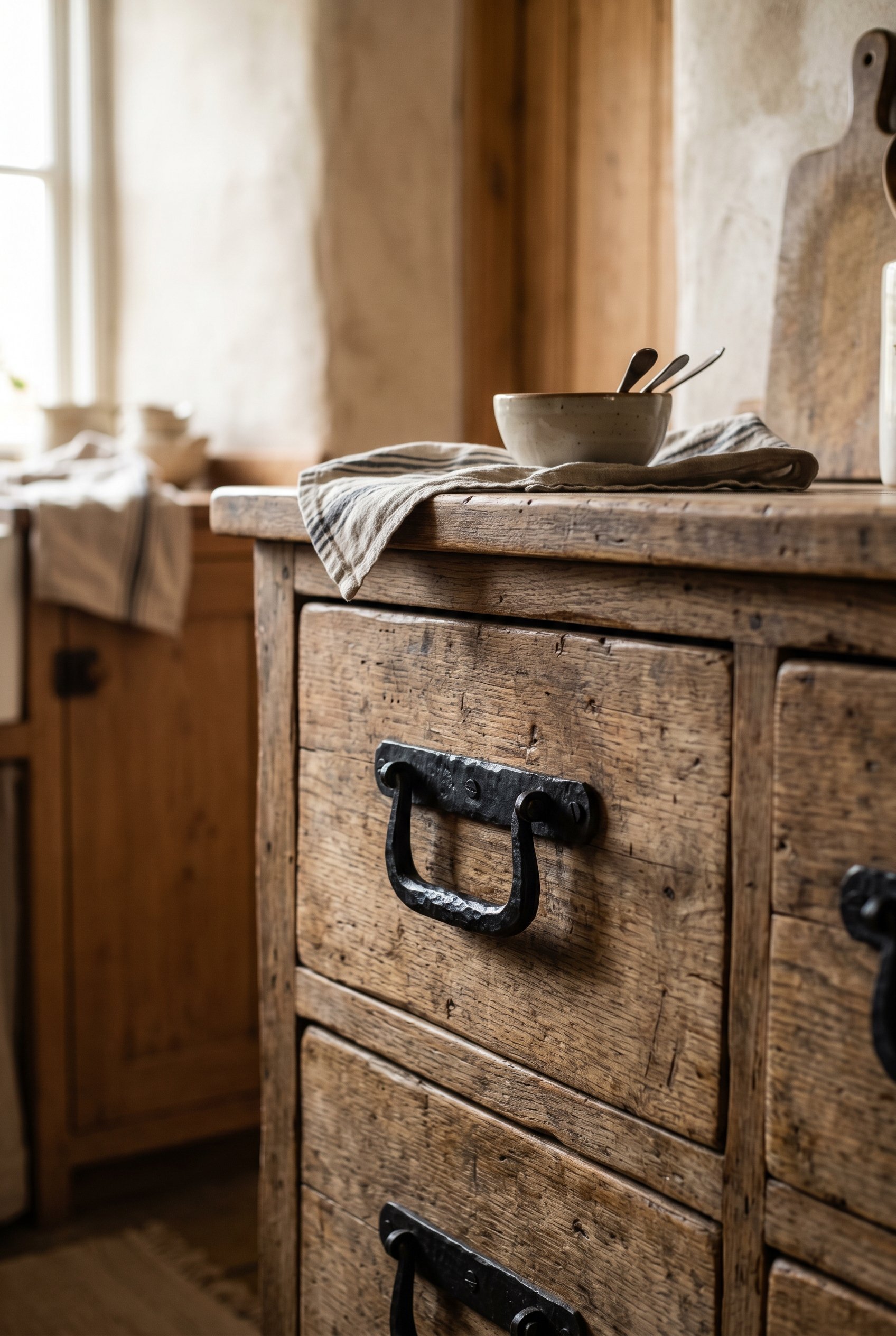
Swap out your lightweight cabinet pulls and builder-grade doorknobs for heavy, matte black wrought iron. The contrast of dark, forged metal against warm terracotta or white plaster is a cornerstone of this style. Vintage shops and architectural salvage yards are goldmines for heavy iron wall sconces, oversized mirrors, and chunky door hinges.
6. Amber Glass and Warm Lighting
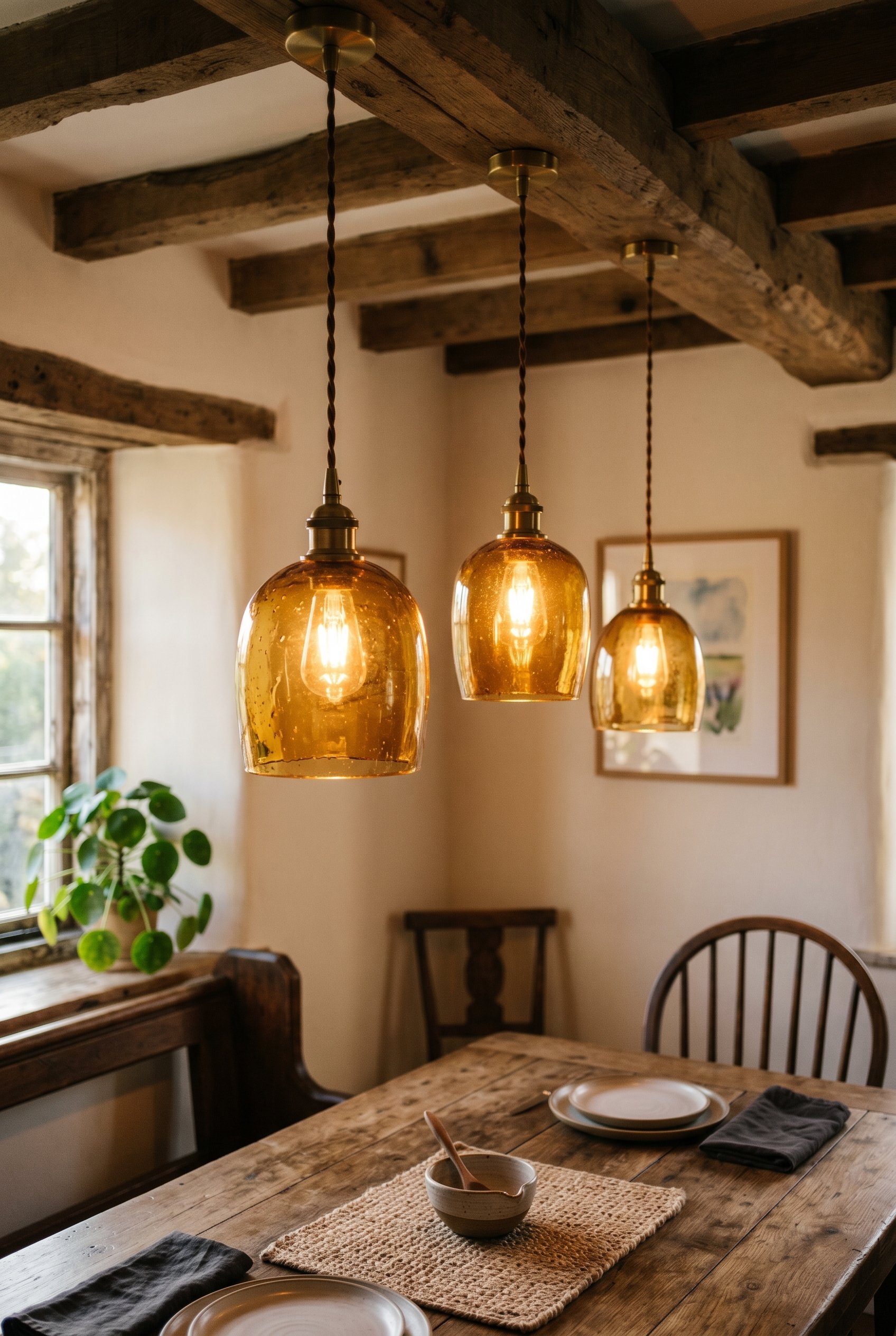
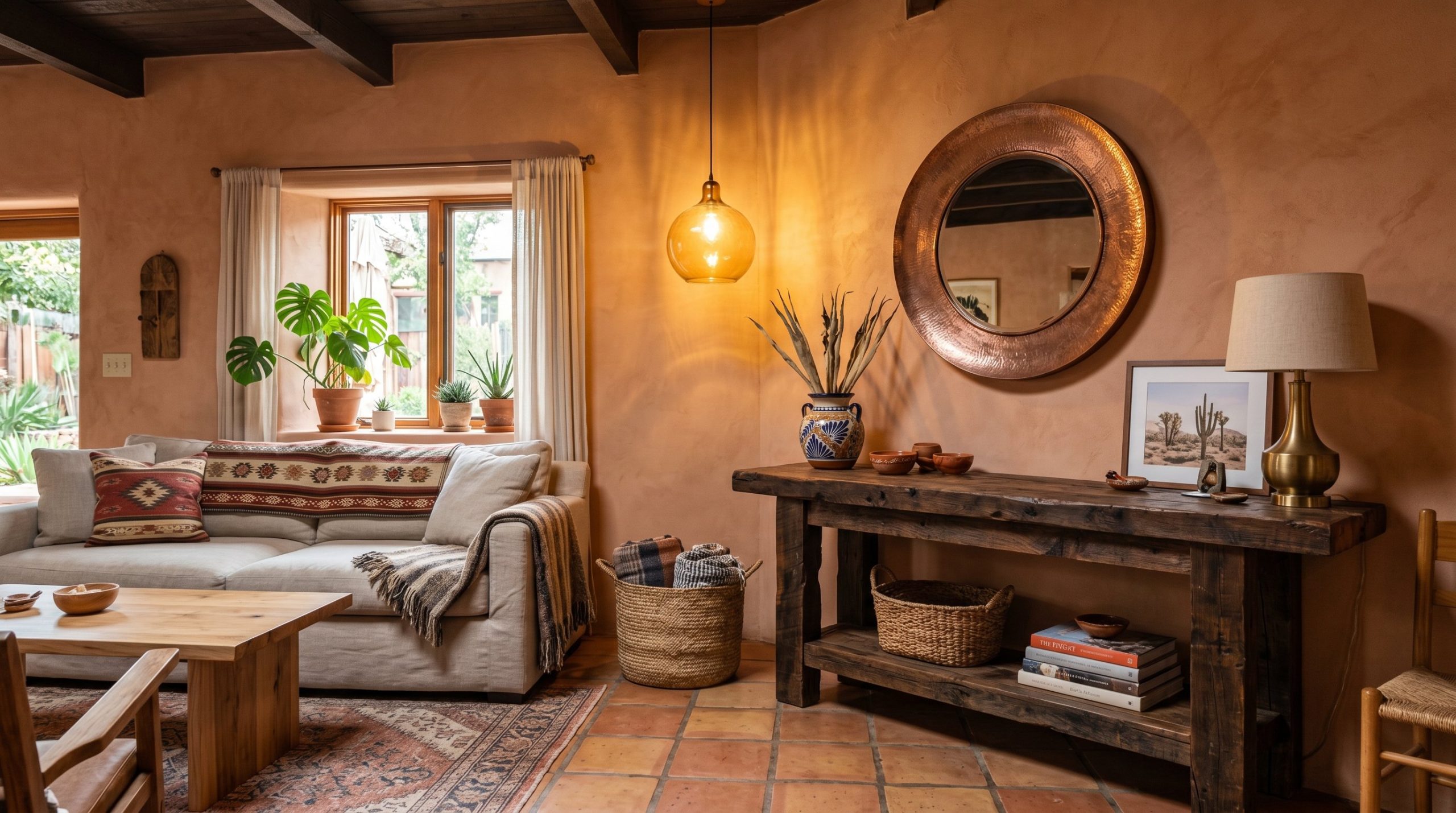
Bright blue-toned LED lighting completely ruins a rustic vibe. You need warmth. Thick, hand-blown amber glass pendants or table lamps cast an incredible golden glow across a room. Mix those fixtures with heavy iron candelabras holding real beeswax pillar candles. The lighting in a Mexican-inspired space should feel like golden hour all the time.
7. Sealed Saltillo Terracotta Floors
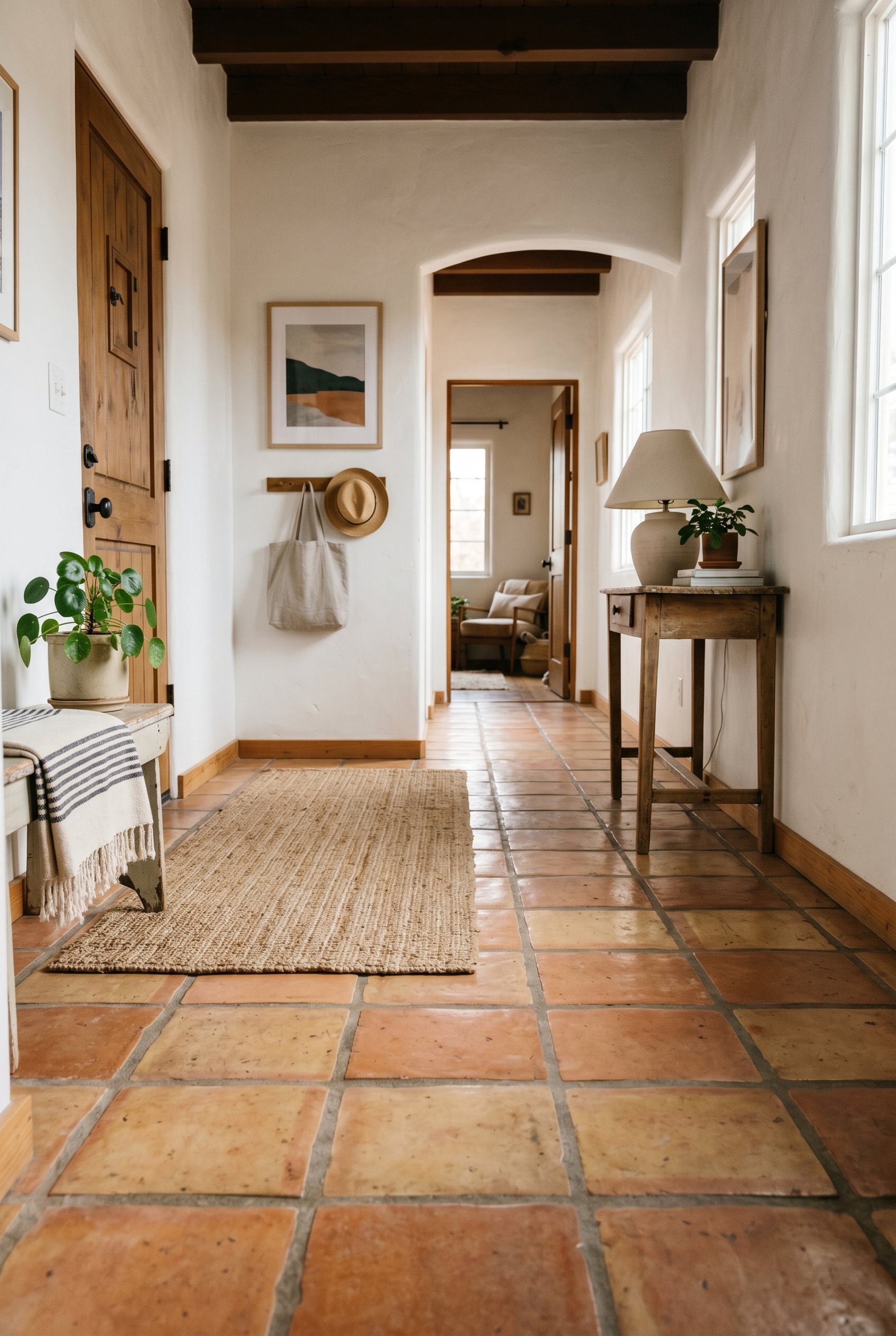
Nothing beats the look of genuine Saltillo tile underfoot. But because they are baked in the sun, they are completely porous and will soak up stains instantly if left raw. You absolutely have to seal them. I prefer using a modern penetrating matte sealer over a high-gloss topical one, so they keep their chalky, rustic appearance while actually repelling water and grease.
8. The Hacienda Courtyard Patio
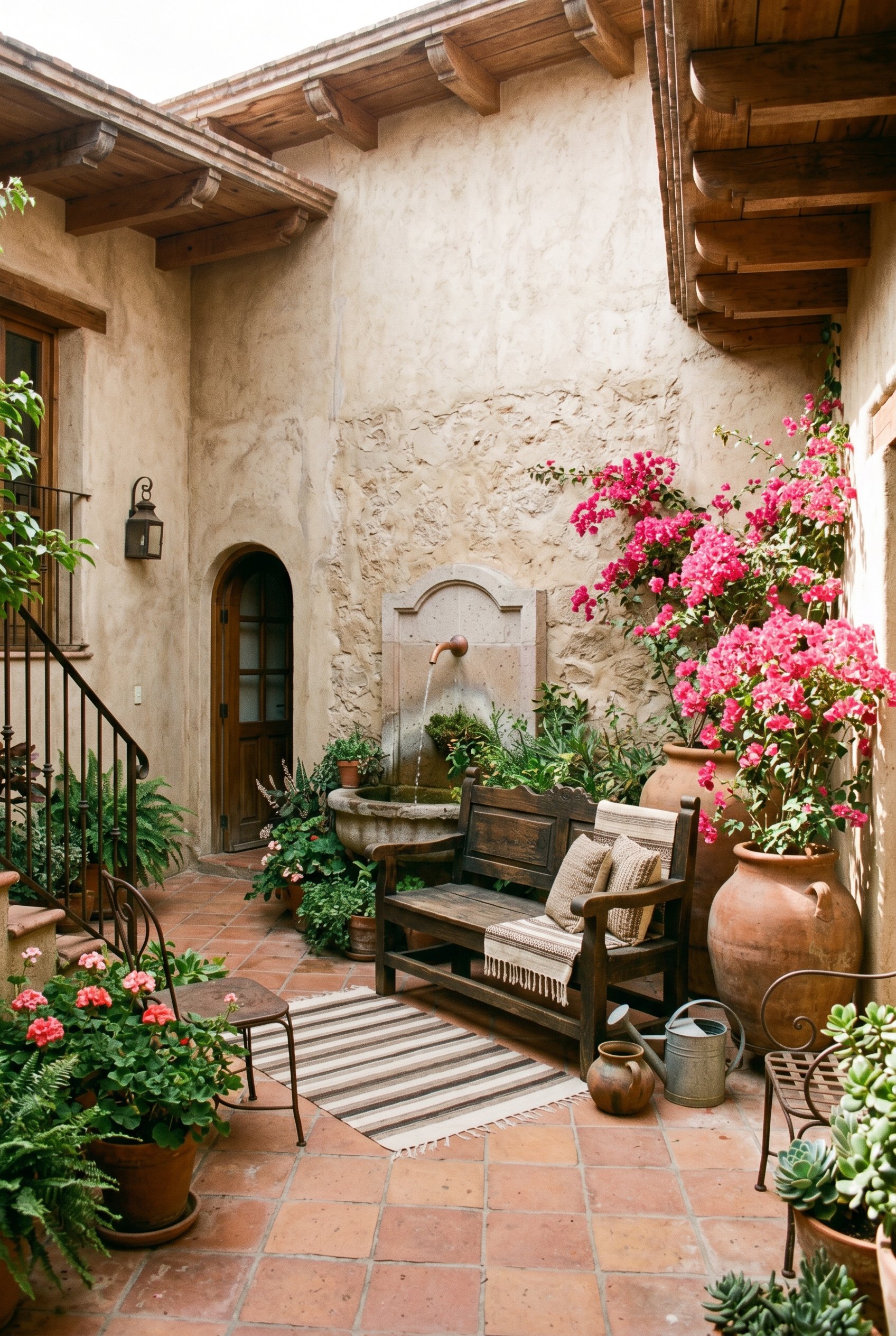
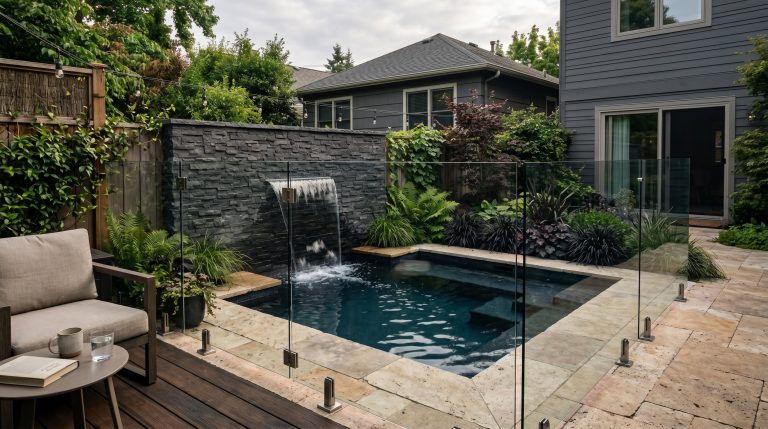
Bring the outside in, or turn your patio into a seamless extension of the house. This means running terracotta pavers outside, pulling out heavy wooden benches, and planting aggressively bright pink bougainvillea in massive pots. A trickling wall-mounted stone fountain is the ultimate flex here if you have the plumbing for it.
9. Hand-Embroidered Otomi Textiles
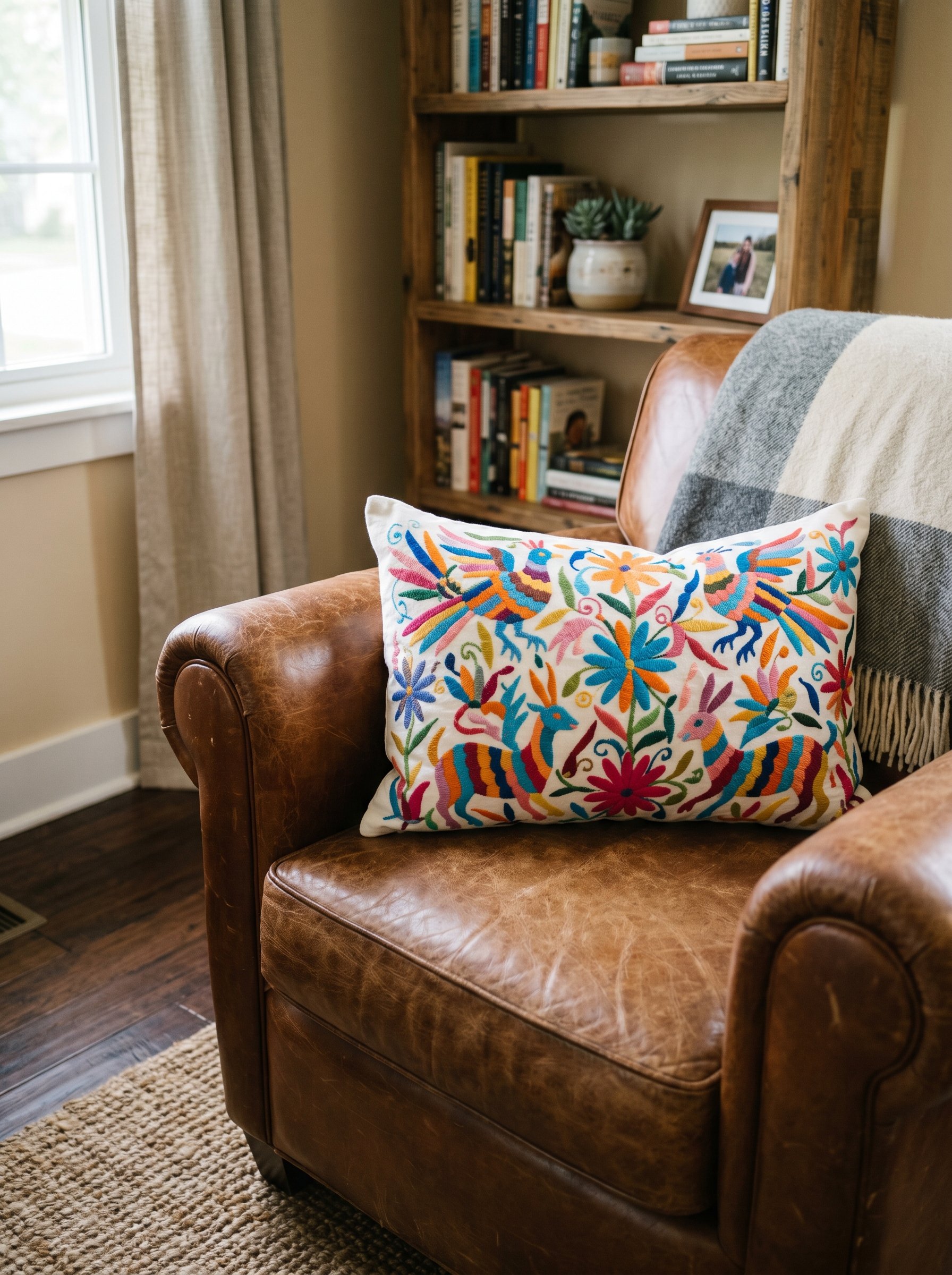
Those bright, animal-patterned Otomi textiles are everywhere now, but most are cheap screen prints from chain stores. Real Otomi fabric is meticulously hand-embroidered by artisans. You can tell it's authentic if the stitches are tight and the back of the fabric shows a faint outline of the design rather than a mess of crossover threads. They are incredibly vibrant, so use them sparingly as an accent pillow or framed as a piece of art.
10. DIY Aged Clay Pots
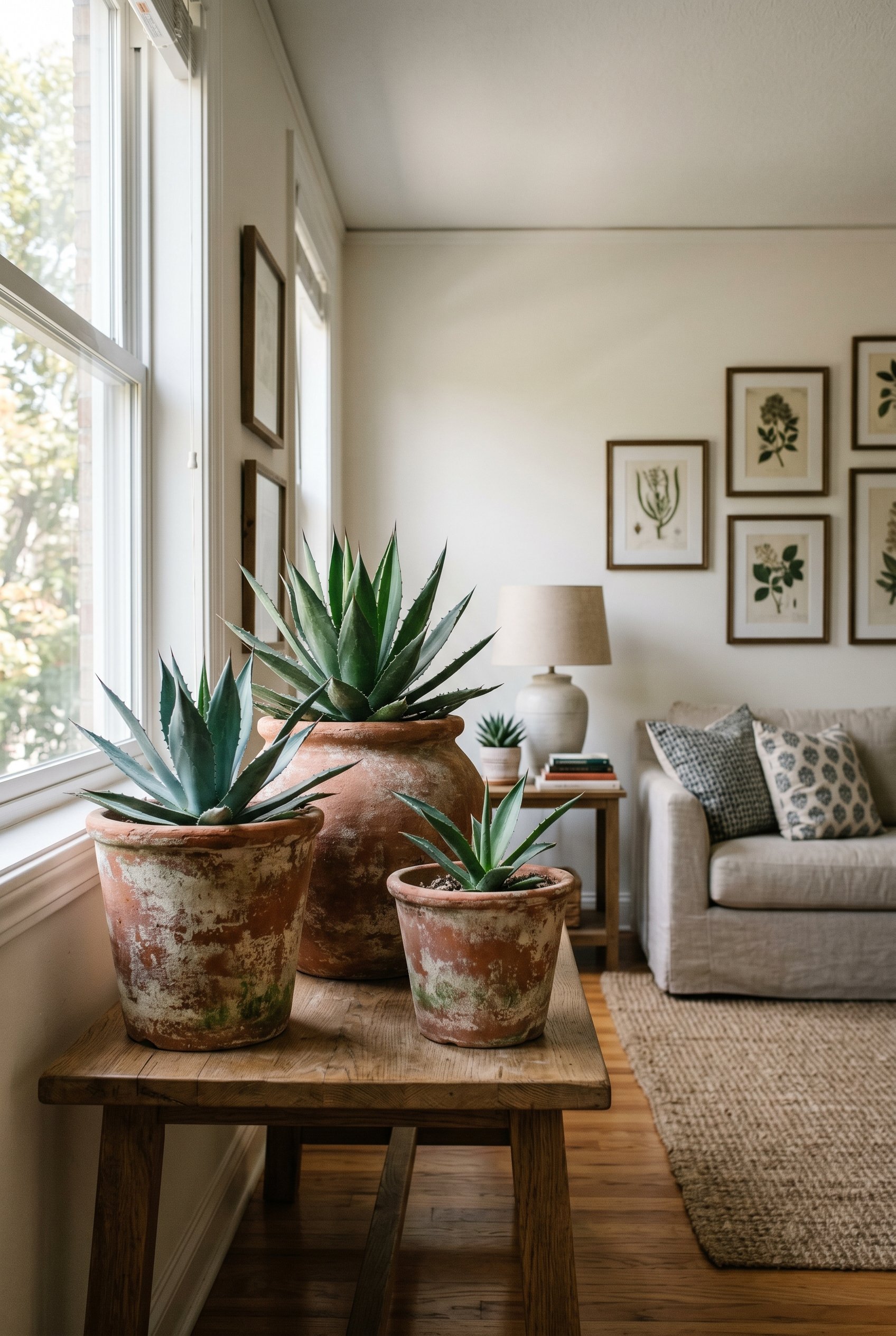
Those perfectly smooth, bright orange terra cotta pots from Home Depot look way too new. You can age them yourself in an afternoon. Smear them haphazardly with joint compound or mud, let it dry, and then dry-brush some watered-down white and moss-green acrylic paint over the surface. They end up looking 100 years old for about five bucks.
11. Leather Equipal Chairs
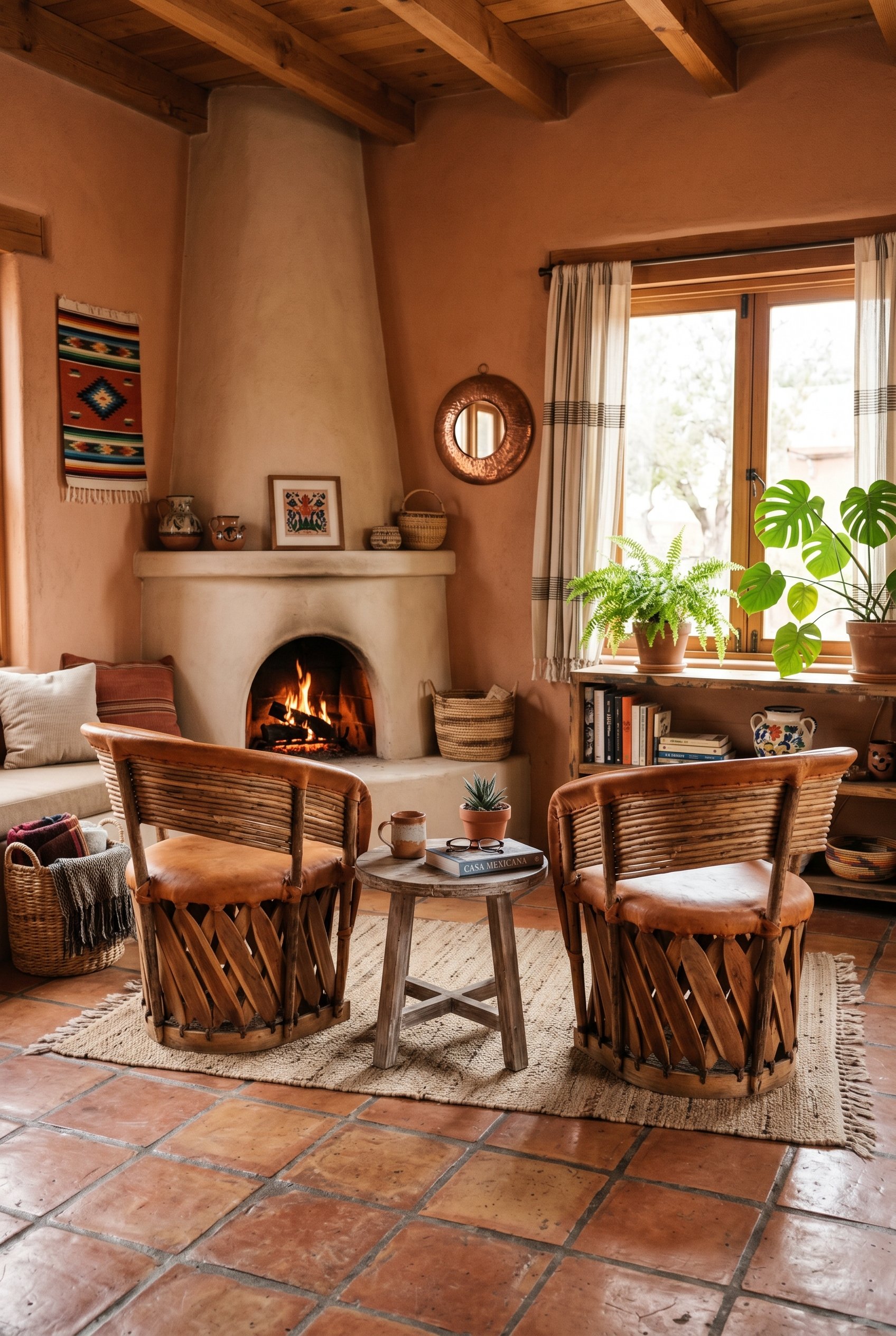
These are the classic Mexican barrel chairs made with cedar slats and pigskin or cowhide leather. They are surprisingly comfortable and bring instant authenticity to a living room or covered patio. Realistic budget expectations: plan to drop $250 to $400 for a quality, handmade piece. Keep the leather from drying out and cracking by rubbing it down with a basic leather conditioner once a year.
12. Open Shelving with Blown Glassware
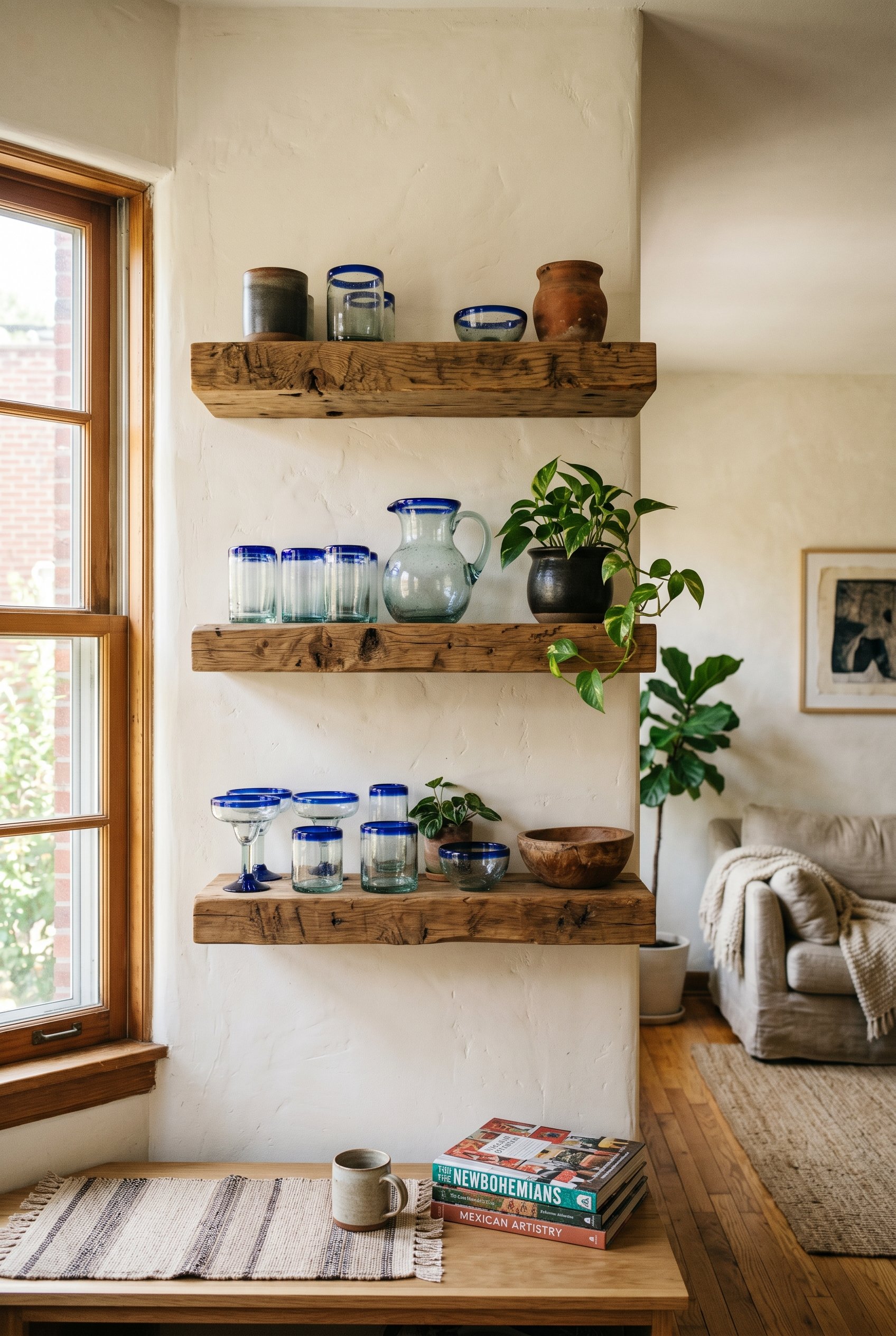
Hide the plastic storage containers. Chunky, floating raw wood shelves are perfect for stacking heavy Mexican glassware. Those thick, recycled pitchers and margarita glasses with the cobalt blue rims are practical enough for daily use and look incredible stacked against a plaster wall.
The leather Equipal chairs are easily my favorite investment out of this entire lineup. They only look better as they get scuffed up over the years. Buy the real pieces once, care for them properly, and let them age.
FAQ
What colors are used in Mexican rustic decor? Deep, earthy tones dominate. Think terracotta, burnt orange, ochre, mustard yellow, and deep brick red, often contrasted with bright cobalt blue, sage green, or off-white plaster.
How do you clean raw terracotta floors? Sweep daily, but for mopping, use a strictly pH-neutral cleaner. Harsh acids or bleach will strip the sealer and permanently etch the porous clay.
Is authentic Talavera tile expensive? Real, hand-painted ceramic Talavera from Mexico usually runs $1.50 to $4.00 per tile depending on the intricacy. Standard big-box ceramic is cheaper, but you lose the organic, slightly uneven texture that makes Talavera special.
What is an Equipal chair made of? Traditional Equipal chairs are crafted from tanned pigskin or cowhide stretched over a frame of Mexican cedar (rosewood) and bound together with natural fibers.