12 Smart Diy Patio Privacy Ideas You Can Actually Build
Our favorite Diy Patio Privacy Home Decor Projects ideas!
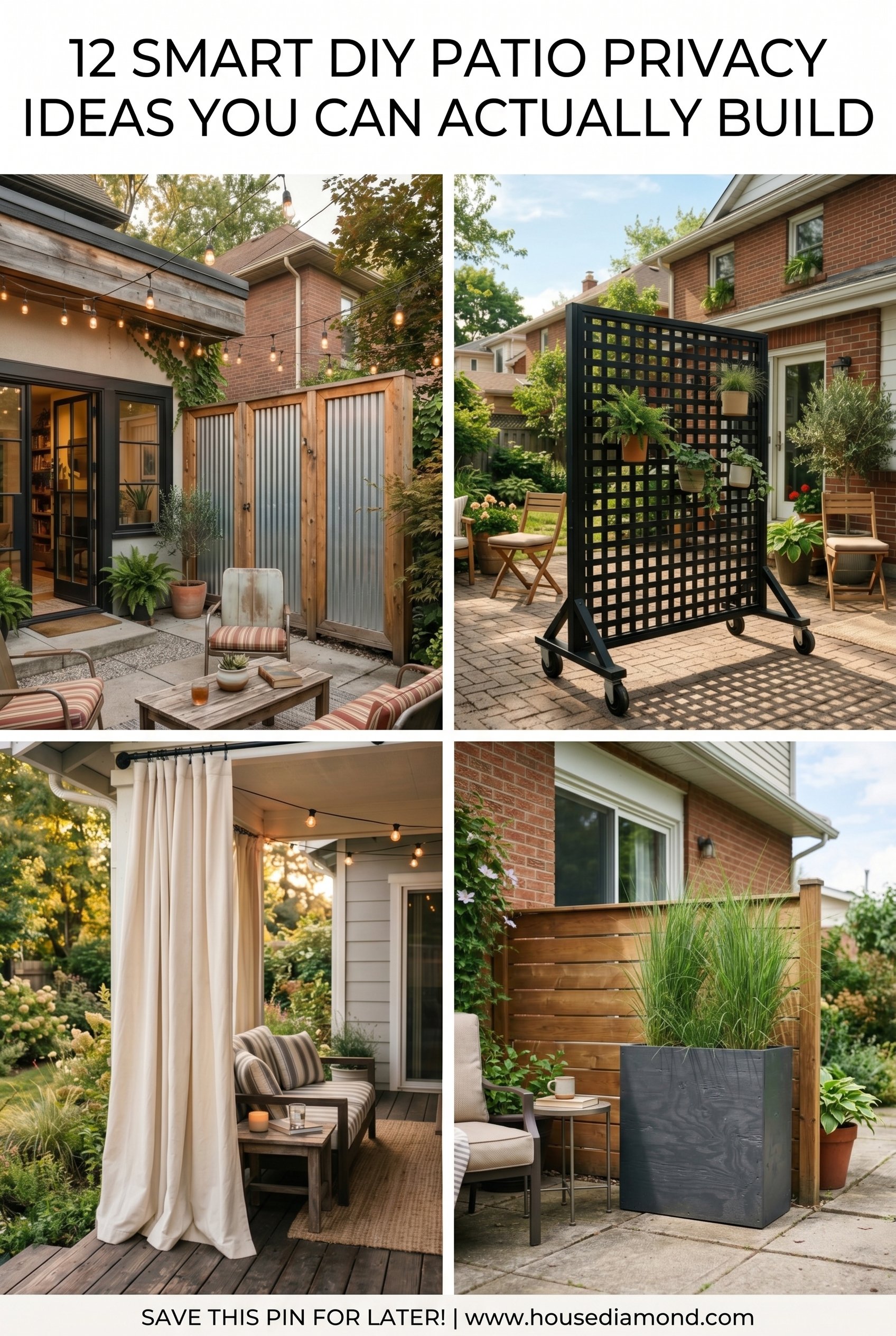
You step out onto your patio in your pajamas with your morning coffee and immediately make eye contact with your neighbor. Not ideal. Most privacy solutions look like cheap plastic afterthoughts or require pulling permits and hiring a contractor. We are skipping all that. These projects block the view while looking completely intentional, standing up to harsh winds, and somehow passing your strict HOA guidelines.
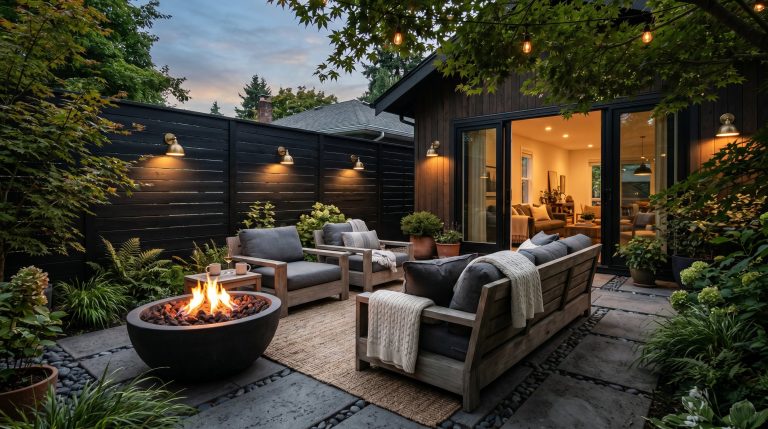
1. Slatted Wood Screens
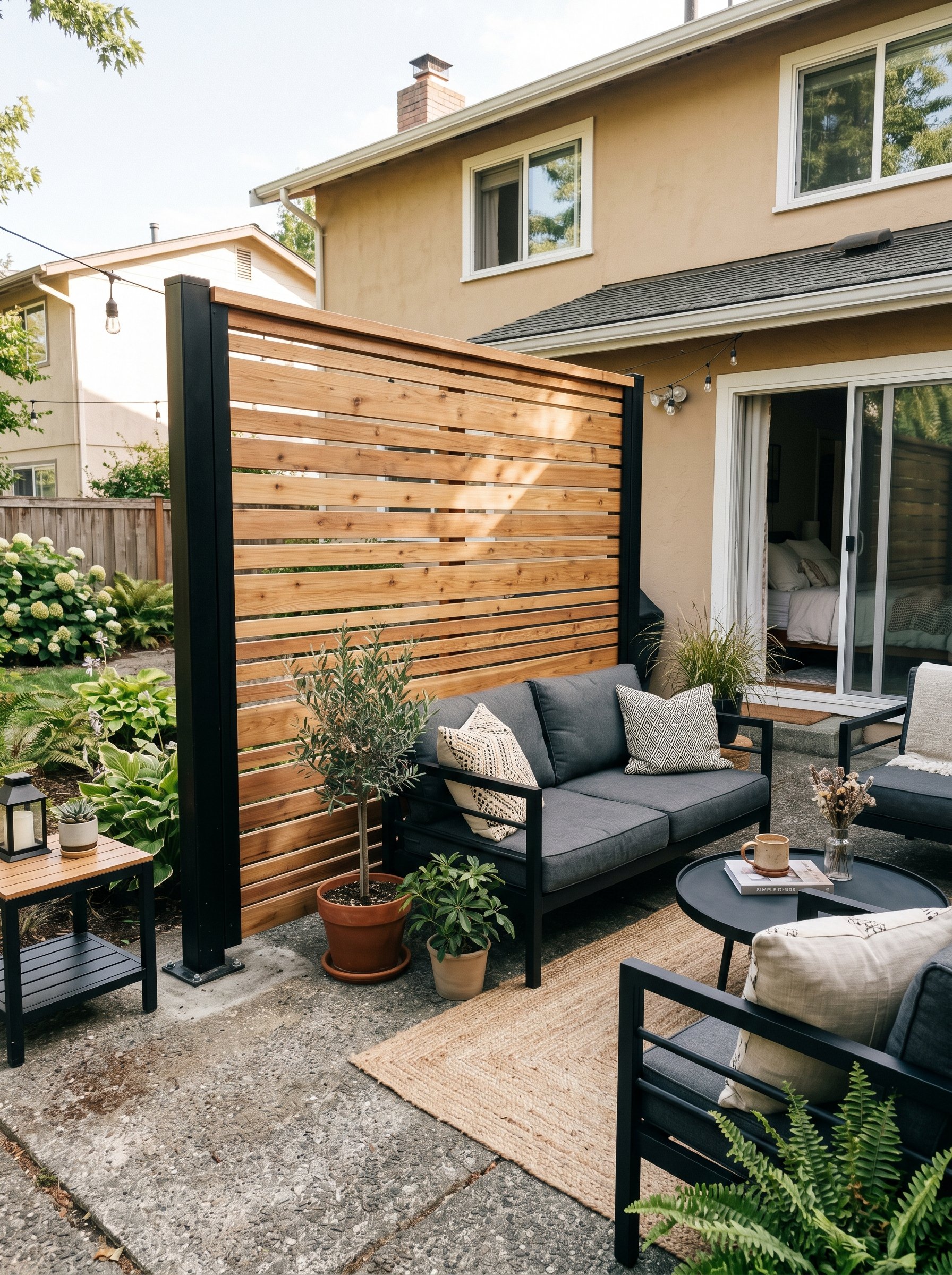
I love a horizontal slatted screen. It immediately gives off a high-end, boutique hotel vibe. The key here is spacing. Leaving a half-inch gap between the boards isn't just about the modern aesthetic; it lets the wind blow through safely. A solid wall of wood acts like a sail and will blow over in a storm unless it's bolted to concrete. Use cedar if you have the budget (about $150-$200 for a 6×6 panel) because it naturally resists rot, or buy cheap pressure-treated pine and stain it dark.
2. Heavy-Duty Weighted Curtains
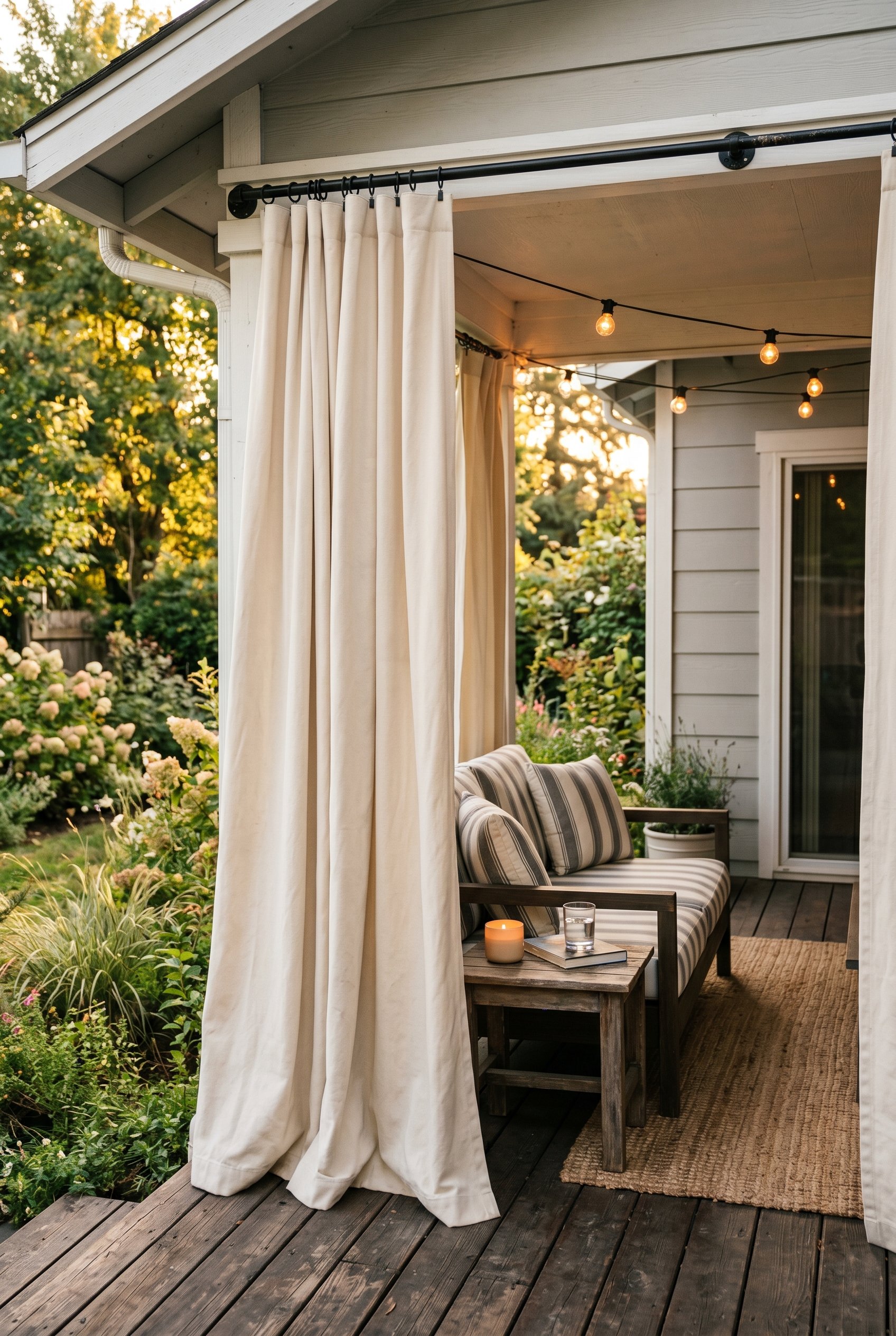
Outdoor curtains are notoriously frustrating because a slight breeze turns them into aggressive ghosts slapping you in the face. Skip the flimsy polyester options. I buy heavy canvas painter's drop cloths from Home Depot ($20 each), waterproof them with an outdoor fabric spray, and hang them from galvanized plumbing pipe. The secret? Cut open the bottom hem and sew in heavy metal washers every few inches to weigh them down.
3. Planter Box Hybrids
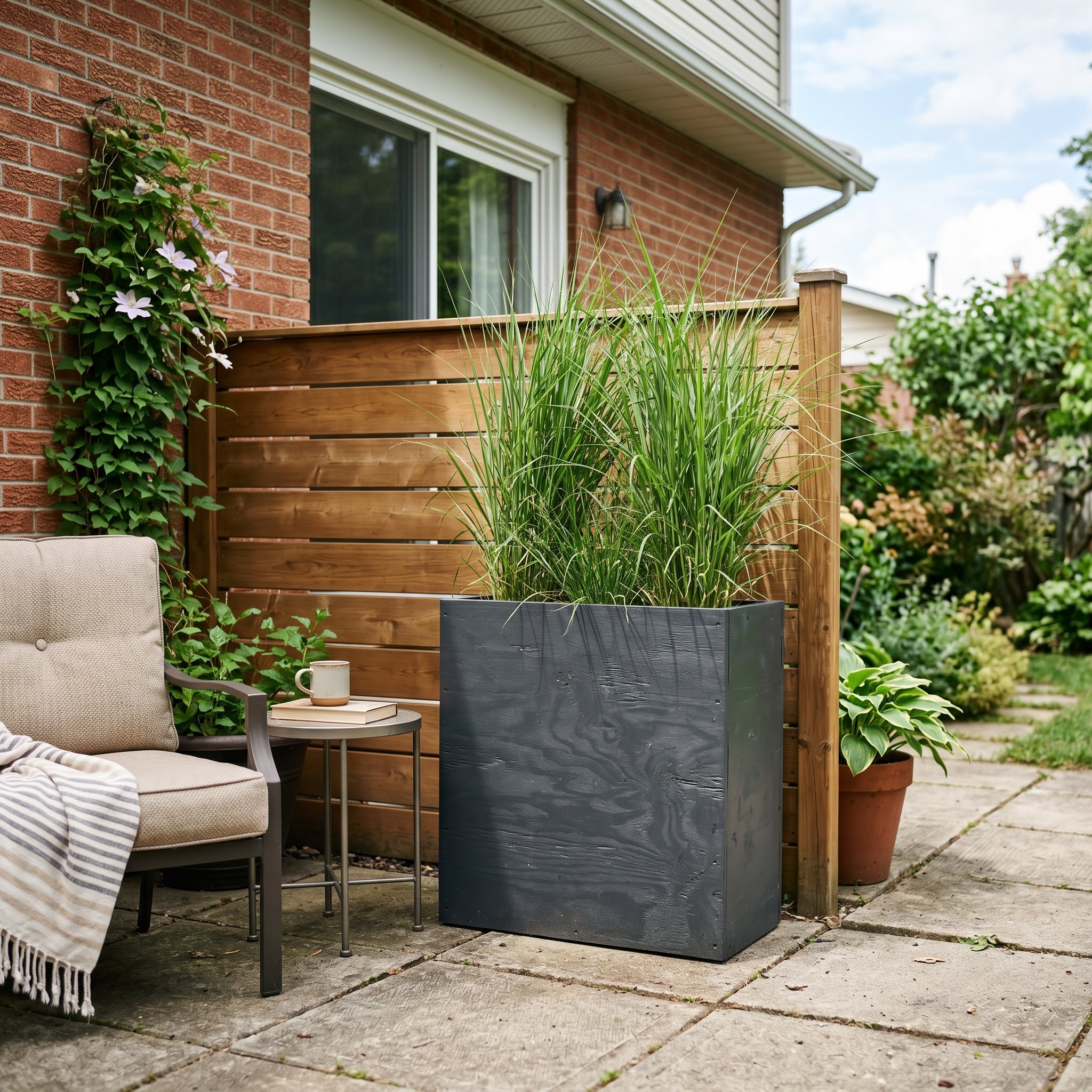
Building a tall, rectangular planter box out of exterior-grade plywood is surprisingly easy. Paint it the exact same color as your exterior siding for instant decor cohesion—it makes the planter look built-in rather than slapped together. Fill it with tall ornamental grasses like Karl Foerster. The dirt makes the base incredibly heavy, giving you structural safety, while the grasses provide about four feet of soft, moving privacy on top.
4. Framed Bamboo Rolls
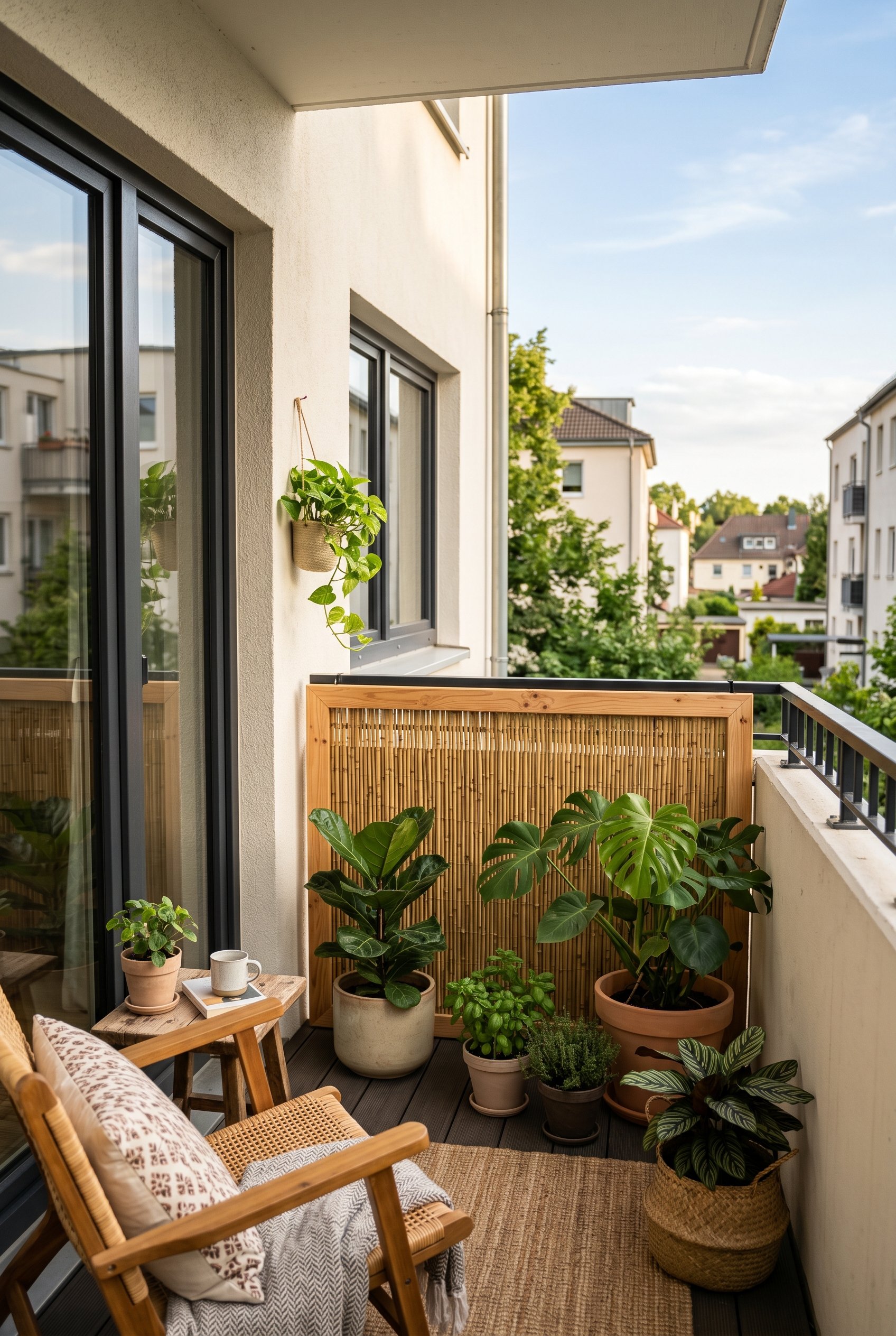
Zip-tying a cheap roll of bamboo to an existing metal railing always looks terrible. It screams college apartment. To fix this, build a simple frame out of 1×2 pine boards and mount the cut bamboo inside it like a piece of art. Seal the whole thing with marine varnish so it survives the rain. This usually sneaks past HOA zoning rules because it qualifies as temporary decor rather than a permanent fence.
5. Moveable Square Lattice
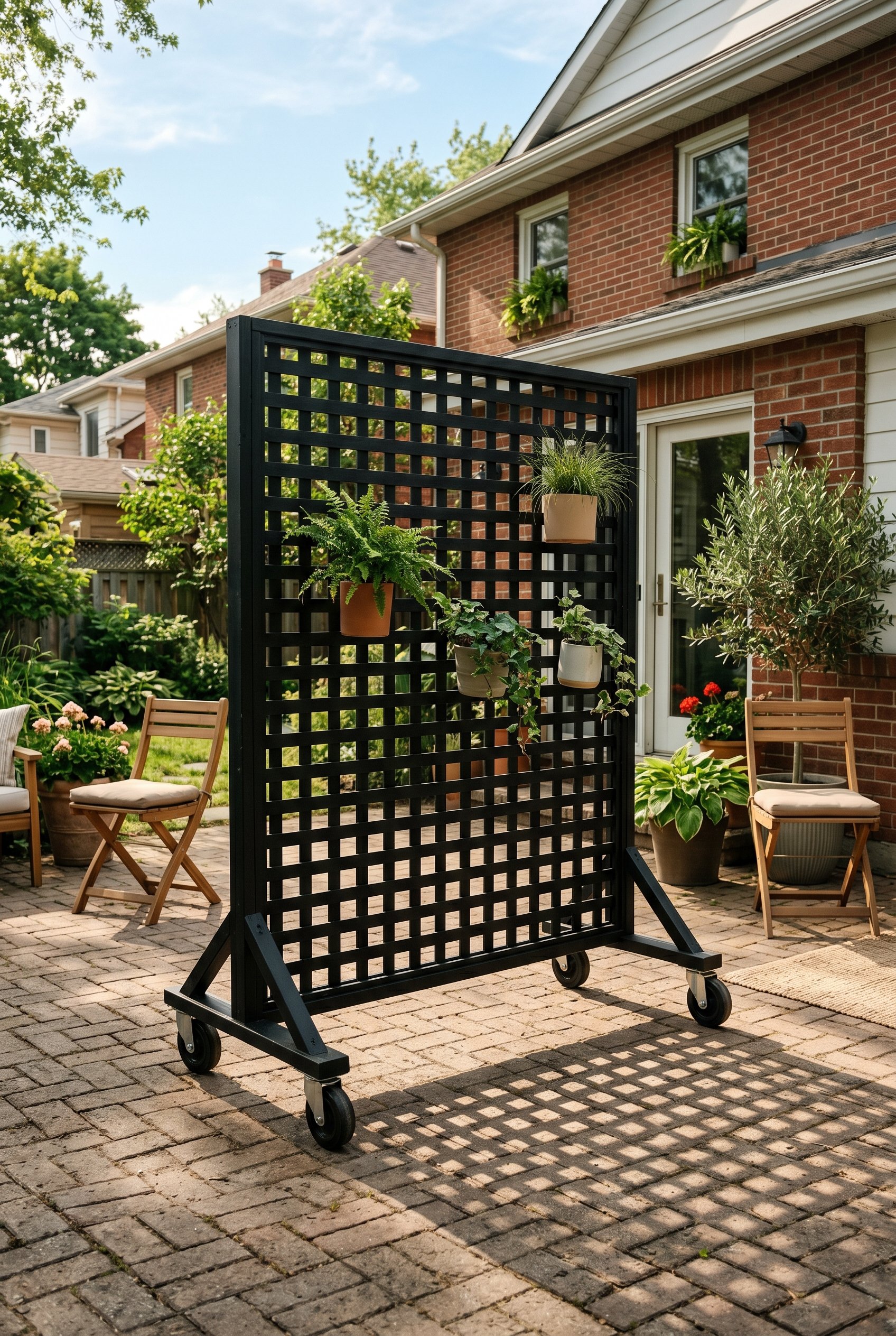
Diamond lattice instantly reminds me of the 1990s. Square lattice, however, looks incredibly chic and architectural. Frame a sheet of square wood lattice, paint it matte black to match your modern patio furniture, and mount it on heavy-duty locking casters. You can roll it exactly where you need it to block the neighbor's kitchen window, and roll it away when you want the sun.
6. The Faux Boxwood Hedge Wall
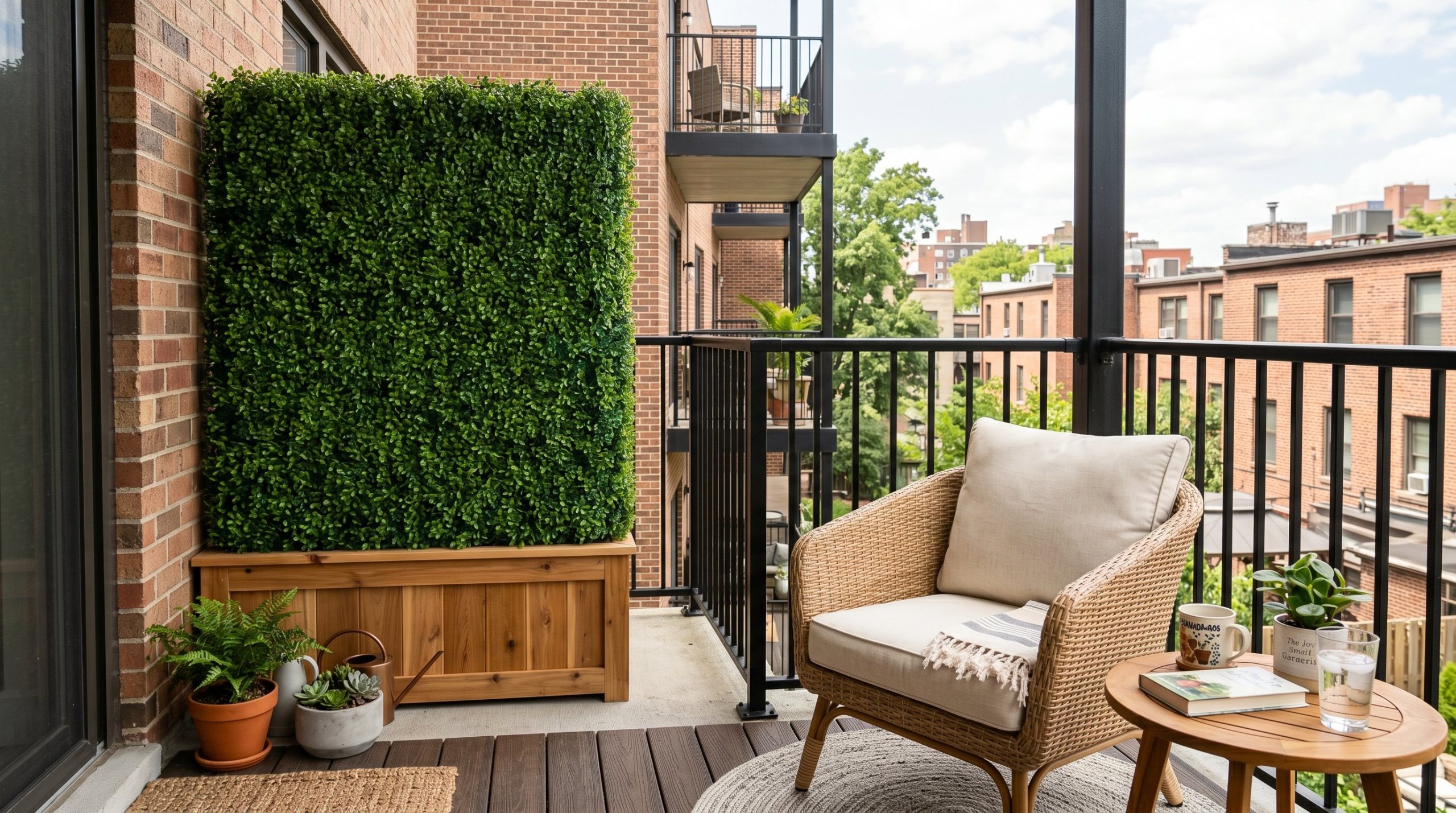
Faux greenery panels stapled to a plywood backing offer 100% solid visual blocking. It is heavy, though. Because air cannot pass through this, you cannot leave it freestanding without a massive, weighted base. I usually screw the plywood backing directly to an existing structural post or a heavy wooden planter base. Buy the UV-resistant faux boxwood panels—the cheap indoor ones turn a depressing neon blue after one summer in the sun.
7. Tension Rod Hanging Greenery
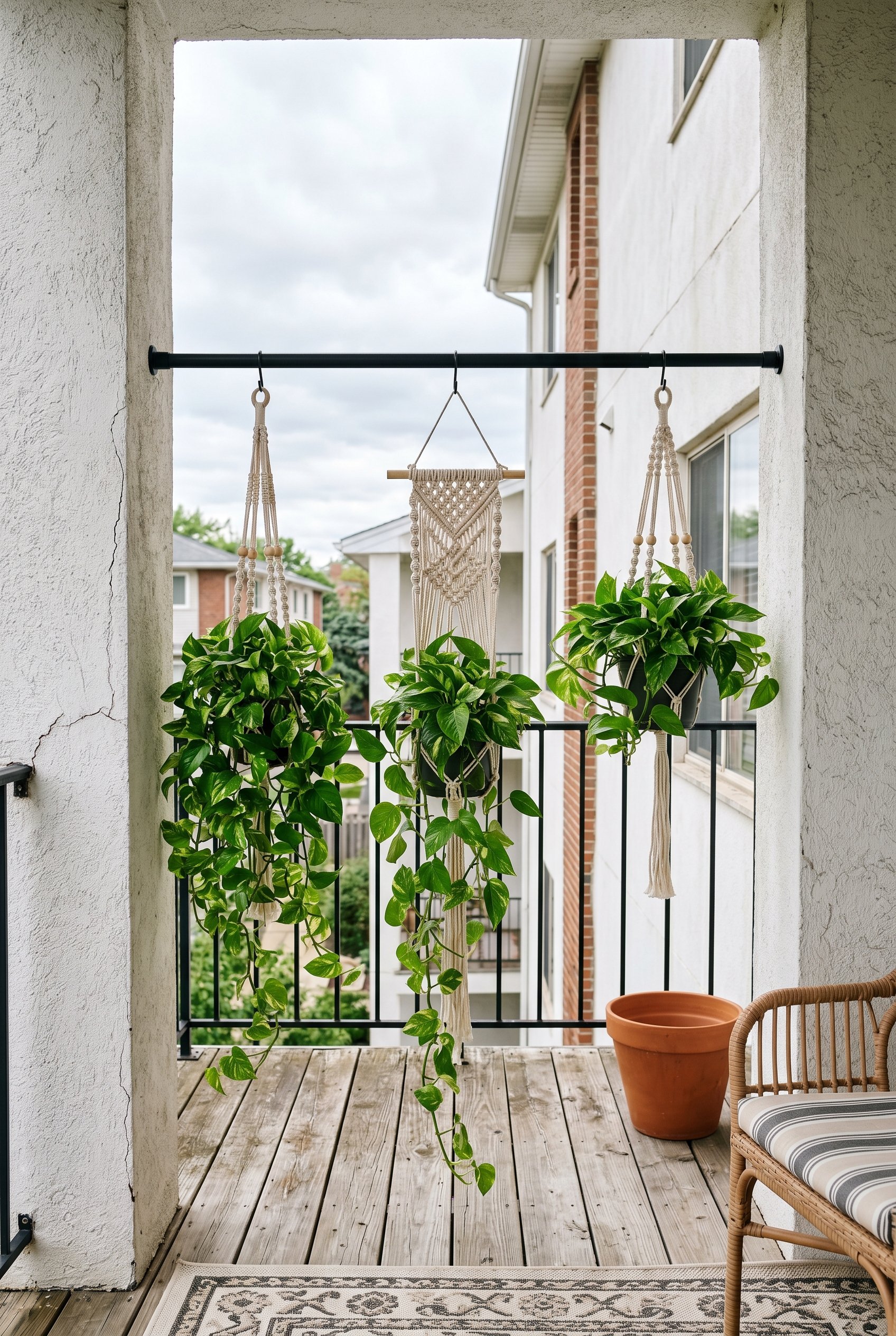
If you rent your apartment, you probably can't drill into the stucco or brick. Buy an outdoor-rated tension rod (the kind used for heavy shower curtains) and wedge it vertically or horizontally between your balcony walls. Hang real trailing plants like pothos in macrame hangers. It breaks up the sightline perfectly. This costs maybe $45 total and takes exactly ten minutes to put up.
8. Nautical Rope Walls
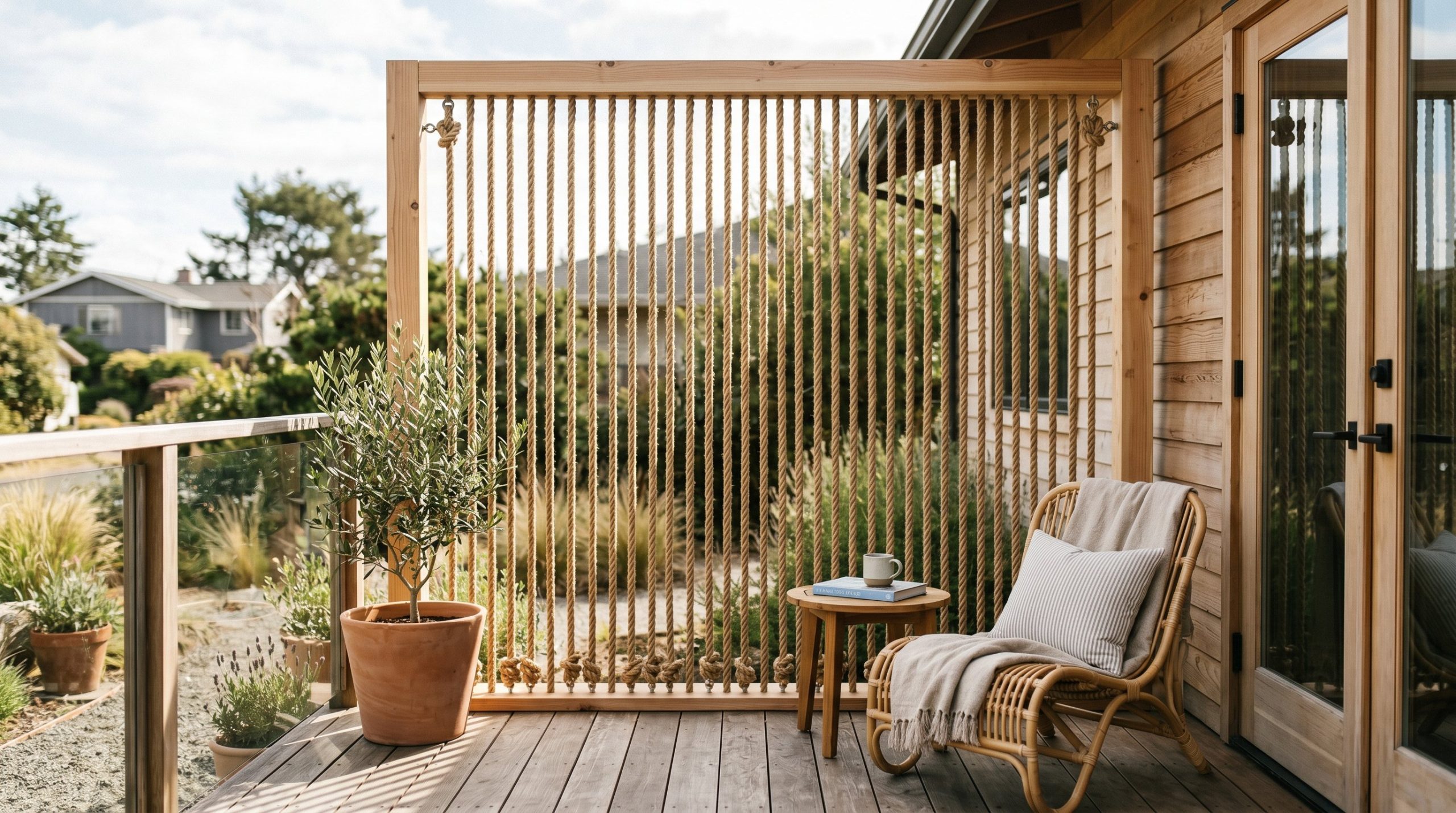
This one is tricky to pull off but looks incredible if your style leans organic or coastal. Build a basic wooden frame and drill holes two inches apart along the top and bottom. Thread thick manila rope tightly up and down to create a striped wall. It provides a decent visual barrier, costs very little, and completely ignores wind pressure because the air just passes right through the gaps.
9. Upcycled Vintage Shutters
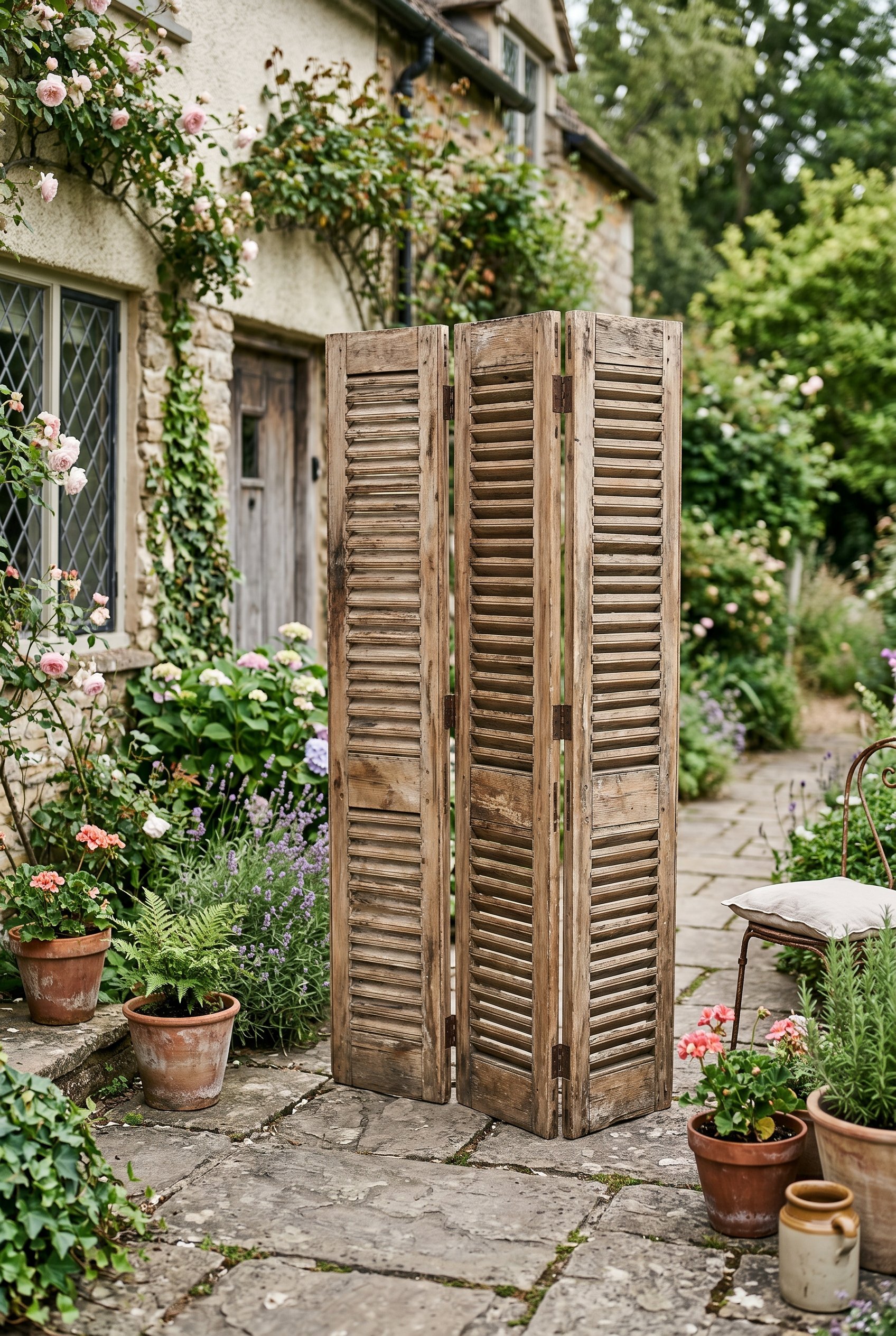
I constantly see solid wood plantation shutters at thrift stores and architectural salvage yards. Buy three or four of the same height, sand them down, and attach them together with door hinges to make a folding screen. Seal them with a heavy coat of polyurethane. They are heavy enough to stand independently on a calm day, and you can just fold them flat and store them against the wall during a storm.
10. Vertical Canvas Shade Sails
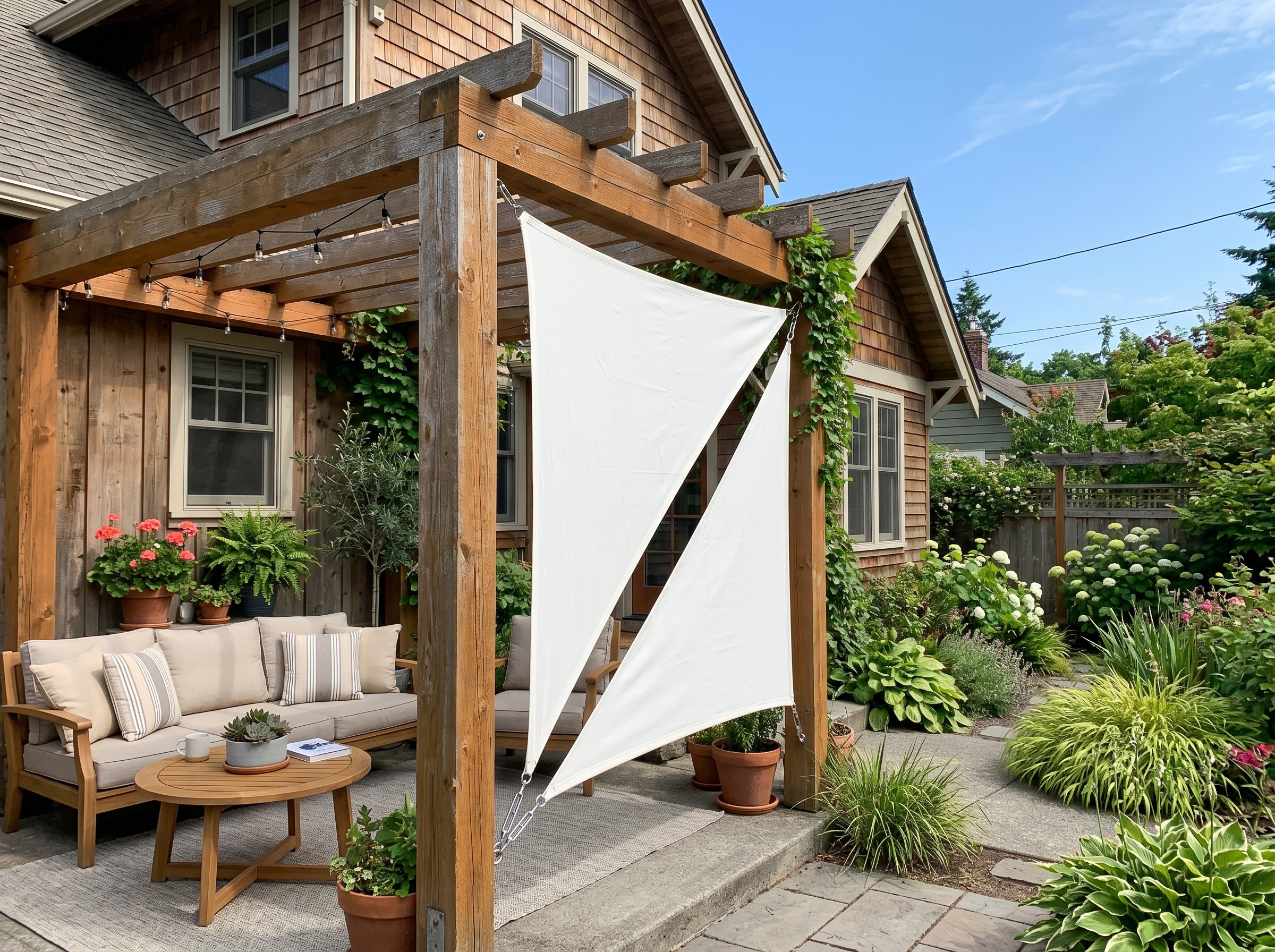
Shade sails are usually stretched overhead, but turning a triangular canvas sail sideways and mounting it vertically blocks a massive amount of your neighbor's yard. You need structural anchor points for this. Screw heavy-duty eye hooks directly into the wall studs or thick patio columns, and use stainless steel turnbuckles to pull the canvas drum-tight. If it's loose, it will tear itself apart in the wind.
11. Galvanized Corrugated Metal
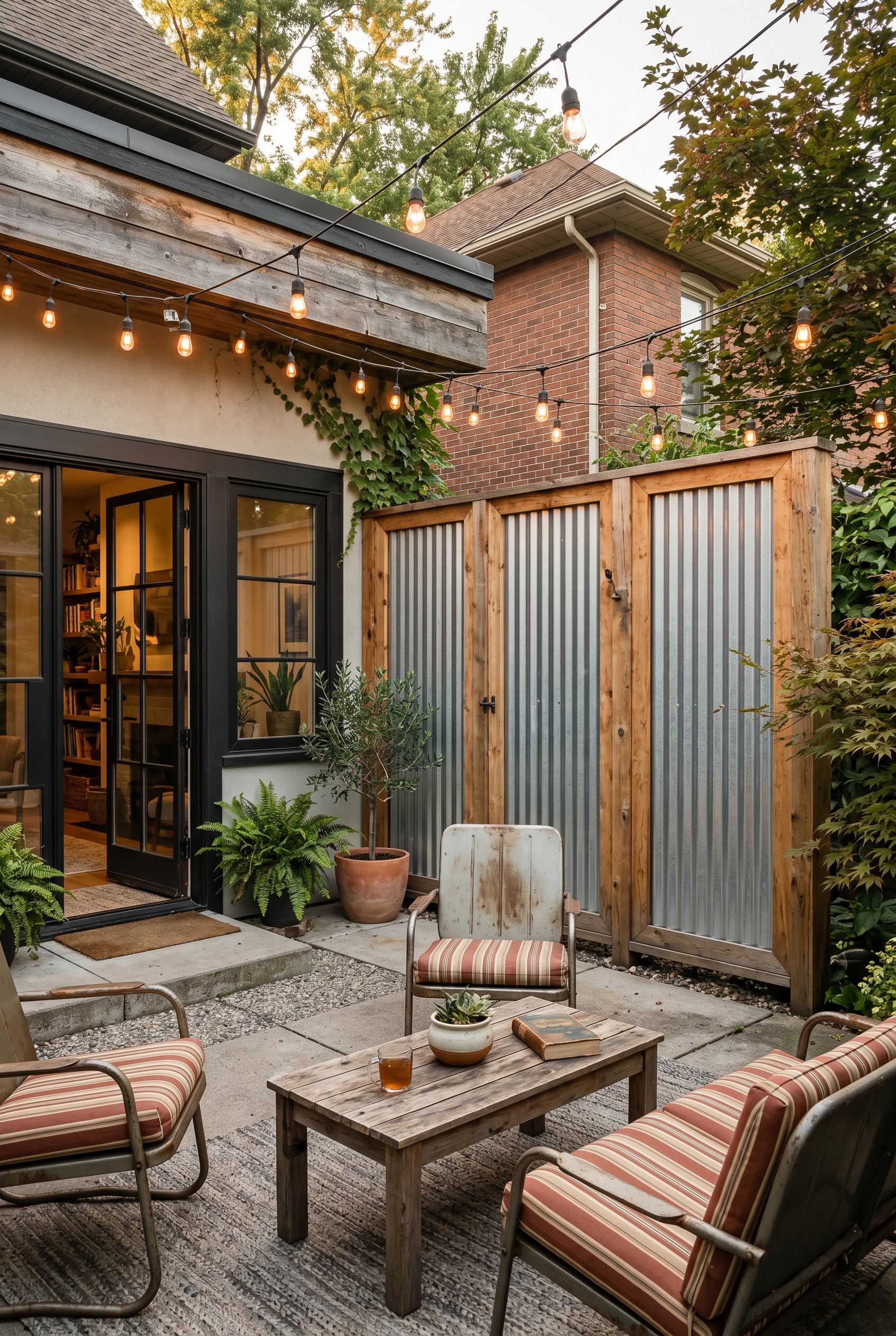
Corrugated metal roofing panels are cheap, rust-proof, and totally opaque. I frame them out in thick, warm cedar boards to cover the sharp metal edges and soften the industrial look. Warning: HOAs absolutely hate corrugated metal. Check your neighborhood bylaws before buying the materials. If you are in the clear, this is a zero-maintenance privacy wall that will outlast your house.
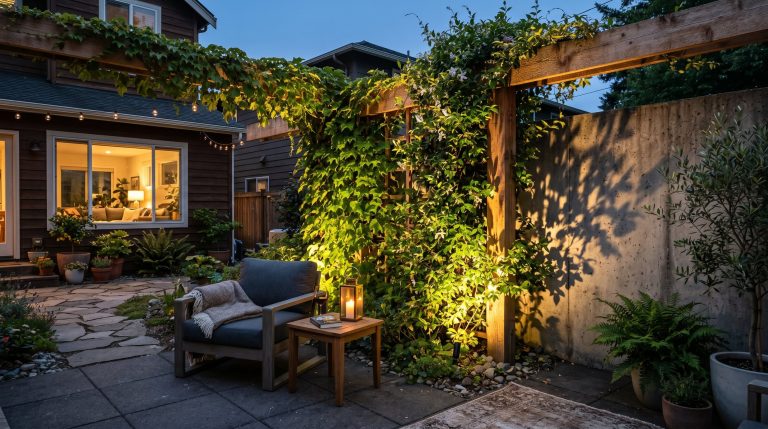
12. Privacy Trellis with Climbing Vines
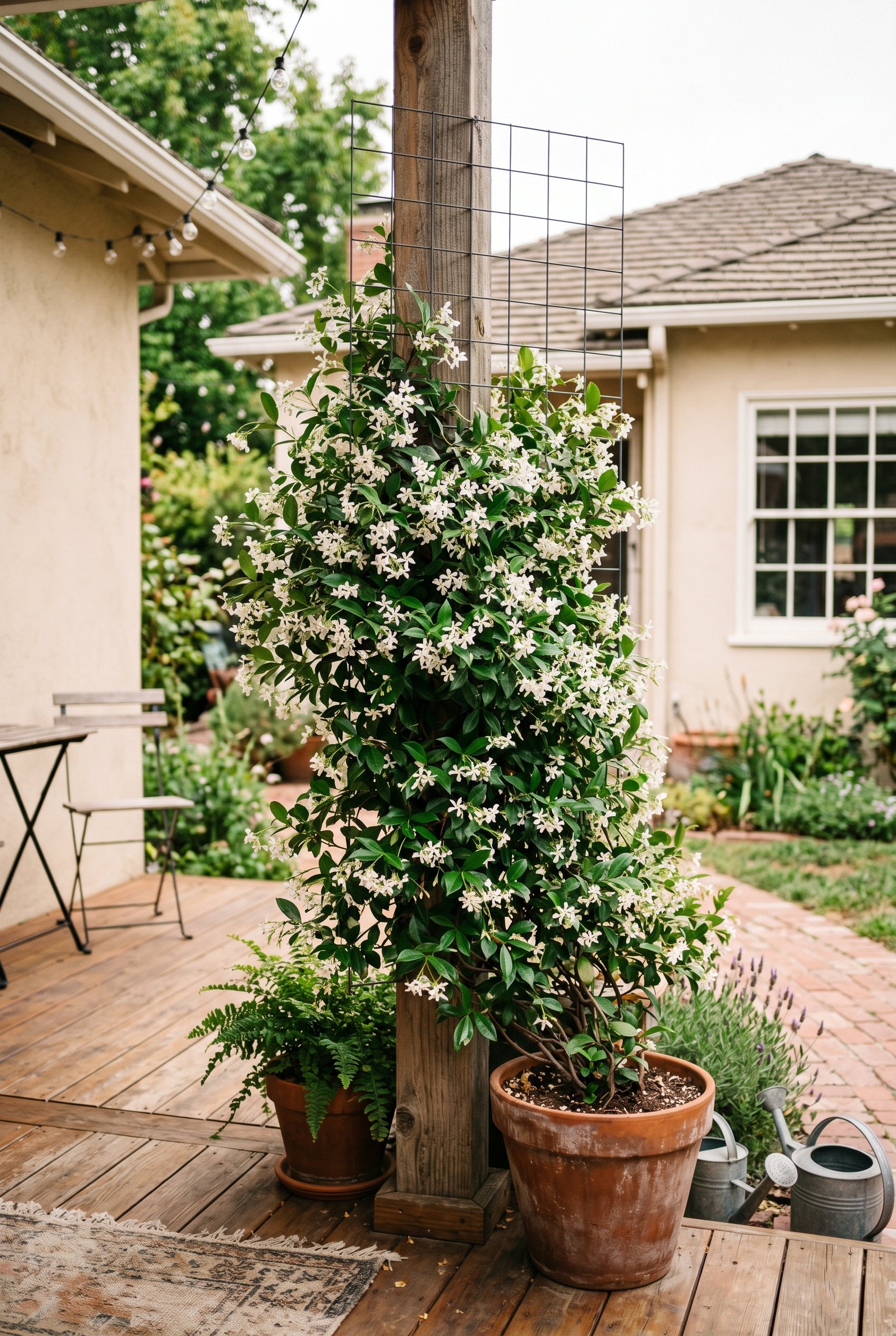
Patience is required here, but a wire grid trellis bolted to your patio framing is the most natural privacy solution. Plant Star Jasmine or English Ivy in a base pot and train it up the wire grid. It takes a full growing season to become totally opaque, but nobody complains about a wall of flowers. It requires pruning every few weeks to keep it from taking over your siding, but the payoff is worth the maintenance.
I'm honestly planning to build the square lattice on casters for my own deck this weekend. Whatever route you go, just remember to over-engineer the base—the wind is always stronger than you think.
FAQ
How tall can a patio privacy screen be? Most municipalities and HOAs cap permanent privacy fences at 6 feet tall. If you build something freestanding or on wheels, it is usually classified as furniture or temporary decor, which often bypasses strict height restrictions. Always check your local bylaws first.
What is the best material for wind resistance? Slatted wood, square lattice, and rope walls. Anything with physical gaps allows wind to pass through, reducing the structural load. Solid walls act like sails and require heavy, permanent anchoring.
How do I keep outdoor curtains from blowing around? Sew stainless steel washers or heavy drapery weights into the bottom hem. You can also run a heavy metal chain through the bottom hem, or anchor the bottom corners to the deck using bungee cords and D-rings.
Are faux boxwood panels waterproof? The plastic itself won't absorb water, but the cheap grid backing can degrade. The real danger is the sun. You must buy panels specifically labeled "UV-resistant," or they will bleach out and turn blue or white within a few months.
What is the cheapest way to block a neighbor's view? Canvas drop cloths hung on a tension rod or a DIY galvanized pipe frame. You can cover an 8-foot span for under $50.